The Women Who Went First – Part 27
AboutHer
STORIES. WOMEN. NOW
THE WOMEN WHO WENT FIRST ✦ FROM THE PAST
PORTRAIT · ISSUE NO. 27
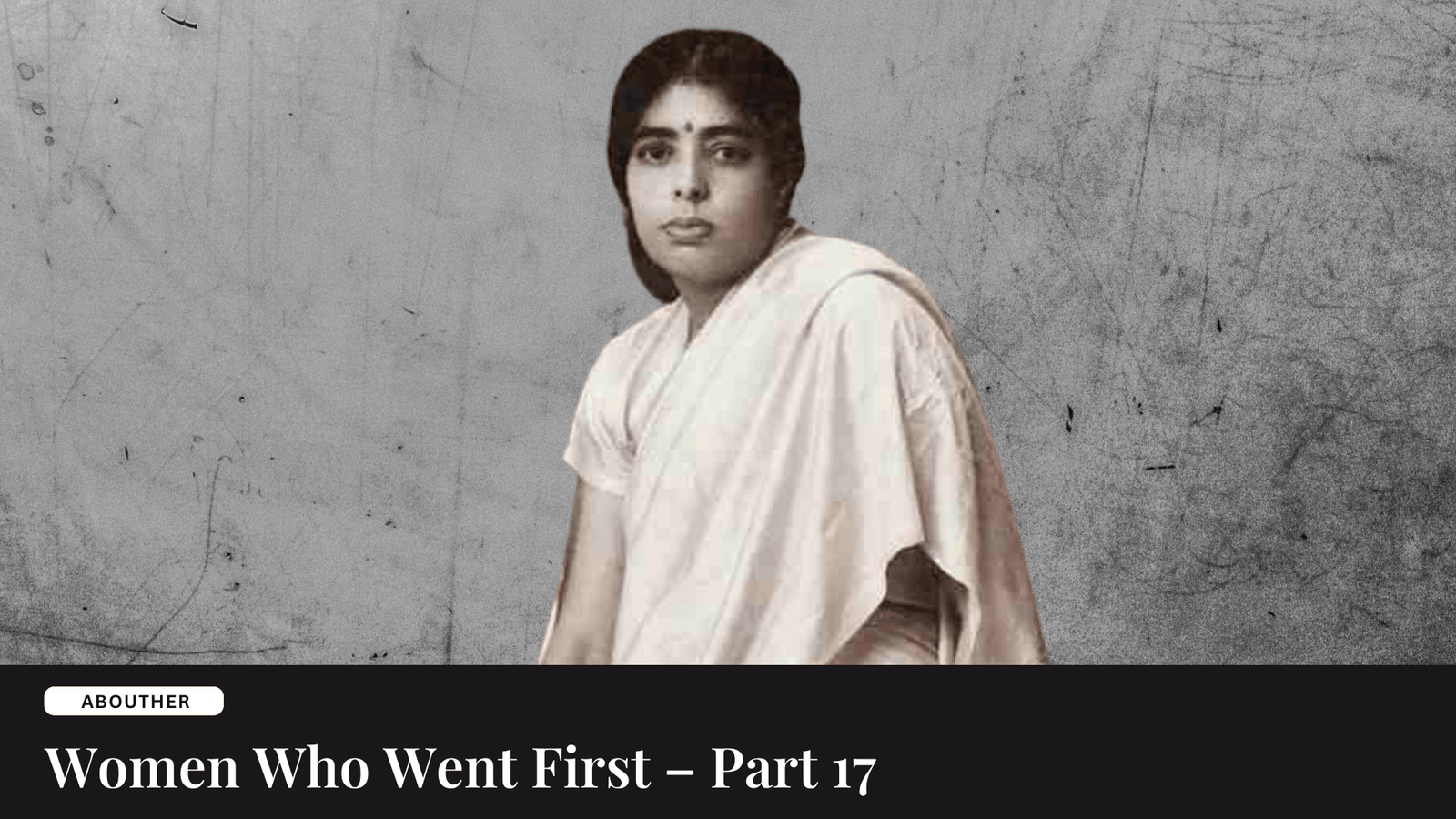
Noor
Inayat Khan
Inayat Khan
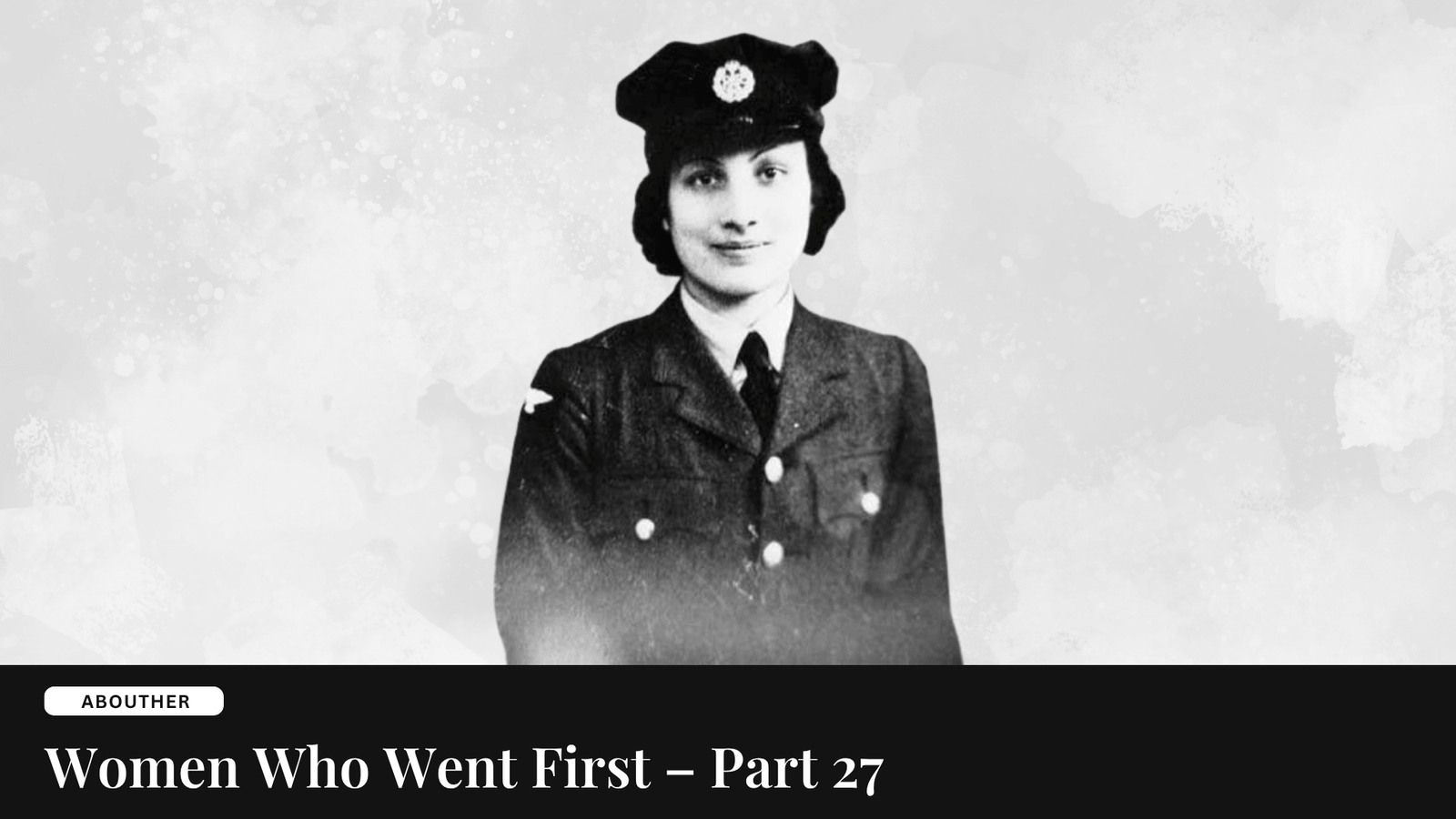
She was a musician and a writer of children’s stories who became the first female wireless operator dropped into Nazi-occupied France. When the Gestapo caught her, they tortured her for months. She gave them nothing. Her last recorded word was Liberté.
Noor Inayat Khan was born in Moscow in 1914, raised in London and Paris, trained as a musician at the Paris Conservatoire, and published a book of Buddhist children’s stories before the war came and changed what was required of her. She joined the Women’s Auxiliary Air Force in 1940, was recruited by the Special Operations Executive in 1942, and in June 1943 became the first female wireless operator to be infiltrated into Nazi-occupied France. She was twenty-nine years old. She knew the risks precisely. Wireless operators in occupied France had a life expectancy of six weeks. She survived for four months, keeping the only communication link between London and the French Resistance alive after her entire network had been arrested around her. She was captured in October 1943, imprisoned in Pforzheim in chains because she had already attempted to escape twice, transferred to Dachau concentration camp, and executed on 13 September 1944. She was thirty years old. Her last recorded word was Liberté.
BETWEEN THREE WORLDS
THE LIFE BEFORE THE WAR
Noor Inayat Khan was the daughter of Inayat Khan, an Indian Sufi musician and teacher from the Mysore royal family who had brought his message of universal love and music to the West, and Ora Ray Baker, an American woman from Albuquerque. She grew up in a household that was simultaneously Indian, American, British, French, and Sufi, speaking multiple languages, steeped in music and spiritual teaching. She studied psychology at the Sorbonne, music at the Paris Conservatoire, and published Jataka Tales, a retelling of Buddhist stories for children, in 1939. She was gentle, sensitive, and deeply committed to the principle of non-violence that her Sufi upbringing had instilled. She was also, when the time came, completely determined.
THE DECISION TO FIGHT
When Germany invaded France in 1940, Noor and her family fled to England. She joined the Women’s Auxiliary Air Force and trained as a wireless operator, showing exceptional aptitude for the technical work. The Special Operations Executive recruited her in 1942. Her SOE assessors were divided about her suitability. Some found her too sensitive, too committed to non-violence for the brutal demands of clandestine work in occupied territory. Others saw something harder beneath the gentleness. She was commissioned and sent to France. She knew, before she went, exactly what capture meant. SOE agents in France were not protected by the Geneva Convention. They would be treated as spies, not prisoners of war. Torture was standard. Execution was the likely outcome. She went anyway, because she had decided that this was what the moment required of her.
Also Read: The Women Who Went First – Part 26
THE FOUR MONTHS IN FRANCE
PARIS, JUNE TO OCTOBER 1943
Noor arrived in France in June 1943 as part of the Prosper network. Within weeks, the network had been almost entirely destroyed by Gestapo arrests. She was offered evacuation back to England and refused it. She was the only wireless operator left in Paris and she chose to stay, maintaining the communications link that kept the French Resistance connected to London. For four months she moved constantly, changing safe houses, transmitting under the most dangerous conditions imaginable, evading a Gestapo that had identified her as a priority target. She was eventually betrayed and arrested in October 1943.
PFORZHEIM AND DACHAU
PFORZHEIM PRISON, 1943 TO 1944
Noor Inayat Khan was held in Pforzheim prison for ten months in solitary confinement, classified as highly dangerous and kept in chains because she had attempted to escape multiple times. During that time she was repeatedly interrogated and subjected to treatment designed to break her. She gave the Gestapo nothing. Not a name, not a network, not a location, not a piece of information that could be used against the people she had worked with. In September 1944 she was transferred to Dachau concentration camp. On 13 September 1944, she was executed. Her last word, recorded by a survivor, was Liberté. She was thirty years old.
“I wish some Indians would win high military distinctions in this war. If one or two could do something in the Allied service which was very brave and which everybody admired, it would help to make a bridge between the English people and the Indians.”
NOOR INAYAT KHAN, BEFORE HER DEPLOYMENT
WHAT SHE WAS MADE OF
The most striking thing about Noor Inayat Khan’s story is the gap between who she appeared to be and what she proved herself capable of. Her SOE assessors who doubted her were not wrong about what they observed: she was gentle, sensitive, committed to non-violence, unused to deception. They were wrong about what those qualities meant under pressure.
The gentleness and the steel were not in contradiction. The same Sufi upbringing that gave her the sensitivity her assessors worried about also gave her the moral clarity that sustained her through ten months of solitary confinement and whatever was done to her at Pforzheim and Dachau. She had decided what she believed in. She had decided what she would not do. No amount of pressure changed either decision.
WHY SHE BELONGS IN THIS SERIES
Noor Inayat Khan went first into occupied France as a wireless operator, into a role that no woman had held before in that context, and she held it for four months under conditions of sustained and escalating danger until she was captured.
She belongs here because of what she did not say. Ten months in Pforzheim. Whatever they did to her. Not a name. Not a network. Not a location. The silence held. That is its own kind of first, and it belongs here without qualification.
Her last word was Liberté. She had earned the right to say it.
“She held silence against everything that was being done to her to break it, and the silence held. Her last recorded word was Liberté. She had earned the right to say it.”
THE WOMEN WHO WENT FIRST · ABOUTHER MAGAZINE
Share This On Social
About the Author: Sangeeta Relan

Related Posts



I’m Sangeeta Relan—an educator, writer, podcaster, researcher, and the founder of AboutHer. With over 30 years of experience teaching at the university level, I’ve also journeyed through life as a corporate wife, a mother, and now, a storyteller.