The Traditions We Inherit, The Traditions We Create, The Traditions We Pass On
The Traditions We Inherit, The Traditions We Create, The Traditions We Pass On
Diwali in my parents’ house began with clearing the clutter. In my own home, Dhanteras brings a silver coin. Somewhere between the two, a tradition changed hands, and I am still learning what it takes to keep one alive.
Ask anyone for their favourite festival memory and they rarely describe the main event. They describe the preparation: a mother’s hands, a smell from the kitchen, a small job given to a child. That is how traditions travel. Not through instruction, but through taking part. This is
the story of one family’s Diwali, but I suspect it is also yours.
The Traditions We Inherit
Diwali in my parents’ house began with clearing out the clutter. My mother believed that when you clear what you no longer need, you make room for good things to come in. It was the first job of the festival, before a single lamp was lit.
We grew up in a Sikh home, so there was no Lakshmi Puja. We did paath in the morning and evening, and we lit up the little corner of our house that served as our Gurudwara. The same night carries its own meaning in the Sikh tradition, where it is remembered as Bandi Chhor
Divas, the day Guru Hargobind Sahib was released from Gwalior fort. Diwali, it turns out, is not one festival with one story. Hindus, Sikhs and Jains each light their lamps for their own reasons, and many homes, mine among them, now carry more than one.
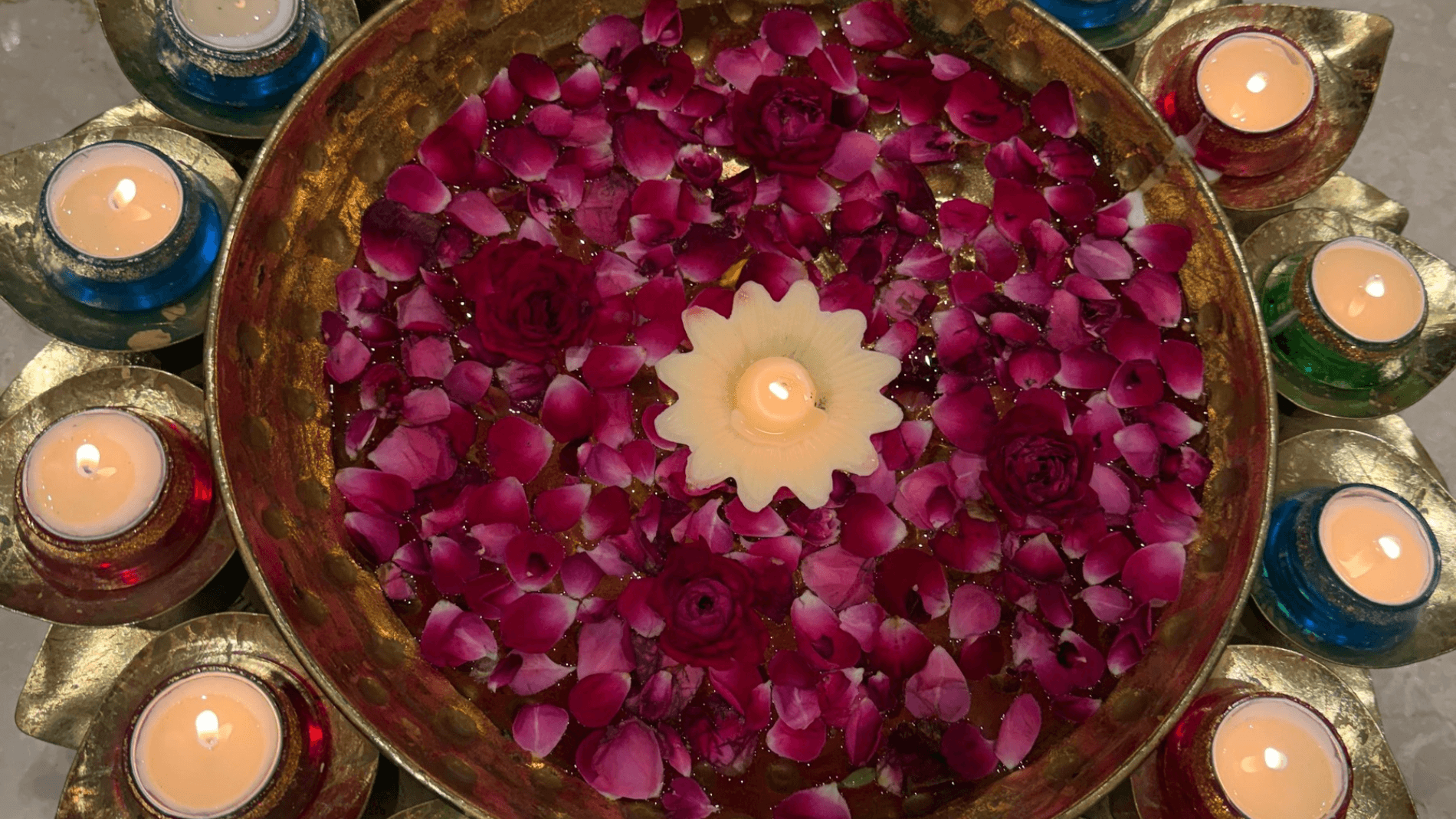
We lit real candles and real diyas, filled with oil and a hand-twisted wick. It took us forever to light the house, and we loved every minute.
What I inherited was not a list of rules. It was a feeling: that a home should be made ready, slowly and by hand, before good things arrive.
The Traditions We Create
Then I married into a Hindu family, and we started again from scratch, just the two of us. Our first Diwali, in Vasant Kunj, had no mandir. There was a small picture on the wall, a few diyas and some flowers. Nobody hands a young couple a blueprint for this. A couple building
a home is also building its calendar, one festival at a time.
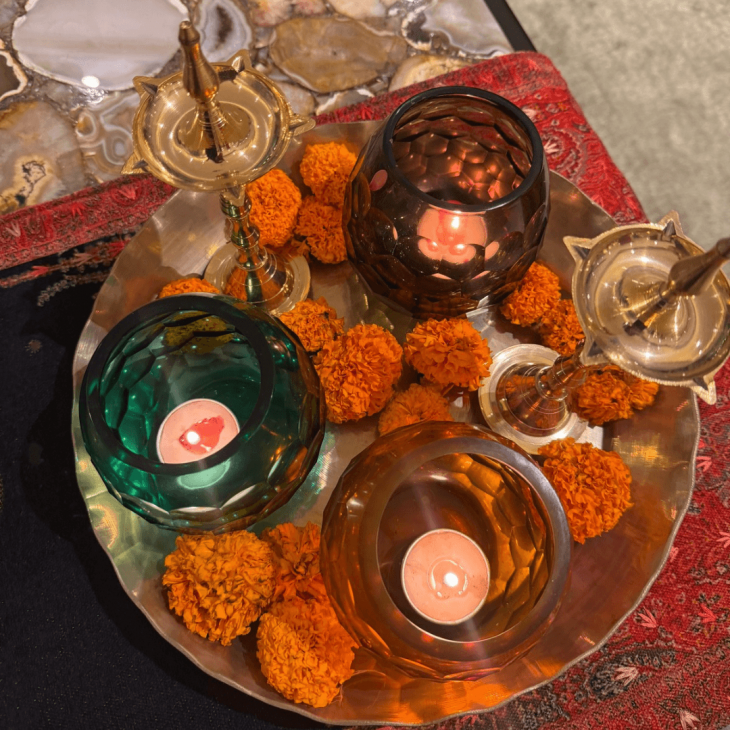
Today there is a mandir at home, fresh flowers, a bandhanwar at the door, brass lamps in little corners and the Lakshmi Puja. I will also be honest about what has changed. The sweets now come from the shop, and electric lights sit beside the diyas. The festival has adapted to the life we live now, and it has not stopped being the festival.
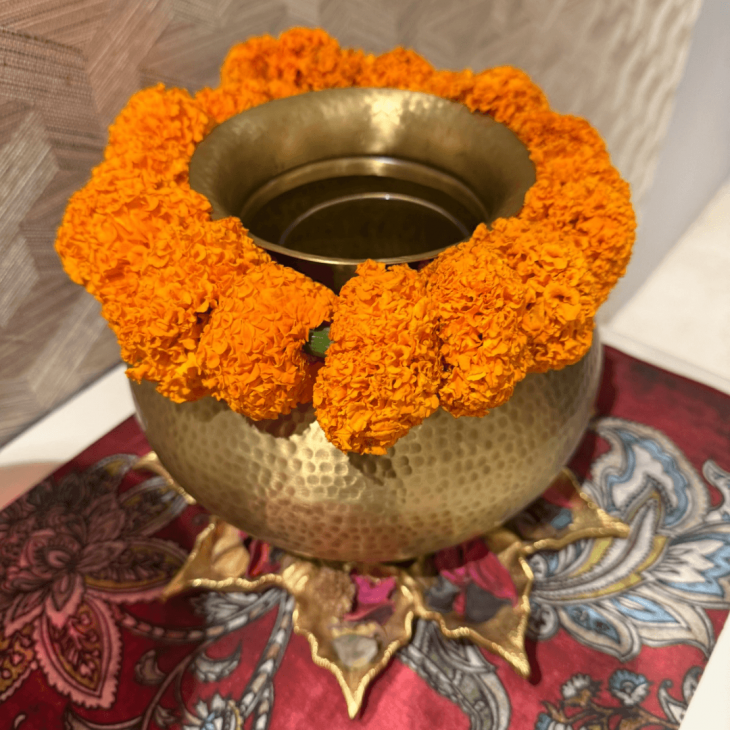
Then there is Dhanteras, the first of the five days of Diwali, when families buy something new, usually gold, silver or utensils, and pray to Lakshmi, Kubera and Dhanvantari. For thirty-three years, every Dhanteras, we have bought a silver coin. It was never a grand plan. It simply became tradition.
That is how most traditions begin. Someone does something once, it feels right, and the next year it is expected.
Ours is not an unusual story. Across India, marriages bring together families with different faiths, regions and habits, and every home that results has to decide what to keep, what to merge and what to let go. Some festivals are doubled, some customs are traded, and some are invented because neither side had them.
Some things have stayed through every change: the clearing of clutter, the flowers, sitting down together, and gifts for friends and for the people who help in our homes.
The Traditions We Pass On
I do not want to give my daughter-in-law a rulebook. I would rather set the tone. If she sees how we do it, and feels what it means, she will understand why. And if she changes something, adds her own family’s customs or drops a step that no longer fits, I would rather see that as the tradition doing its work than as a break in it.
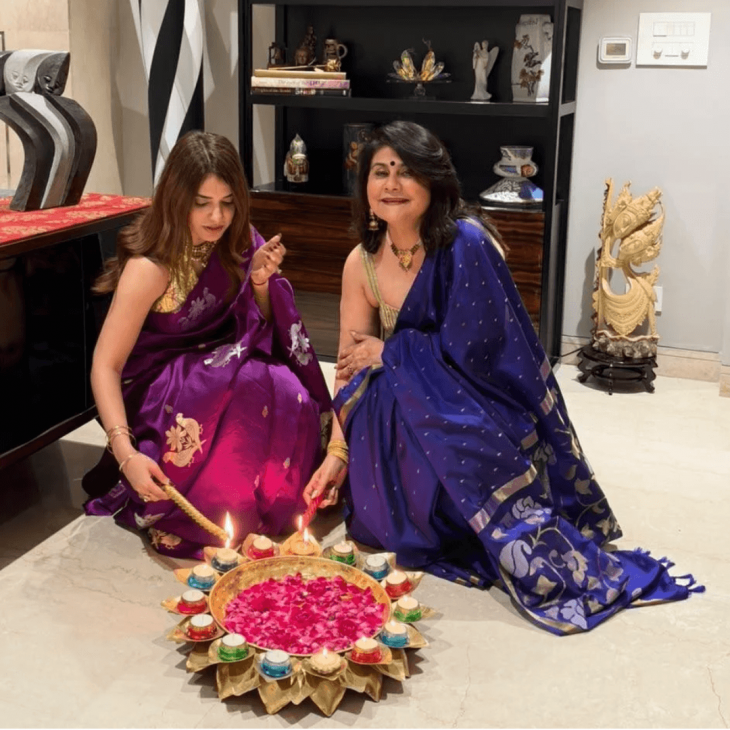
What deserves handing down is not always the most elaborate part. It is usually the small, repeatable thing: the coin, the flower, the clearing of clutter. These survive because they are easy to do and hard to forget.
Every family is a small negotiation between what was handed down and what is chosen. My mother handed me a feeling about clearing space. My husband’s family handed me a set of rituals. Between the two, we made our own. The next generation will do the same with what we give them.
A tradition does not survive because it is enforced. It survives because someone sets the tone, and the next person wants to carry it forward.
Five questions to ask in your own family
Before the next festival, sit down with your mother, your mother-in-law, your children or your partner and ask:
- What did your mother do before a festival that nobody ever explained?
- Which tradition did you carry with you when you left home, and which did you leave behind?
- What have you added that your parents never did?
- What would you be sad to see disappear?
- Who will you tell why you do it, not just how?
The answers are the beginning of a family archive, and the best place to keep a tradition is in the telling of it.
So this festive season, whichever customs you keep, ask where they came from. Then decide, deliberately, what you will hand on.
Share This On Social
About the Author: Sangeeta Relan

Related Posts









I’m Sangeeta Relan—an educator, writer, podcaster, researcher, and the founder of AboutHer. With over 30 years of experience teaching at the university level, I’ve also journeyed through life as a corporate wife, a mother, and now, a storyteller.