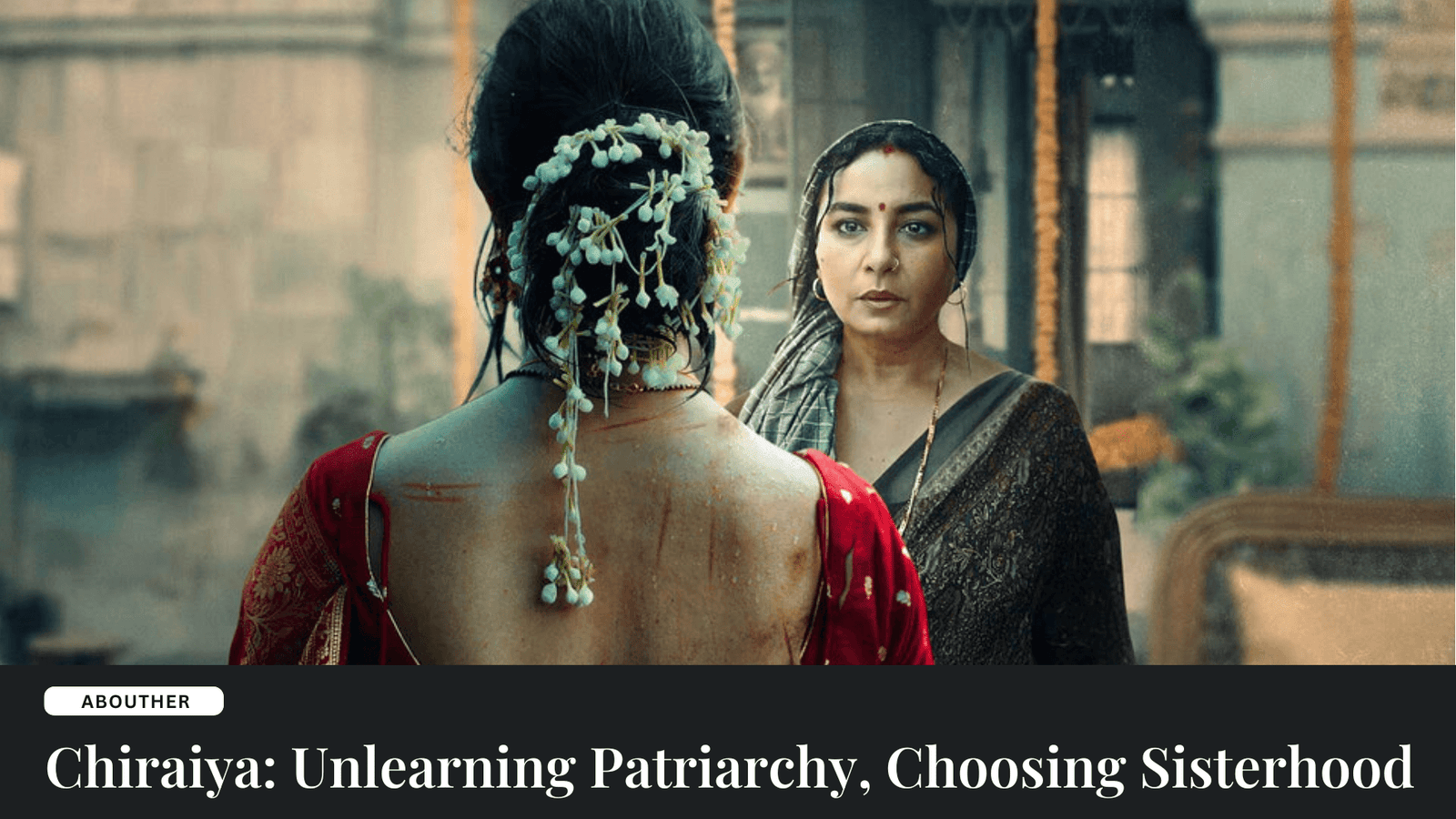
Chiraiya: Unlearning Patriarchy, Choosing Sisterhood
In a time when conversations around gender are shifting from whispers to declarations, Chiraiya emerges as more than just a show, it becomes a reflection of the lives many women continue to live, negotiate, and quietly question.
At the centre is Pooja, whose journey is not marked by rebellion, but by awareness. And that awareness is what makes her story powerful. Because Chiraiya is not about dramatic defiance, it is about subtle awakenings.
Patriarchy: Carried Forward, Not Just Forced
One of the most compelling truths the show brings out is this: patriarchy is not sustained by men alone,it is often carried forward by women themselves.
Within Pooja’s marital home, everyday conversations reveal this deeply ingrained conditioning. When she questions expectations placed on her, the response is not confrontation, but quiet dismissal,“Yeh sab toh chalta hai.”
Then there is Kamlesh, the sister-in-law, educated, aware, and yet unable to truly understand Pooja’s perspective. When Pooja speaks about feeling unheard or wanting emotional space, Kamlesh reduces it to overthinking:
“Itna kya sochna? Sab gharon mein aisa hi hota hai.”
It is in these moments that the show captures something profound: patriarchy survives not just through authority, but through normalization.
“What’s the Big Deal?” The Invisible Barrier
Through Pooja’s husband, Chiraiya presents one of the most nuanced portrayals of modern relationships.
He is not controlling. He is not aggressive. He is, in many ways, a “good man.”
And yet, when Pooja expresses discomfort,whether around emotional neglect, lack of agency, or even consent, his response is confusion:
“Par problem kya hai? Main toh sab theek hi kar raha hoon.”
Also Read: Haq- When Marriage Ends, Do a Woman’s Rights End Too?
This inability to see the issue is what makes the situation so real.
Because the challenge is not always overt patriarchy, it is often the quiet dismissal of a woman’s lived experience. The idea that if something looks normal, it must be normal.
Sisterhood: Beyond Shared Identity
Through Kamlesh, the show explores the complexity of sisterhood.
Being a woman does not automatically mean understanding another woman’s struggle.
Kamlesh does not intend harm. But her inability to empathize reflects how deeply conditioning runs, even among those who seem progressive.
And yet, Chiraiya leaves space for evolution.
Moments where silence turns into reflection.
Where dismissal gives way, however slightly, to understanding.
Sisterhood, the show reminds us, is not automatic, it is intentional.
From Silence to Assertion: The Rise of Awareness
What makes Pooja’s journey deeply relevant is how it mirrors a larger societal shift.
She does not raise her voice dramatically.
She does not break away impulsively.
But she begins to question.
Whether it is around consent within marriage, or the right to express discomfort without being labelled “difficult,” Pooja represents a generation of women who are learning to name what they feel.
This is not rebellion.
This is awareness.
And awareness is transformative.
Male Allies: The Shift That Changes Everything
In true AboutHer ethos, Chiraiya also highlights the importance of male allies.
Through the elder brother, we see a quiet but powerful contrast.
He listens.
He does not dismiss Pooja’s concerns.
He acknowledges that something may be wrong, even if he doesn’t fully understand it.
And that openness matters.
Because change does not come from opposition alone, it comes from men who are willing to unlearn, to question, and to stand alongside.
Why Stories Like Chiraiya Matter
Chiraiya does not rely on grand moments. Its power lies in the everyday.
In the casual dismissal.
In the unspoken expectations.
In the small, internal shifts.
It creates language for what many women feel but cannot always articulate.
It validates experiences that are often brushed aside.
It gently nudges viewers to reflect, not just on others, but on themselves.
At AboutHer, we believe that stories like these don’t just reflect society, they shape it. And in that shaping lies the possibility of a more aware, more equal world.
By Sangeeta Relan
Sangeeta Relan is an educator, writer, podcaster, and founder of AboutHer. Through her work, she brings forward stories that centre women’s voices, lived experiences, and journeys of growth, creating a space for reflection, connection, and inspiration.
Share This On Social
About the Author: Sangeeta Relan

Related Posts








I’m Sangeeta Relan—an educator, writer, podcaster, researcher, and the founder of AboutHer. With over 30 years of experience teaching at the university level, I’ve also journeyed through life as a corporate wife, a mother, and now, a storyteller.