The Inner Compass: How to Find Your Way Back to Yourself
FINDING YOURSELF
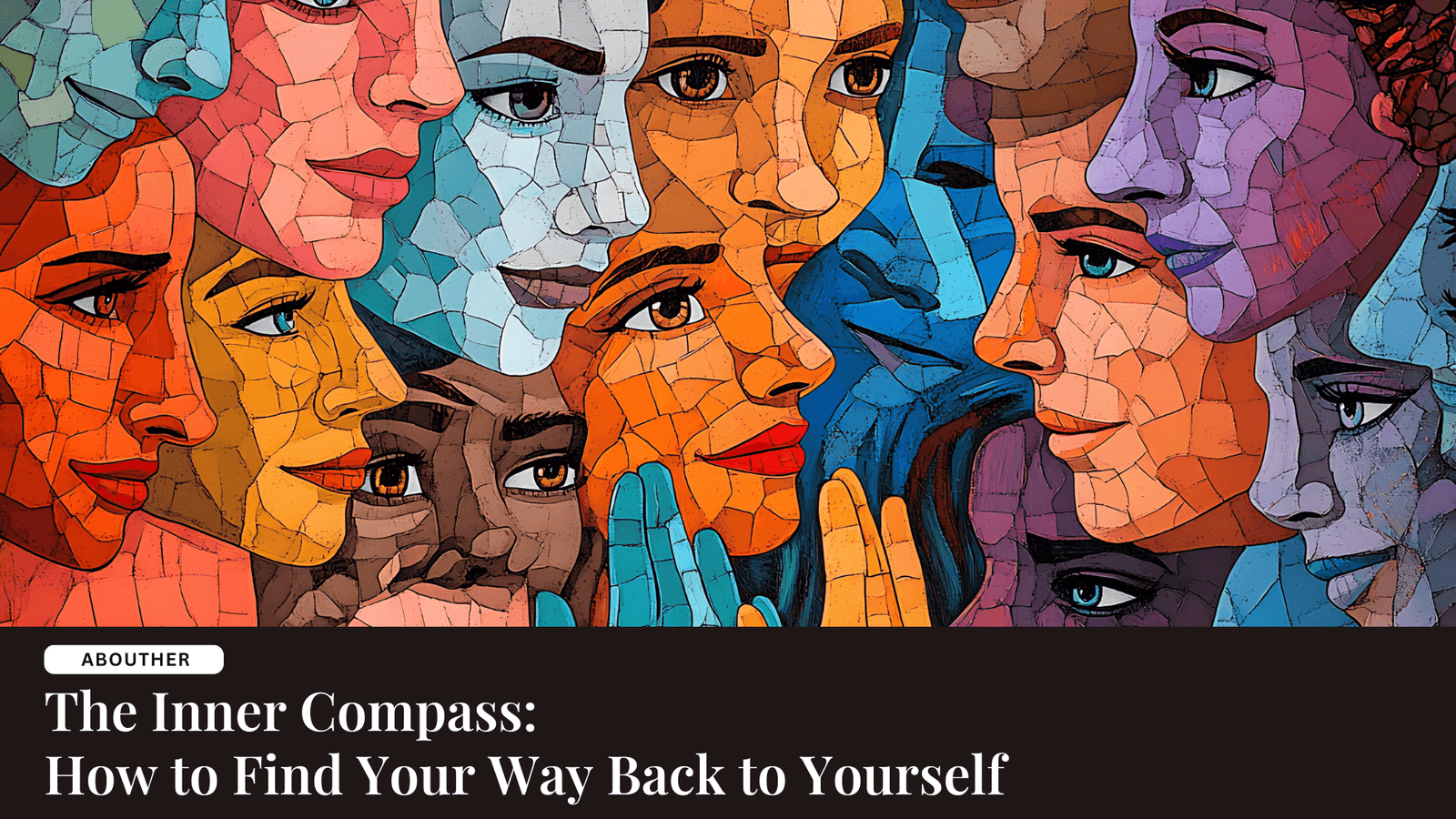
The Inner Compass: How to Find Your Way Back to Yourself
A new monthly column on the emotional patterns that quietly shape our lives, and how we begin listening to ourselves again.
Long before GPS, maps on our phones, or satellite navigation, explorers relied on one simple instrument to find their way: the compass. Although its origins can be traced back to ancient China over 2,000 years ago, the compass wasn’t initially created for navigation. Early magnetic compasses were used for divination and understanding the natural world. It was only centuries later that sailors began using it to navigate vast oceans, allowing them to travel even when the sky was cloudy, familiar landmarks had disappeared, and the destination wasn’t yet visible.
The compass did something extraordinary. It didn’t remove the storm. It didn’t calm the sea. It didn’t shorten the journey. It simply helped people stay oriented.
I often think that’s exactly what we need emotionally. We spend so much of our lives looking outward: for answers, validation, reassurance, certainty. We ask friends what they think, search online for advice, compare ourselves to others, and wait for someone to tell us what the “right” decision is. Somewhere along the way, many of us stop asking ourselves a far more important question: what feels true to me? That quiet, inner knowing is what I like to call our inner compass.
It reminds you who you are beneath your roles, achievements, expectations, and the noise of the outside world.
Your inner compass is the part of you that helps you distinguish fear from intuition, conditioning from values, people-pleasing from genuine kindness. Like a real compass, it doesn’t promise an easy journey. It won’t eliminate uncertainty or prevent life’s storms. But it can help you stay aligned with yourself, even when life feels confusing. The challenge is that many of us lose touch with it.
Also Read- The Invisible Emotional Burden Indian Women Carry, and Why It Often Begins in Childhood.
Sometimes it happens because we grew up learning that other people’s needs mattered more than our own. Sometimes we were praised for being agreeable, successful, or “good,” but rarely encouraged to understand what we truly felt. Sometimes painful experiences taught us not to trust ourselves. Over time, our decisions become guided by fear, approval, guilt, or habit rather than by our own inner direction.
But it doesn’t have to be that way. Your inner compass isn’t broken. It has simply gotten lost in the noise, and it grows stronger the moment you pause and tune back in.
Just as a compass becomes useful only when we learn how to read it, our inner compass becomes stronger the more we pause, reflect, and listen. That is what this column is about. Each month, we’ll explore one emotional pattern that quietly shapes our lives: people-pleasing, perfectionism, burnout, loneliness, boundaries, self-worth, relationships. We’ll understand what’s happening beneath the surface, why these patterns develop, and how we can begin moving towards a life that feels more authentic and intentional.
Not because change begins with fixing ourselves. But because lasting change begins with understanding ourselves.
REFLECTION CORNER
Before our next conversation
I’d like to leave you with three questions. Sit with them. You don’t need an answer right away.
1. When was the last time I decided because it genuinely felt right to me, rather than because I felt I should?
2. In which areas of my life am I following someone else’s expectations more than my own values?
3. If I trusted myself just a little more, what is one small decision I would make differently this week?
Sometimes, finding your way isn’t about searching for a new direction. It’s about learning to listen to the one that’s been quietly guiding you all along.
Share This On Social
About the Author: Damini Grover

Related Posts










I’m Sangeeta Relan—an educator, writer, podcaster, researcher, and the founder of AboutHer. With over 30 years of experience teaching at the university level, I’ve also journeyed through life as a corporate wife, a mother, and now, a storyteller.