The Women Who Went First – Part 28
AboutHer
STORIES. WOMEN. NOW.
THE WOMEN WHO WENT FIRST ✦ CONTEMPORARY
PORTRAIT · ISSUE NO. 28
Menaka
Guruswamy
Guruswamy
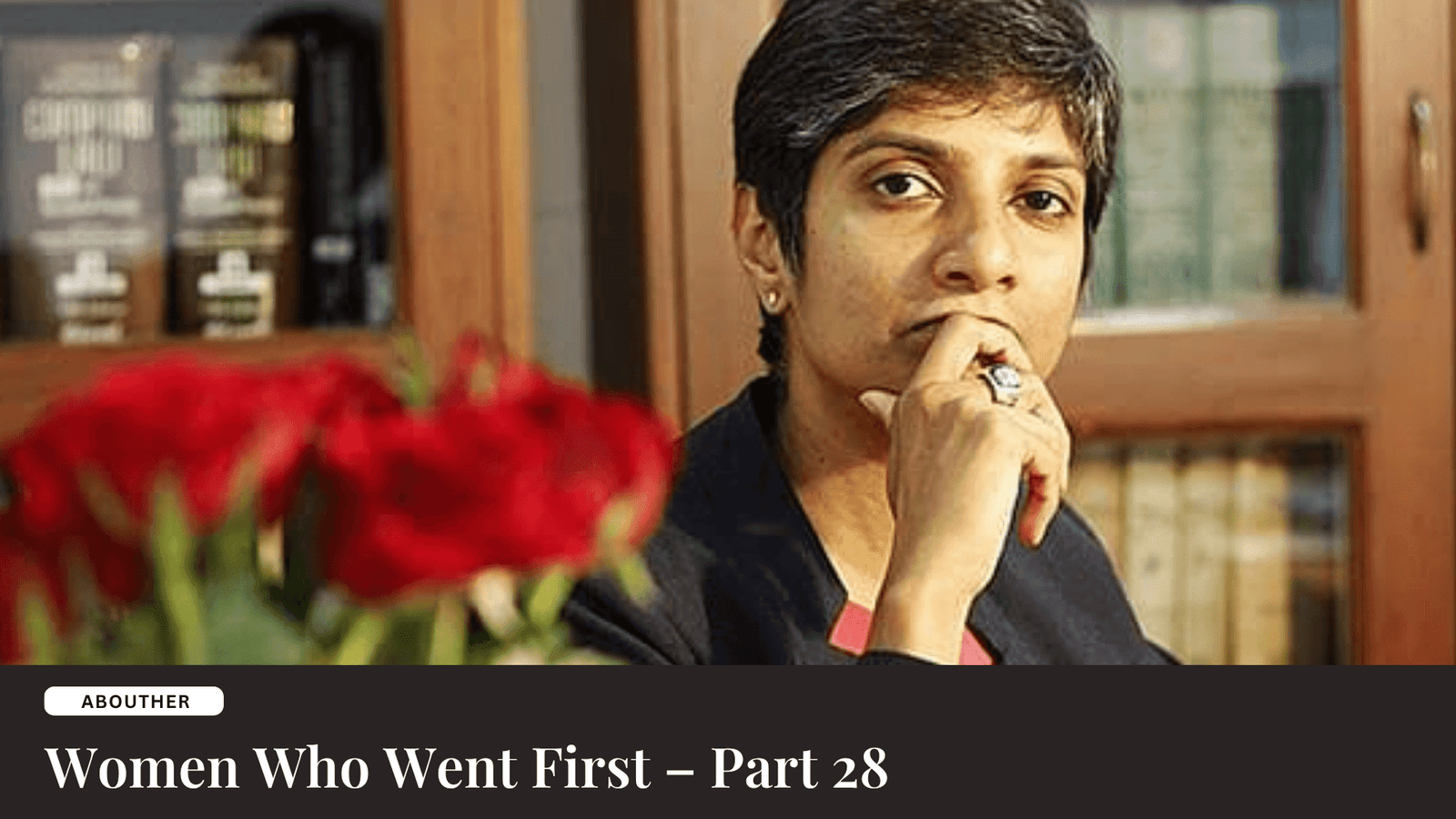
On 6 September 2018 the Supreme Court of India struck down Section 377, decriminalising homosexuality. The argument that changed the court’s mind was made by Menaka Guruswamy. She did not argue a legal abstraction. She argued for the lives of real people, by name, in one of the most consequential courts in the world.
On 6 September 2018, Menaka Guruswamy stood before the Supreme Court of India and made an argument that changed what the law meant for millions of people. She was arguing for the striking down of Section 377 of the Indian Penal Code, the colonial-era provision that criminalised same-sex relations. The court was persuaded. Section 377 was struck down unanimously. Millions of Indians went to bed that night as criminals and woke up as citizens. Menaka Guruswamy was the lawyer who argued the case that made the difference.
WHO SHE IS
Menaka Guruswamy was born in 1973 and educated at the National Law School of India University in Bangalore, followed by graduate study at Oxford and Columbia. She practised at the Supreme Court and became one of the most respected constitutional lawyers of her generation, known for taking on cases that combined legal complexity with genuine human consequence. She is a Senior Advocate, one of the highest designations in the Indian legal profession.
She is also, personally, a member of the community whose rights she argued for in the Section 377 case. She came out publicly in the aftermath of the verdict, and she has spoken about the relationship between her personal experience and her legal commitment with a clarity that has made her one of the most significant public voices on LGBTQ rights in India.
THE ARGUMENT THAT CHANGED INDIA
SUPREME COURT OF INDIA, SECTION 377, 2018
Section 377 of the Indian Penal Code was a Victorian-era provision introduced by the British in 1861 that criminalised sexual acts against the order of nature, effectively making same-sex relations a criminal offence punishable by up to life imprisonment. The second Supreme Court challenge resulted in the unanimous five-judge bench ruling of September 2018 that Section 377 was unconstitutional. Guruswamy’s argument was notable for its combination of constitutional rigour and human immediacy. She named her clients. She described their lives. She asked the court to understand not merely the legal question but the human reality that the legal question contained. The bench, in its judgment, used language that went beyond the narrow legal question into a broader affirmation of the dignity and humanity of LGBTQ Indians.
“My Lords, we are not merely arguing a legal question. We are asking this court to see our clients as full human beings, entitled to the same dignity and the same love as everyone else.”
MENAKA GURUSWAMY, SUPREME COURT OF INDIA, 2018
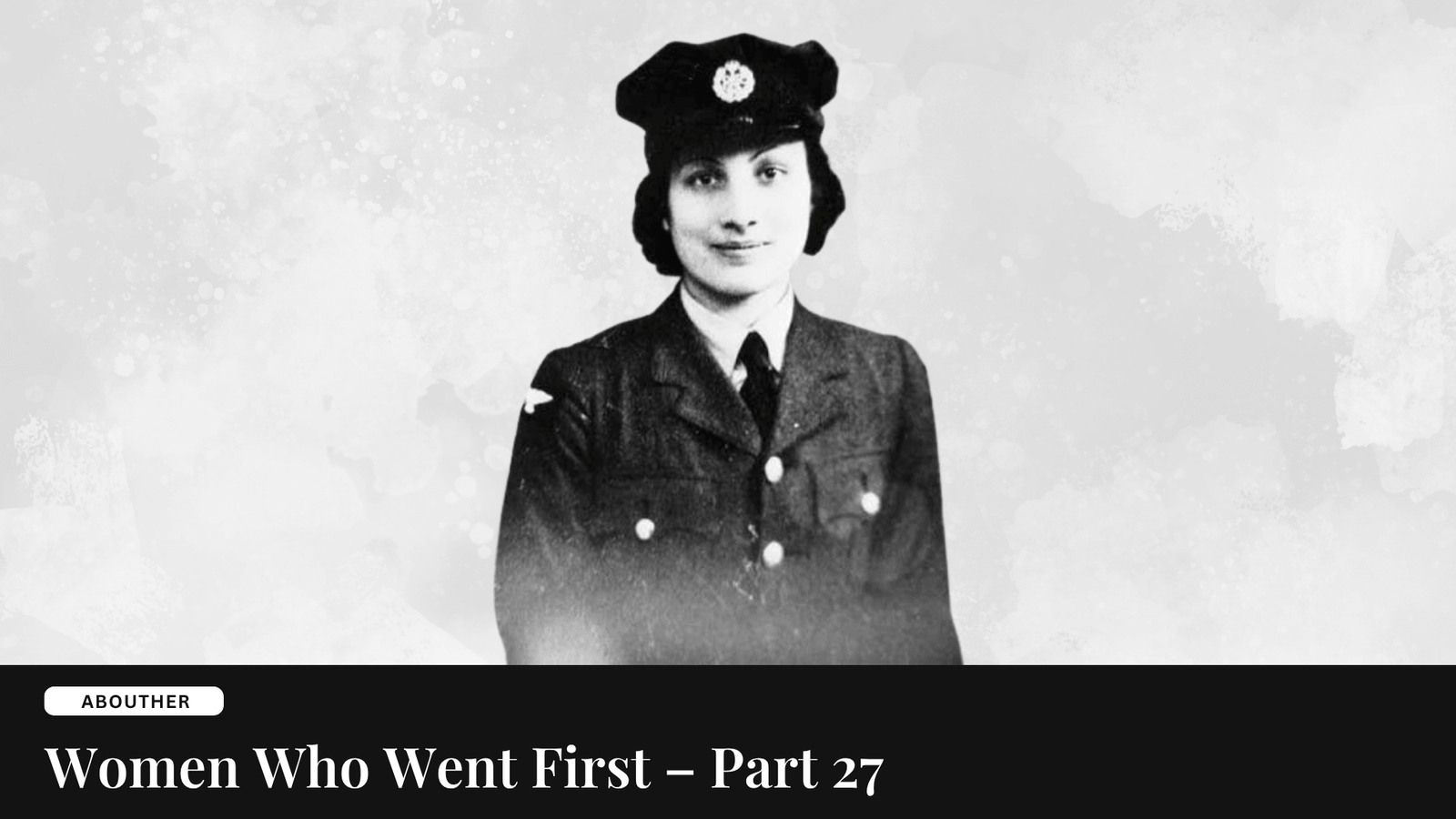
Also Read: The Women Who Went First – Part 27
HOW SHE ARGUED IT
Menaka Guruswamy’s approach in the Section 377 case was deliberately and strategically human. She presented petitioners not as abstract rights-holders but as specific people with names and lives and loves and careers and families who were being told by the state that those lives were criminal. She spoke about IIT graduates who had left India because they could not be themselves at home. She spoke about the daily reality of fear, of blackmail, of violence, of the psychological damage done by being classified as a criminal for the most intimate aspects of who you are. By insisting on the human dimension of the case at every point, Guruswamy made it impossible for the bench to treat the question as purely abstract. The judgment that followed reflected that insistence.
THE CORNELIA SORABJI CONNECTION
CORNELIA SORABJI AND MENAKA GURUSWAMY: A CENTURY APART
This series featured Cornelia Sorabji in its early issues: the first woman to sit the Bachelor of Civil Laws examination at Oxford in 1892, the first woman to practise law in India, who spent her career arguing for the rights of women in purdah who had no other legal voice. Menaka Guruswamy is her contemporary inheritor, a woman who has used the highest legal platform in India to argue for the rights of people whom the law had classified as criminals. Both women chose law as their instrument of change. Both understood that the courtroom is one of the most powerful spaces available to those who want to expand the boundaries of who is included in the protection of the state. A century separates them. The conviction is identical.
WHY SHE BELONGS IN THIS SERIES
The Women Who Went First has told stories of women who went first into institutions, into space, into courts, and into hostile territory. Menaka Guruswamy went first into the Supreme Court of India with an argument that millions of people needed someone to make, and she made it in a way that could not be dismissed or reduced to anything less than what it was: a complete, rigorous, human argument that the Constitution of India meant what it said about the dignity of every citizen.
She belongs here because of Cornelia Sorabji, whose story this series told at the beginning. A century of Indian women in law, from the first to be permitted to sit the bar examination to the one who argued the case that gave millions of Indians their constitutional rights back. The arc between those two women is the arc of what persistence in the law, across generations, actually produces.
She belongs here because of what she did after the verdict. Coming out publicly, in India, as a prominent lawyer, knowing that the visibility would invite scrutiny and the specific hostility that public figures who speak about LGBTQ rights still face, was its own act of going first. She had argued the case for others. She then placed herself inside it. That completeness is what makes her story more than a legal triumph. It is a human one.
“She argued for the lives of real people, by name, before the highest court in the land, and the court was persuaded. Millions of Indians went to bed that night as criminals and woke up as citizens.”
THE WOMEN WHO WENT FIRST · ABOUTHER MAGAZINE
Share This On Social
About the Author: Sangeeta Relan

Related Posts




I’m Sangeeta Relan—an educator, writer, podcaster, researcher, and the founder of AboutHer. With over 30 years of experience teaching at the university level, I’ve also journeyed through life as a corporate wife, a mother, and now, a storyteller.