The Women Who Went First – Part 11
THE WOMEN WHO WENT FIRST ✦ FROM THE PAST
PORTRAIT · ISSUE NO. 11
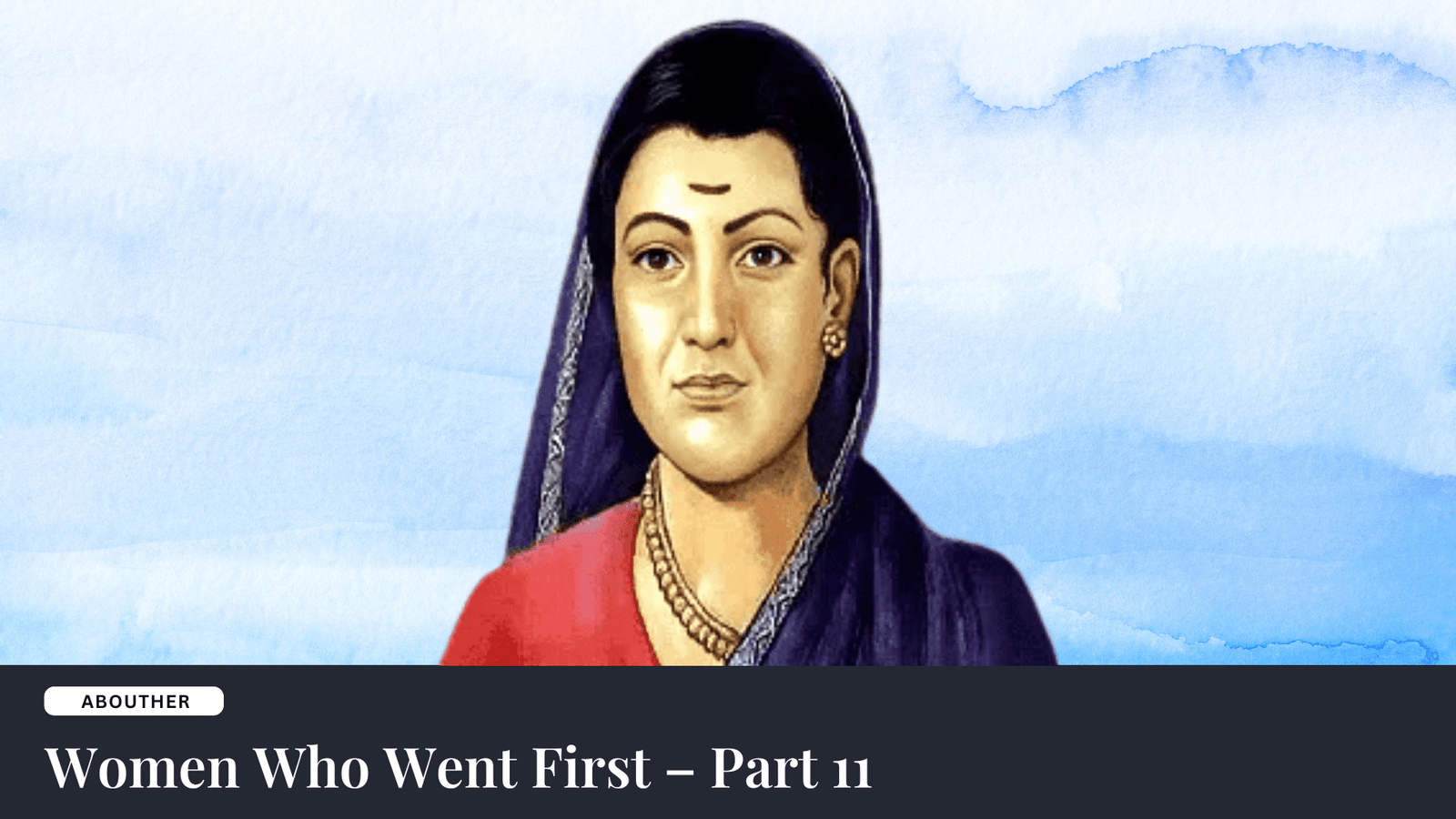
Savitribai
Phule
Phule
Every morning she walked to school while people threw stones and dung at her. She carried a spare sari in her bag, changed when she arrived, and began teaching. She did this for years.
There is a detail about Savitribai Phule’s daily walk to school that stops you cold when you hear it. Each morning, as she made her way through Pune to the school she and her husband Jyotirao had opened for girls of lower castes, people along the route threw mud, stones, and dung at her. This was not occasional. It was organised opposition, a community’s fury at the idea that a woman, from a low-caste family, had the right to teach other women to read. Savitribai’s response was practical and complete. She carried a spare sari in her bag, changed when she arrived, taught her students, and walked home again. She did this every day for years. India’s first female teacher was not celebrated. She was pelted. She went anyway.
A MARRIAGE THAT CHANGED HISTORY
Savitribai was born in 1831 in Naigaon, a village in Maharashtra, into a family of the Mali caste. She was married at nine to Jyotirao Phule, who was twelve. Child marriage was the norm. What was not the norm was what happened next. Jyotirao, who would become one of the great social reformers of 19th century India, believed with absolute conviction that education was the only instrument capable of dismantling caste oppression, and that women’s education was the sharpest edge of that instrument. He taught Savitribai to read and write himself, and she proved to be not merely an apt student but an exceptional thinker in her own right.
The partnership they built over the following decades was one of complete intellectual and moral equality, which was itself a radical act in the India of their time. She was not his helpmate. She was his collaborator, and often the more determined of the two.
THE SCHOOL AT BHIDE WADA
PUNE, 1848 — INDIA’S FIRST SCHOOL FOR GIRLS
On 3 January 1848, Savitribai Phule and Jyotirao Phule opened a school for girls at Bhide Wada in Pune. Savitribai was seventeen years old. The school was the first of its kind in India, specifically designed to educate girls from lower castes who had been systematically excluded from learning. She taught the first class herself. By the end of that year they had opened a second school. By 1851 they were running three schools with over 150 students. The opposition they faced from upper-caste communities was sustained and sometimes violent. They continued regardless.
What Savitribai understood, and what made her dangerous to those invested in the existing order, was that literacy is not merely a skill. It is access. A woman who can read can read a contract, a law, a land deed. She can write a complaint. She can teach her children. She can know, and knowledge in the hands of those who have been deliberately kept ignorant is among the most destabilising forces a society can produce. The people throwing stones at Savitribai on her way to school understood this perfectly well. That is why they threw them.
THE POET NOBODY TAUGHT YOU ABOUT
Savitribai was also a poet, and her poetry is as direct and unadorned as her life. She wrote in Marathi, in a voice that had no patience for the ornamentation that 19th century literary culture expected of women. She wrote about caste, about the lives of women, about the obligation to learn and to resist. Her first collection, Kavya Phule, was published in 1854 when she was twenty-three. A second collection followed.
Also Read: The Women Who Went First – Part 10
FROM KAVYA PHULE, 1854
“Go, get education
Be self-reliant, be industrious
Work, gather wisdom and riches
All gets lost without knowledge
We become animal without wisdom
Sit idle no more, go, get education
End misery of the oppressed and forsaken
You’ve got a golden chance to learn
So learn and break the chains of caste.”
She is one of the earliest published women poets in the Marathi language. This fact is not widely taught. She tends to appear, when she appears at all, as a footnote to Jyotirao’s story, which tells you something about how history processes women who do not perform the role of wife as secondary character.
BEYOND THE CLASSROOM
Savitribai’s work extended well beyond education. She and Jyotirao opened their home as a refuge for pregnant women from upper castes who faced social ostracism, running what was essentially an early women’s shelter and maternity home. She campaigned against the practice of killing infant daughters. She worked for the rights of widows at a time when widowhood in upper-caste Hindu society meant a life of social death. She set up a care centre during the plague epidemic that swept Pune in 1897, nursing the sick regardless of caste. She contracted plague herself while caring for patients and died the same year, still working.
18
SCHOOLS OPENED BY
SAVITRIBAI AND JYOTIRAO
BY 1852
1848
YEAR INDIA’S FIRST
SCHOOL FOR GIRLS WAS
OPENED IN PUNE
2
POETRY COLLECTIONS
PUBLISHED IN HER
LIFETIME
WHAT HISTORY DID WITH HER
Savitribai Phule died in 1897 and spent most of the following century in the margins of official history. The nationalist movement had its own preferred heroines, and a low-caste woman from Maharashtra who had spent her life arguing that caste was the central wound of Indian society did not fit neatly into the story that post-independence India preferred to tell about itself. She was not entirely forgotten, but she was consistently understated, her work folded into her husband’s biography rather than given the independent standing it deserved.
This has been changing. Her birthday, 3 January, is now observed as Teachers’ Day in Maharashtra. Her image appears on a postage stamp. Universities and institutions carry her name. The recovery of her legacy is ongoing and, given what she actually did, still incomplete.
WHY SHE BELONGS IN THIS SERIES
Every woman in this series went somewhere she was not supposed to go. Savitribai Phule went there on foot, through a gauntlet, carrying a spare sari, at seventeen years old, in 1848. The physical reality of that walk is worth sitting with. There was no abstraction in her resistance, no distance between the idea and the consequence. The opposition was immediate, personal, and daily. She walked through it anyway.
She also did something this series has not yet fully celebrated: she built for others from the very beginning. Every school she opened was for children who had been told, by caste and custom and centuries of structural exclusion, that learning was not for them. She did not go first for herself. She went first so that others could follow, and she kept going because the work was not finished, and because she understood, more clearly than almost anyone of her time, that it would not finish itself.
That is what a first looks like when it is done with full moral seriousness. Not a trophy. A door, held open, in all weather, for as long as it takes.
“She did not go first for herself. She went first so that others could follow, and she kept going because the work was not finished.”
THE WOMEN WHO WENT FIRST · ABOUTHER MAGAZINE
Share This On Social
About the Author: Sangeeta Relan

Related Posts



I’m Sangeeta Relan—an educator, writer, podcaster, researcher, and the founder of AboutHer. With over 30 years of experience teaching at the university level, I’ve also journeyed through life as a corporate wife, a mother, and now, a storyteller.