The Women Who Went First – Part 5
STORIES. WOMEN. NOW.
THE WOMEN WHO WENT FIRST ✦ FROM THE PAST
PORTRAIT · ISSUE NO. 05
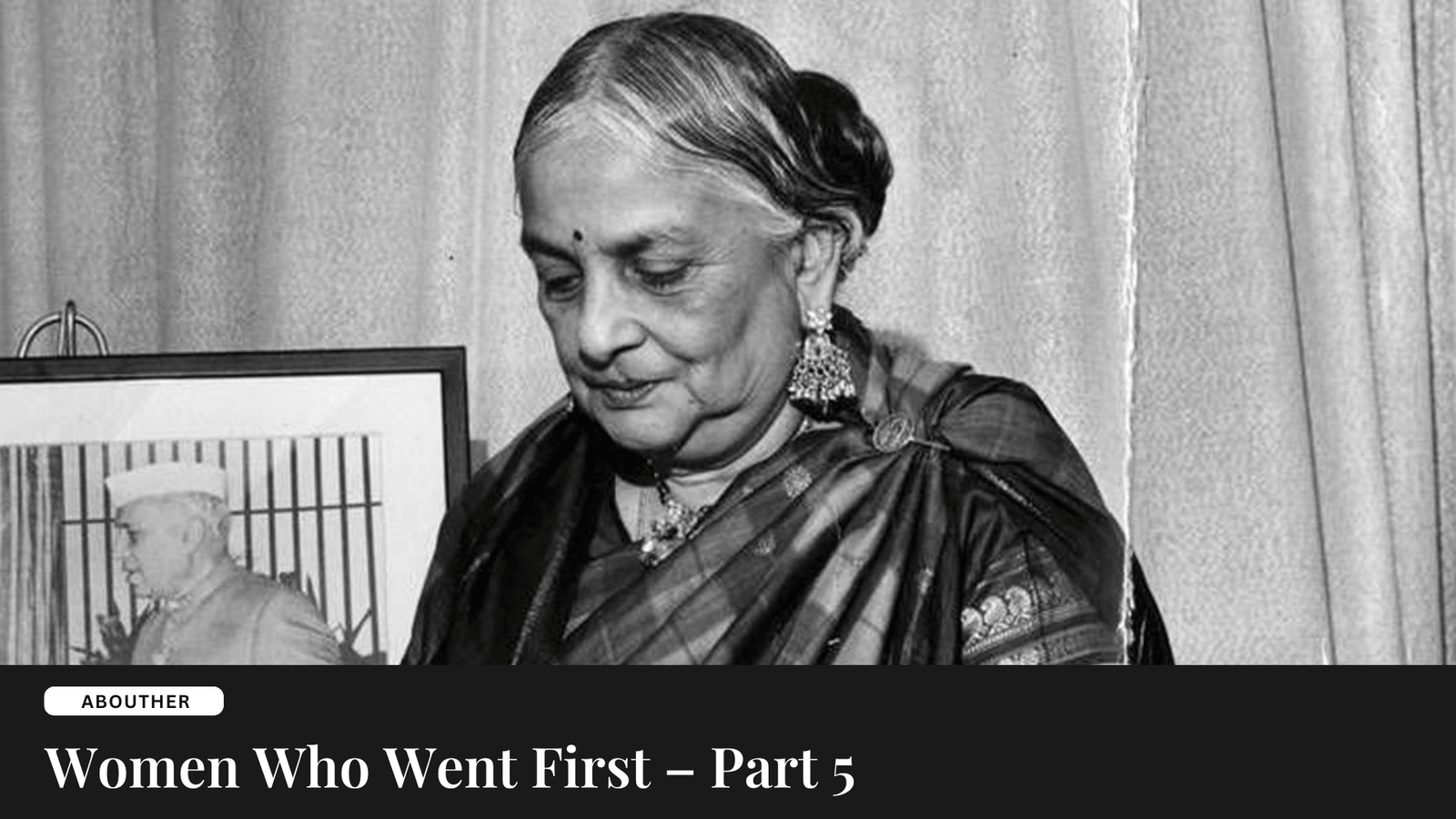
Kamaladevi
Chattopadhyay
Chattopadhyay
1903 – 1988
She did not just break barriers. She built the institutions that made sure others wouldn’t have to.
In a country still finding its feet after independence, one woman was quietly doing the work of ten ministries. Kamaladevi Chattopadhyay — freedom fighter, feminist, playwright, craft revivalist, cooperative pioneer — led a life so full it seems implausible that it belonged to a single person. Yet what is most striking about her is not the breadth of what she did, but the philosophy that threaded it all together: the belief that a nation’s true wealth lives in the hands of its people, and that women are not beneficiaries of progress but its architects.
— THE MAKING OF A RADICAL
Born in 1903 in Mangalore into a progressive Saraswat Brahmin family, Kamaladevi lost her father young and was widowed at fourteen — a grief that could have swallowed her entirely. Instead, it seems to have sharpened something in her. She pursued education with fierce determination, eventually studying at Bedford College in London and later at the London School of Economics, absorbing ideas about socialism, cooperative economics, and women’s rights that she would spend the rest of her life putting into practice on Indian soil.
By her twenties she had joined the Indian National Congress, not as a peripheral supporter but as an active agitator. She was one of the first women to court arrest during the Civil Disobedience Movement. In 1926, she became the first woman in India to stand for election to a legislative assembly — she lost by a narrow margin, but the act itself was a statement that reverberated far beyond the ballot count.
“Women must cease to be merely an audience to be harangued and become participants in the great drama of national life.”
— KAMALADEVI CHATTOPADHYAY
— THE FEMINIST BEFORE THE WORD WAS COMMON
Kamaladevi’s feminism was structural, not sentimental. She understood that women’s liberation was not a question of attitude but of economic independence. Long before the language of gender mainstreaming entered policy circles, she was making the argument in practice: put tools in women’s hands, put money in their accounts, and watch what happens to a community.
She helped found and lead the All India Women’s Conference, pushing it beyond social welfare into territory that made many uncomfortable — property rights, remarriage, the dismantling of purdah. She was not polite about it. She believed that the liberation of women was inseparable from the liberation of India, and she said so, loudly, at a time when nationalist men were often content to treat women’s equality as something to be addressed after independence, if at all.
Also Read: Starting at 50, Building a Billion- Falguni Nayar and the Power of Reinvention
Her personal life reflected her convictions. She was married twice — her second husband, the poet Harindranath Chattopadhyay, shared her artistic sensibilities but not always her ideological discipline. She lived and worked largely on her own terms, which for a woman of her era was itself a form of quiet revolution.
— THE WOMAN WHO SAVED INDIA’S CRAFTS
After independence, when others were debating foreign policy and five-year plans, Kamaladevi turned her attention to something that seemed, to some, almost quaint: the dying craft traditions of India. She saw what others missed — that these were not hobbies or heritage curios but living industries, and that the artisans who practised them, many of them women, were being pushed to the margins by industrialisation and neglect.
She founded the All India Handicrafts Board in 1952 and transformed it from a bureaucratic afterthought into a genuine engine of artisan welfare. She helped establish the Cottage Industries Emporium. She travelled the length and breadth of the country — documenting, connecting, advocating, creating markets where none existed. She understood that craft was culture, and that culture was dignity, and that dignity was economics. The logic was elegant and completely her own.
— THEATRE, CULTURE, AND THE POLITICS OF BEAUTY
Kamaladevi believed profoundly in the arts — not as ornament but as infrastructure. A people who have lost their aesthetic traditions have lost something essential about themselves, she argued. This conviction led her to co-found the Sangeet Natak Akademi, India’s national academy for the performing arts, and to play a decisive role in the establishment of the National School of Drama. These were not vanity projects. They were acts of nation-building of a kind that economic planning alone could not accomplish.
She was herself a playwright and a writer, and she brought to her institutional work a sensibility that was rare among administrators: she actually cared about the things she was administering. The result was institutions with soul — places that took seriously the idea that art was not a luxury for a developing nation but a necessity.
“She understood that craft was culture, that culture was dignity, and that dignity was economics. The logic was entirely her own.”
— THE COOPERATIVE VISION
Perhaps her least celebrated but most consequential contribution was her work on cooperative economics. After the partition of 1947, millions of refugees poured into India with nothing. Kamaladevi led efforts to rehabilitate them — not through charity, but through organised production. She helped set up weaver cooperatives, craft cooperatives, producer groups that gave displaced people not just income but agency.
The model she championed — collective ownership, fair distribution, women as economic actors rather than dependents — was decades ahead of what development economists would eventually formalise as best practice. She was doing it on the ground in the 1950s, without the vocabulary, with nothing but conviction and organisational genius.
— RECOGNITION, EVENTUALLY
The Padma Bhushan came in 1955. The Sangeet Natak Akademi Ratna in 1974. The Ramon Magsaysay Award — Asia’s equivalent of the Nobel — in 1966. The Padma Vibhushan in 1987, a year before she died. The honours were real, but they always felt like they were catching up to her rather than marking her out.
She died in 1988 at eighty-five, still working, still writing, still insisting that the work was not finished. She was right. It isn’t.
✦ ✦ ✦
— WHY SHE BELONGS IN THIS SERIES
The women we tend to celebrate as firsts are usually firsts in a narrow sense — first to hold a title, first to cross a finish line. Kamaladevi was a first in a harder sense: first to conceive of what was possible and then build it from scratch. She did not wait for institutions to welcome her. She created the institutions. That is a different, rarer kind of leadership, and it is one that India has never fully reckoned with.
She also refused the false choice between public life and private conviction. She was simultaneously a nationalist, a feminist, an artist, an economist, and an institution-builder. She didn’t choose between these identities because she understood, perhaps better than anyone of her generation, that they were all the same project.
In a series about women who went first, Kamaladevi Chattopadhyay is the one who didn’t just walk through doors — she built the entire building.
“She did not wait for institutions to welcome her. She created the institutions. That is a different, rarer kind of leadership.”
THE WOMEN WHO WENT FIRST · ABOUTHER MAGAZINE
Share This On Social
About the Author: Sangeeta Relan

Related Posts
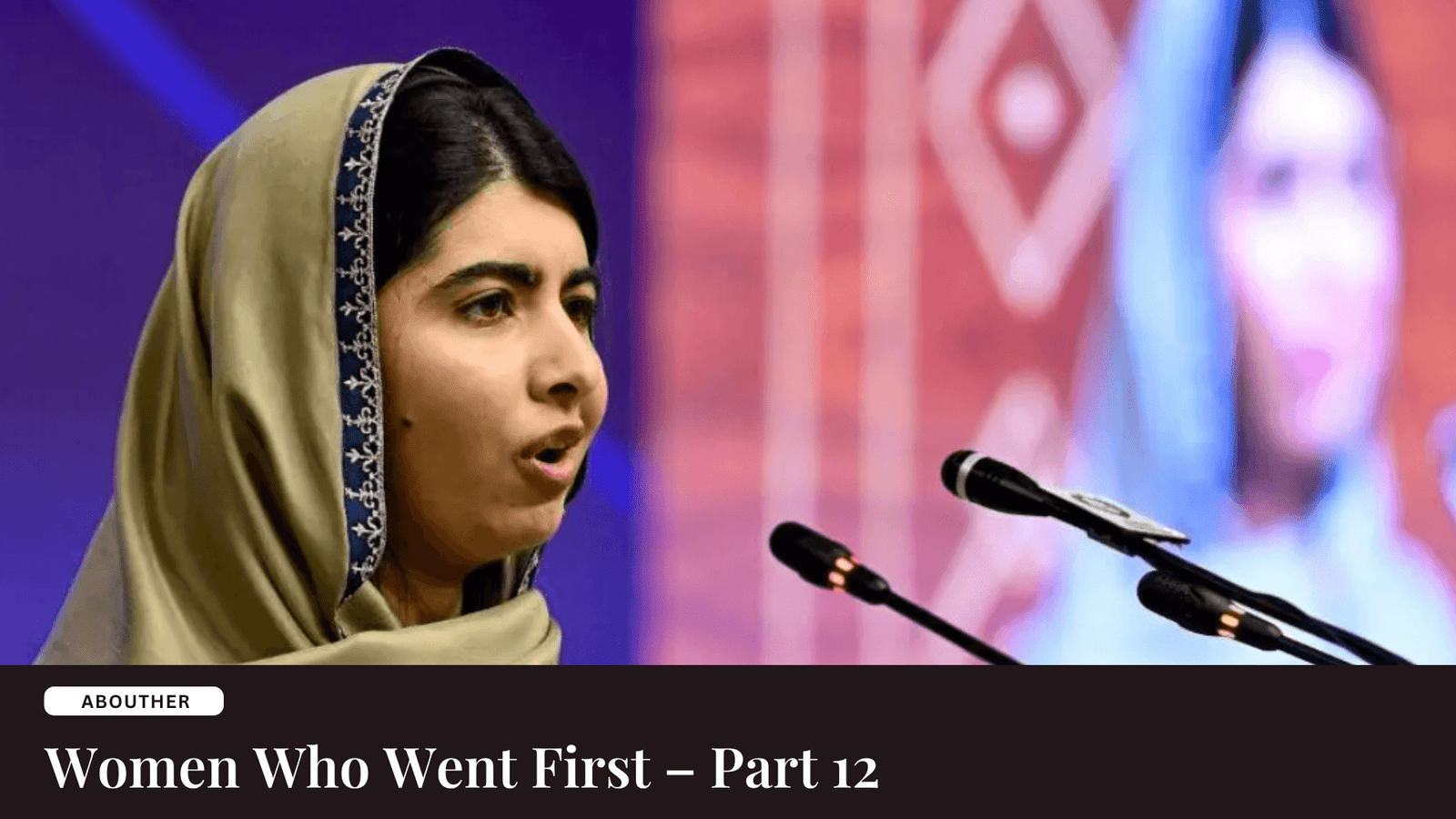



I’m Sangeeta Relan—an educator, writer, podcaster, researcher, and the founder of AboutHer. With over 30 years of experience teaching at the university level, I’ve also journeyed through life as a corporate wife, a mother, and now, a storyteller.