
The Women Who Went First – Part 34
ISSUE 34 | THE WOMEN WHO WENT FIRST
CONTEMPORARY PORTRAIT
Ritu
Karidhal
Karidhal
BORN 1975, LUCKNOW
India reached Mars on its first attempt, at a cost lower than most Hollywood films about space. A woman from Lucknow was running the mission.
On 24 September 2014, the Indian Space Research Organisation’s Mars Orbiter Mission entered Mars orbit. India became the first country in the world to reach Mars on its first attempt, and the first Asian nation to do so at all. The control room in Bengaluru erupted. The scientists who had built the mission, many of them women in bright sarees, embraced each other. One of them was Ritu Karidhal, the deputy operations director of the mission. She had been working toward this moment for years. She sat down quietly and let the numbers confirm what she already knew: it had worked.
Ritu Karidhal grew up in Lucknow, in a family where her father encouraged her curiosity about how things worked. She studied physics and went on to complete a Master’s degree in aerospace engineering from the Indian Institute of Science in Bengaluru. She joined ISRO in 1997. She has been there ever since, working her way through projects with the kind of steady, unglamorous competence that space science requires and rarely rewards with public attention.
Until Mangalyaan. Until Mars.
The Mission
The Mars Orbiter Mission, nicknamed Mangalyaan (meaning “Mars craft” in Sanskrit), was conceived in 2012 and launched in November 2013. It was designed as a technology demonstrator: could India build a spacecraft capable of interplanetary travel, launch it on a budget fraction of what NASA or ESA would spend, and get it into orbit around another planet? The answer, delivered on that September morning in 2014, was yes.
The budget was approximately 450 crore rupees, roughly 74 million US dollars at the time. The film Gravity, a Hollywood production about space that released in 2013, cost around 100 million dollars to make. India reached Mars for less than it cost to film Sandra Bullock floating in a studio.
₹450 CR
TOTAL MISSION BUDGET
1st
COUNTRY TO REACH MARS ON FIRST ATTEMPT
300M+
KILOMETRES FROM EARTH AT ORBIT INSERTION
Ritu Karidhal’s role as deputy operations director meant she was responsible for the autonomous function of the spacecraft: its ability to make decisions on its own when the 20-minute communication delay between Earth and Mars made human instruction impossible. She wrote the algorithms that told the spacecraft what to do when it could not ask anyone. She built the systems that let it think for itself.
“When the signal takes 20 minutes to reach Mars, you cannot tell the spacecraft what to do in an emergency. You have to teach it what you would do. That is what she built.”
ON RITU KARIDHAL’S ROLE IN MANGALYAAN
The Working Mother Detail
During the most intense phases of the Mangalyaan project, Ritu Karidhal used to bring her young daughter to the ISRO campus. This detail, which she has mentioned in interviews without particular emphasis, stopped a lot of people when it circulated. It should not be remarkable. It is remarkable only because of how rarely science lets you see it: the reality that the people solving equations and writing spacecraft algorithms are also people who have children who need to be somewhere after school.
She has spoken about the culture at ISRO, where many senior scientists are women, as one that did not treat her gender as a variable to be managed. The work was the variable. You either did it or you did not. She did it.
THE CONTROL ROOM PHOTOGRAPH
When Mangalyaan successfully entered Mars orbit, a photograph of the ISRO mission control room circulated internationally. It showed rows of scientists in bright sarees, embracing, cheering, wiping tears. The image became famous partly because it looked nothing like the control rooms that space imagery had trained the world to picture: no white men with buzz cuts and coffee cups. What it looked like was a group of people who had spent years on an impossible problem and were watching it resolve correctly. Several publications ran the photograph under headlines noting the gender composition of the room, as if this required explanation. The scientists in it found this mildly amusing.
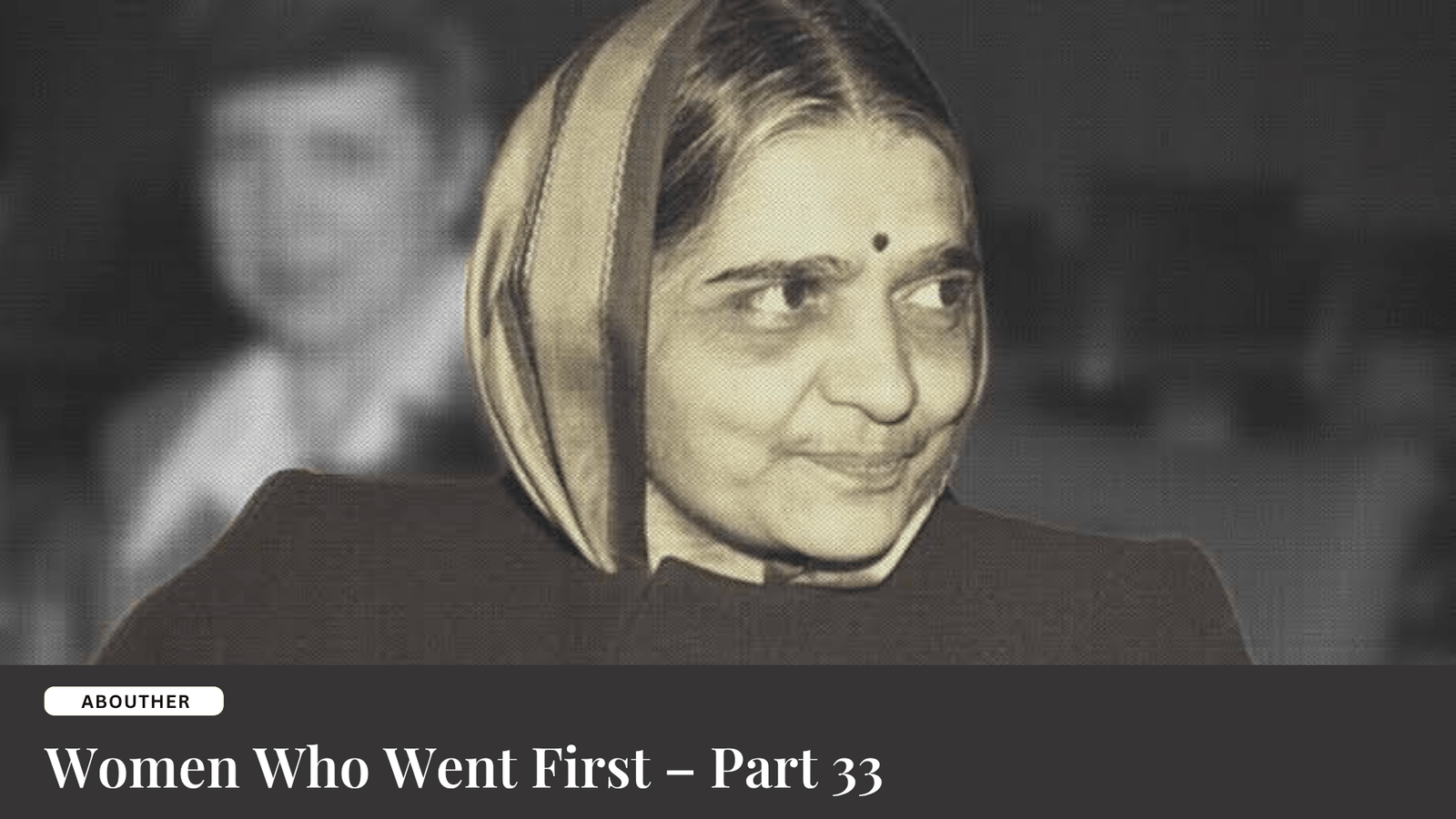
Also Read: The Women Who Went First – Part 33
After Mars
Following Mangalyaan, Ritu Karidhal was appointed Mission Director of Chandrayaan-2, India’s second lunar exploration mission, launched in July 2019. The mission’s lander, Vikram, lost communication with ISRO during its descent to the lunar surface and crashed. It was one of the most publicly watched failures in Indian science. Prime Minister Narendra Modi was in the control room. The scientists sat with him as the signal was lost.
Ritu Karidhal handled it the way people who understand the actual odds of space exploration handle failure: as data. A mission that reaches the lunar surface and fails in its final minutes is still a mission that reached the lunar surface. The orbiter component of Chandrayaan-2 continues to function and collect data. The mission was not a success in the terms it set for itself, and she has not pretended otherwise.
India went on to land Chandrayaan-3 successfully on the lunar south pole in August 2023, the first mission in history to do so. Ritu Karidhal’s foundational work on ISRO’s deep space capabilities runs through all of it.
THE RECORD
1997 Joined ISRO after completing aerospace engineering at IISc Bengaluru
2014 Deputy Operations Director, Mangalyaan (Mars Orbiter Mission)
2014 India reaches Mars orbit on first attempt; she writes autonomous flight systems
2017 Awarded the ISRO Team Achievement Award
2019 Mission Director, Chandrayaan-2 (lunar mission)
2024 Named in TIME100 India’s most influential people
What She Actually Did
The popular version of Ritu Karidhal’s story tends to emphasise the budget comparison with Hollywood and the saree photograph. Both are real and both matter. But neither is the actual technical achievement.
What she did was build the autonomous navigation and decision-making systems for a spacecraft traveling to another planet. She wrote the software that governed how Mangalyaan would respond to situations that could not be anticipated from Earth, in real time, across distances that made human intervention impossible. This is not a glamorous description. It is a precise one. It is the kind of work that determines whether a mission succeeds or becomes expensive space debris.
The spacecraft entered Mars orbit exactly as planned. The software worked. The mission ran for nearly eight years before contact was lost in 2022, long past its designed lifespan of six months. What she built held for eight years in deep space. That is the number that matters.
CROSS-SERIES CONNECTION
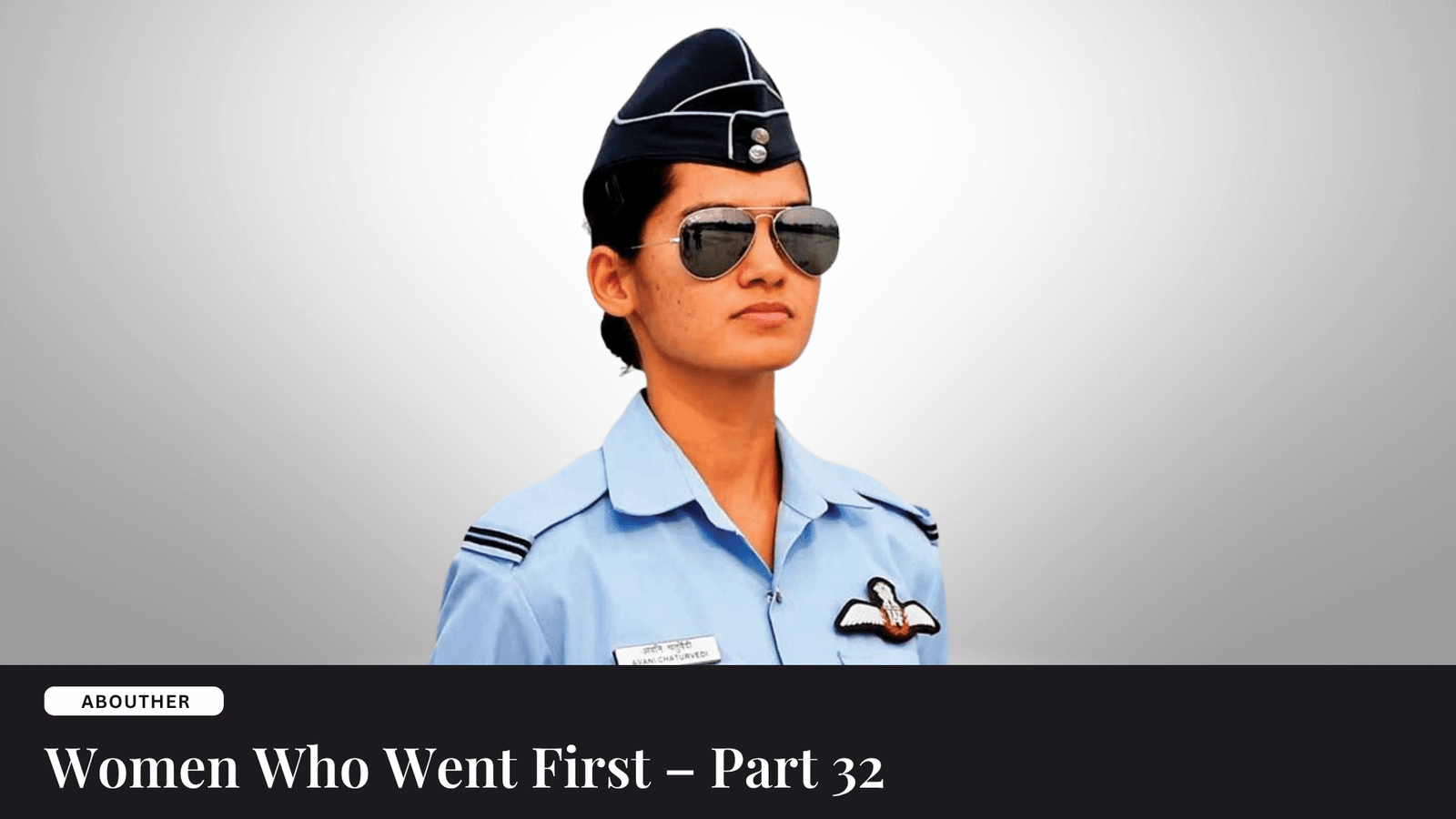
In Issue 32, we profiled Avni Chaturvedi, the first Indian woman to fly a fighter jet solo. Both she and Ritu Karidhal entered technical fields that had been largely male for their entire histories, and both proved themselves through the most unambiguous measure possible: the work either succeeds or it does not. A MiG-21 either lands or it does not. A spacecraft either enters orbit or it does not. What connects them is not just gender in a difficult field, but a specific kind of proof that leaves no room for argument. Numbers and physics do not accommodate bias. These two women let the outcomes speak.
Why She Belongs in This Series
The Women Who Went First is about women who entered rooms that were not built for them. Ritu Karidhal entered the room where India’s planetary future was being decided and built the systems that made it work. She did not do this loudly. She did not position herself as a symbol. She showed up, wrote the code, ran the simulations, brought her daughter to campus when she had to, and then watched her spacecraft travel 300 million kilometres and do exactly what she told it to do.
She is here because space is the most ambitious version of going first that human beings have invented, and she sent India there. She is here because the photograph of that control room changed what young Indian girls thought was possible for them. And she is here because the work she built is still out there, in the data the Chandrayaan-2 orbiter sends back, in the systems that Chandrayaan-3 inherited, in every calculation that India’s next mission will run. She went first, and the first steps are still carrying weight.
ISSUE 34 • CONTEMPORARY PORTRAIT • ABOUTHER MAGAZINE
THE WOMEN WHO WENT FIRST
Share This On Social
About the Author: Sangeeta Relan

Related Posts








I’m Sangeeta Relan—an educator, writer, podcaster, researcher, and the founder of AboutHer. With over 30 years of experience teaching at the university level, I’ve also journeyed through life as a corporate wife, a mother, and now, a storyteller.