The Women Who Went First – Part 36
ISSUE 36 | THE WOMEN WHO WENT FIRST
CONTEMPORARY PORTRAIT
Mithali
Raj
Raj
BORN 1975, LUCKNOW
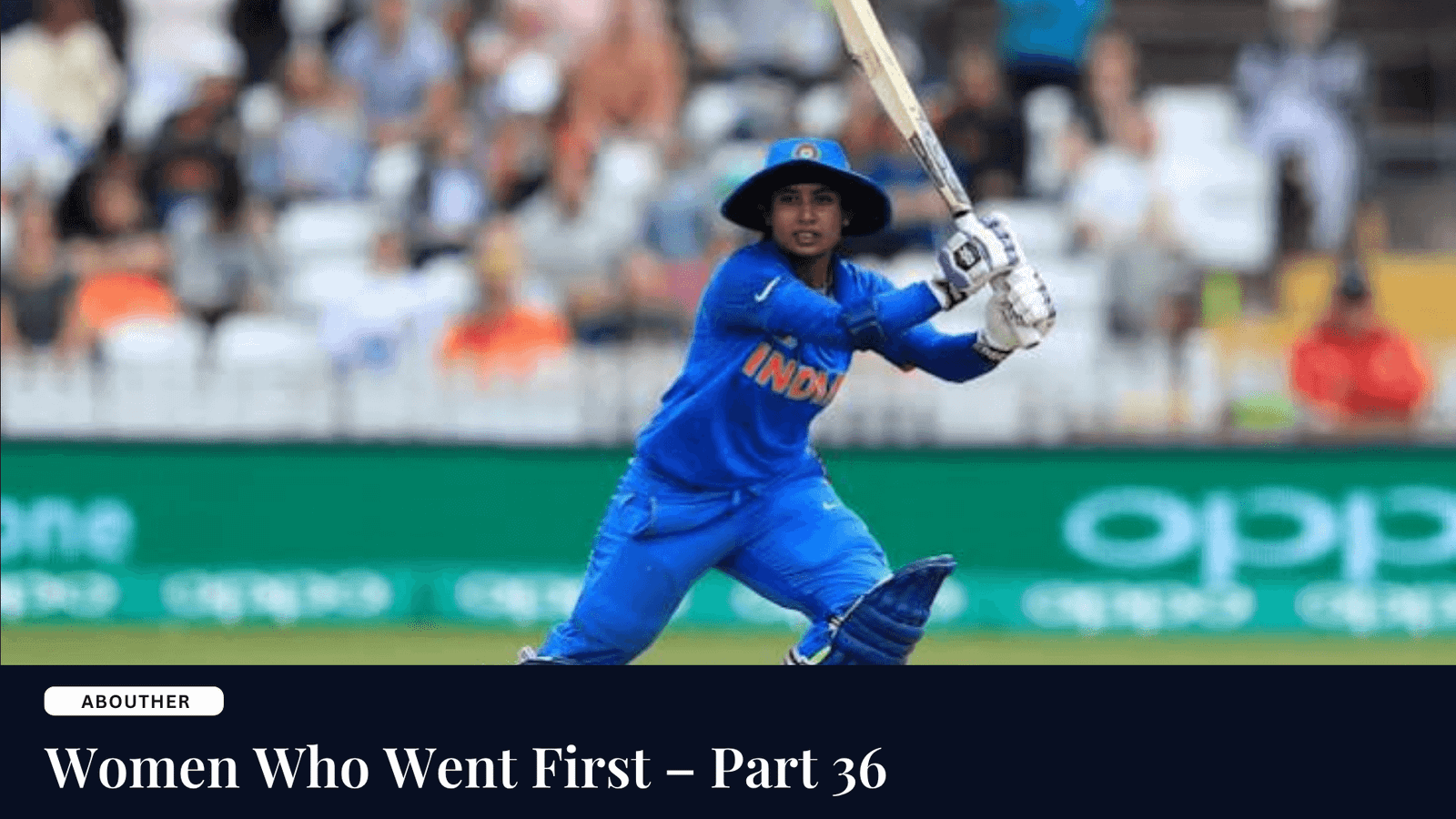
She captained India’s women’s cricket team for sixteen years. She is the highest run-scorer in the history of women’s ODI cricket. She spent most of that time fighting for the sport to be taken seriously, not just for her own records.
In 1999, a seventeen-year-old from Jodhpur walked out to bat for India in a One Day International and scored 114 not out. It was her debut innings. It was also a sign of what the next two decades would look like: Mithali Raj arriving, performing at a level that could not be ignored, and then returning to an environment that was doing its best to ignore her anyway.
She grew up in Hyderabad, the daughter of a former Indian Air Force officer. Her father enrolled her in cricket coaching at eight years old, initially alongside her brother. She took to it with the kind of seriousness that coaches describe as rare in children: she wanted to understand the game, not just play it. By her early teens she was training at the Hyderabad Cricket Association under the coach Jwala Singh, sometimes cycling to the ground at four in the morning to get court time before school.
She also trained in Bharatanatyam for eight years and performed publicly. This detail surfaces in every profile written about her, always framed as a charming contrast. She finds it less interesting than journalists do. She was a serious student of two disciplines simultaneously. That is what she did.
The Records, Briefly
The numbers require stating because they are extraordinary and because they are frequently understated in Indian sports coverage, which has historically given women’s cricket a fraction of the attention it deserves.
7,805
ODI RUNS: WOMEN’S WORLD RECORD
16
YEARS AS INDIA’S CAPTAIN
23
YEARS OF INTERNATIONAL CRICKET
7
ODI CENTURIES
She captained India to the final of the ICC Women’s World Cup in 2005 and again in 2017, when the team came within one match of winning it. The 2017 campaign, in England, changed the visibility of women’s cricket in India in a way that nothing before it had managed. Millions watched. People who had never seen a women’s match watched. The final, which India lost to England by nine runs, was the most-watched women’s cricket match in Indian television history.
What the Records Don’t Show
The years between the records are the harder story. Women’s cricket in India operated for most of Mithali Raj’s career with minimal funding, irregular scheduling, and the persistent institutional message that it was a secondary concern. Players trained without the infrastructure their male counterparts took for granted. Tours were cancelled or shortened without explanation. Selection decisions were made by committees that had little understanding of the women’s game.
THE 2018 WORLD TWENTY20
In November 2018, Mithali Raj was dropped from India’s World Twenty20 semi-final against England. She had not been informed in advance. The decision came from the team management and was later revealed to involve a report filed by the coach characterising her attitude and commitment in terms that she and many observers found inexplicable given her record. The episode became public and became a controversy. The BCCI conducted an inquiry. The coach eventually left his position. What it revealed was the gap between Mithali Raj’s standing as India’s greatest women’s cricketer and the institutional respect that standing did or did not command behind the scenes. She continued playing. She did not stop until she chose to stop.
She retired from T20 internationals in 2019, and from all international cricket in June 2022. She did so in a brief statement that contained no bitterness and no score-settling. She said she was grateful. She said cricket had given her everything. She left the numbers to speak, knowing they would do so long after the controversies had faded.
“She spent twenty-three years being the best in the world at something the world was not fully ready to watch. She did it anyway, and then she did it again, until the world caught up.”
ON MITHALI RAJ’S CAREER
What Changed
The Women’s IPL, launched in 2023 after years of advocacy, represents the institutional acknowledgment that the audience Mithali Raj built exists and is worth investing in. She did not play in it; she had already retired. But it exists in part because of the sixteen years she spent making women’s cricket impossible to ignore.
Also Read: The Women Who Went First – Part 35
The young women who play in the Women’s IPL today play in franchises, before packed crowds, for salaries that would have seemed impossible when Mithali Raj was cycling to the ground at four in the morning in Hyderabad. She made the argument with her bat. It took a while for the infrastructure to agree.
THE HONOURS
2003 Arjuna Award
2015 Padma Shri
2017 Wisden Leading Woman Cricketer in the World
2021 Padma Bhushan, one of India’s highest civilian honours
2021 Rajiv Gandhi Khel Ratna (now Major Dhyan Chand Khel Ratna)
2022 Retired from all international cricket after 23 years
CROSS-SERIES CONNECTION
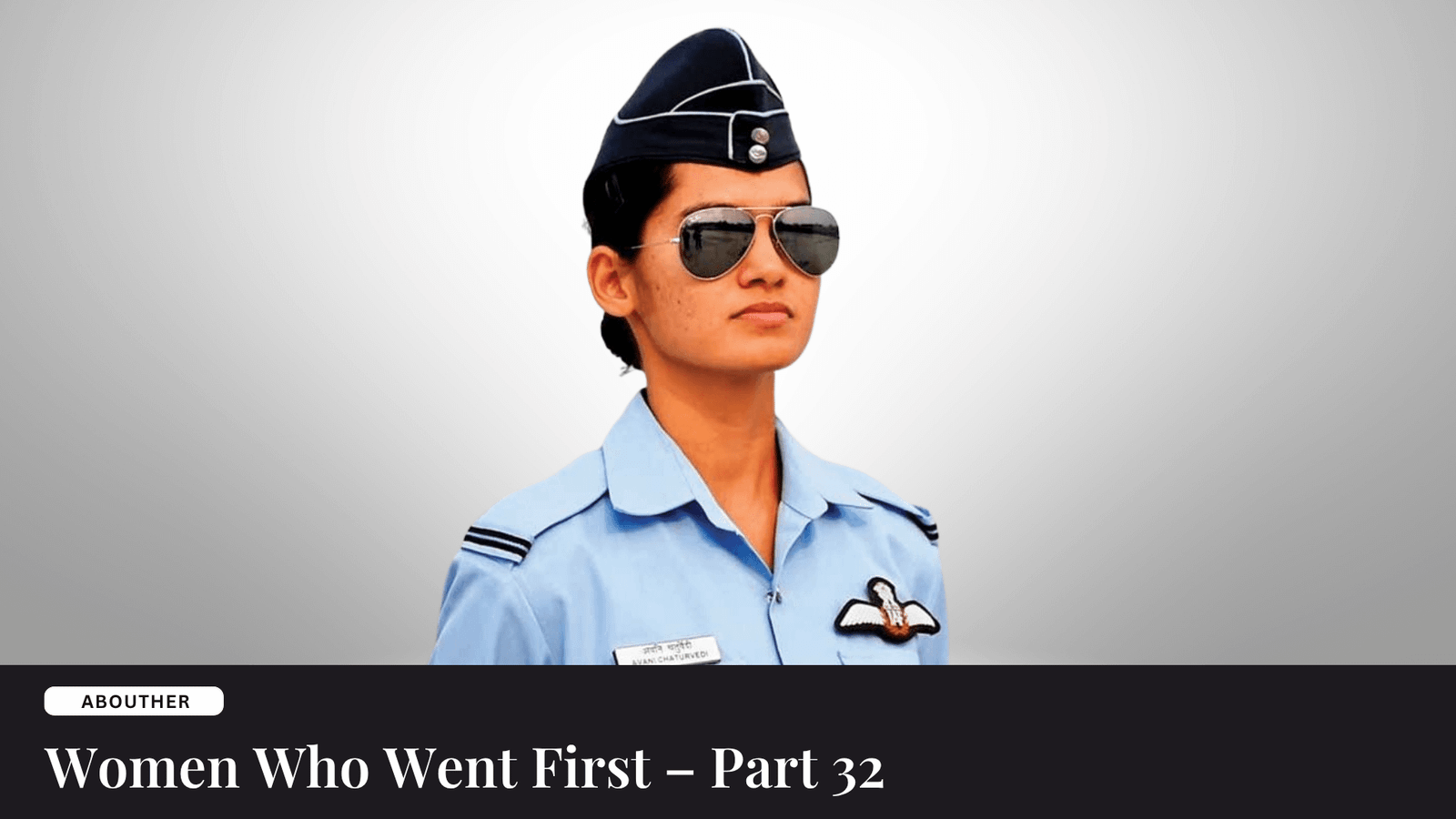
In Issue 32, we profiled Avni Chaturvedi, who in 2018 became the first Indian woman to fly a fighter jet solo. Both she and Mithali Raj entered institutions that were structured around men, performed at the highest level those institutions could measure, and forced the question of why the door had ever been closed. The difference is that Avni’s proof came in a single flight. Mithali’s came over twenty-three years, repeatedly, every time she walked to the crease. Some arguments have to be made again and again before the institution accepts them. She made hers until it did.
Why She Belongs in This Series
The Women Who Went First is about women who entered spaces that were not designed for them and changed what was possible inside those spaces. Mithali Raj did this for a generation of Indian girls who grew up watching women’s cricket and assumed, because she made it look natural, that women had always played this way and always been watched this way. They had not. She built that normality through two decades of showing up and being better than anyone had any excuse to ignore.
She is here because 7,805 runs is a number that requires no translation. She is here because the 2017 World Cup final was watched by millions of Indians who had never watched women’s cricket before, and they watched because she gave them something worth watching. And she is here because she retired without bitterness, which is perhaps the most remarkable thing about her: she gave the sport twenty-three years and left it better than she found it, and she did not ask it to apologise for what it had cost her along the way.
ISSUE 36 • CONTEMPORARY PORTRAIT • ABOUTHER MAGAZINE
THE WOMEN WHO WENT FIRST
Share This On Social
About the Author: Sangeeta Relan

Related Posts


I’m Sangeeta Relan—an educator, writer, podcaster, researcher, and the founder of AboutHer. With over 30 years of experience teaching at the university level, I’ve also journeyed through life as a corporate wife, a mother, and now, a storyteller.