The Women Who Went First – Part 31
AboutHer
STORIES. WOMEN. NOW
THE WOMEN WHO WENT FIRST ✦ FROM THE PAST
PORTRAIT · ISSUE NO. 31
Mata
Hari
Hari
France shot her at dawn on 15 October 1917 for spying for Germany. Whether she actually did it has never been established beyond reasonable doubt. What is certain is that she was a woman who had invented herself completely, and that a world at war found that unforgivable.
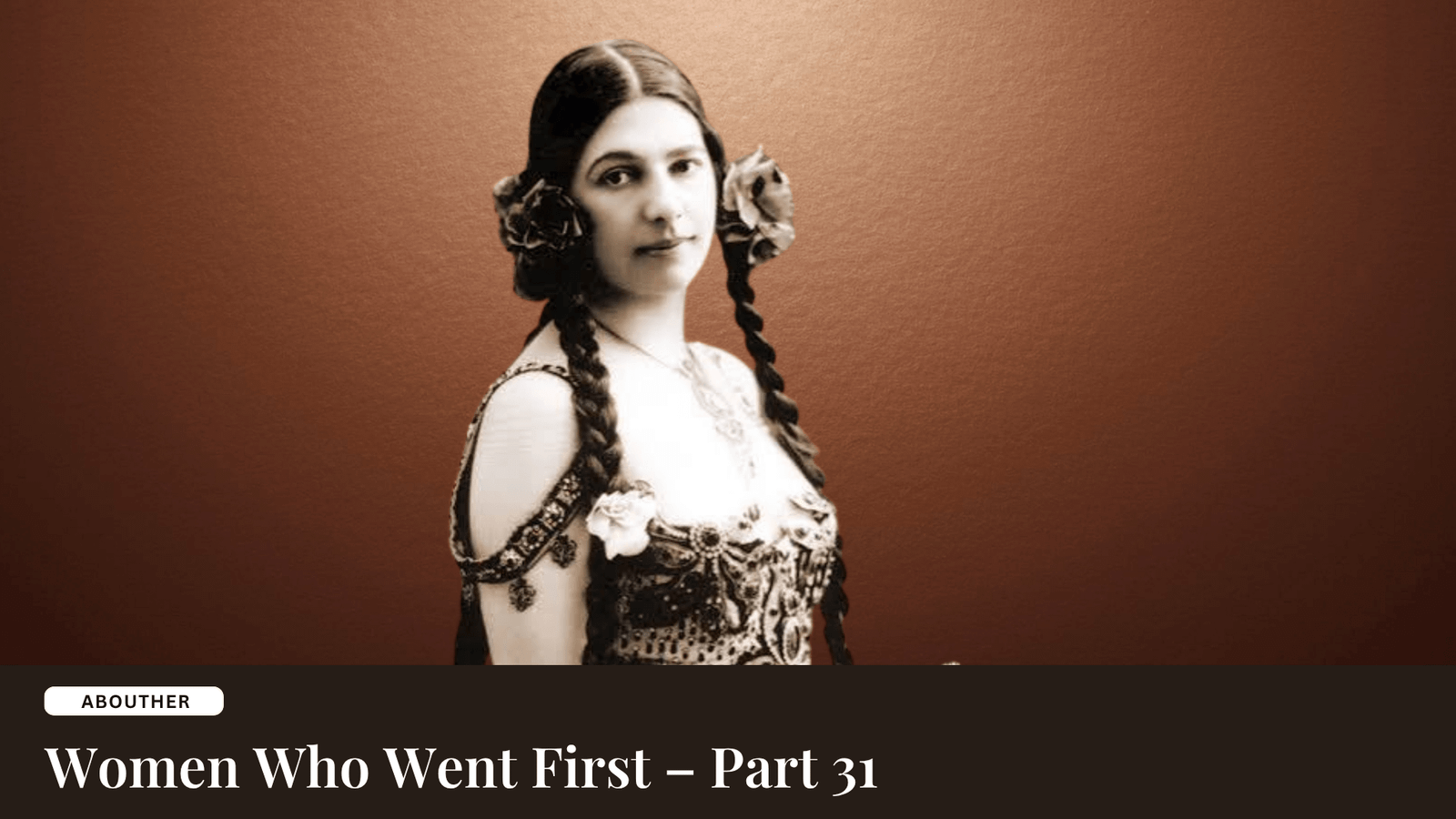
Her real name was Margaretha Geertruida Zelle. She was born in 1876 in Leeuwarden, in the Netherlands, to a hat maker who went bankrupt and a mother who died when she was a child. She married a Dutch colonial officer at eighteen, moved to Java, had two children, watched one die, survived a marriage of sustained abuse, returned to Europe alone, and reinvented herself in Paris as Mata Hari, an exotic dancer of supposedly Indian origin who performed for the richest and most powerful men in Europe. She was not Indian. She had learned enough about Javanese dance to make the performance plausible, and she understood, with exceptional clarity, what European men of the Belle Epoque wanted to see when they looked at a woman from the East. She gave it to them, on her own terms, for her own purposes, for a decade. Then the war came, and the world that had celebrated her decided it needed someone to blame, and she was convenient.
THE SELF SHE INVENTED
Mata Hari means eye of the day in Malay, the language she had encountered during her years in Java. She chose the name deliberately and constructed around it an identity so complete that even today, more than a century after her death, the name she was born with is less well known than the one she gave herself. She claimed to be the daughter of a temple dancer from South India, raised in sacred traditions, performing dances that were acts of devotion rather than entertainment. None of this was true. All of it was performance, and the performance was genius.
She debuted in Paris in 1905 and became a sensation almost immediately. She performed for King Edward VII, for the German Crown Prince, for ministers and generals and aristocrats across Europe. She was not simply a dancer. She was an experience, a fantasy of the exotic East made flesh, and she charged accordingly. By the time the war began in 1914, she had lived entirely on her own terms for nearly a decade, a remarkable achievement for a woman with no inherited wealth, no family connections, and no institutional support of any kind.
PARIS, 1905: THE DEBUT THAT CHANGED EVERYTHING
Mata Hari’s debut performance in Paris in March 1905 was held at the Musée Guimet, the museum of Asian art, which lent her performance an air of cultural authenticity that a theatre stage would not have provided. She appeared draped in jewels and little else, performed what she described as sacred Hindu temple dances, and was received by Parisian high society as the genuine article. Reviews were rapturous. Invitations multiplied. She was photographed extensively, and those photographs survive: a woman of extraordinary presence, entirely at ease in her own skin, looking directly at the camera with an expression that suggests she finds the whole enterprise privately amusing. She probably did. She had invented the character being photographed, and she knew it better than anyone watching her.
THE WAR AND THE ACCUSATION
When war broke out in 1914, Mata Hari’s world began to contract. The Europe of aristocratic leisure that had sustained her career was being dismantled by industrial warfare. Her lovers were going to the front. Her income was shrinking. She moved between neutral countries, as many people did, and she accepted money from a German intelligence officer, Karl Kroemer, who offered it to her in 1915. She later claimed she had taken the money and given nothing in return. French intelligence, which had been watching her movements across borders, drew different conclusions.
Also Read: The Women Who Went First – Part 30
She was also recruited, she claimed, by French intelligence, with the understanding that she would use her contacts with German officers to gather information. Whether this arrangement was genuine or whether she invented it after her arrest to explain her German contacts has never been established. Both things could be true simultaneously. She may have been a double agent. She may have been an opportunist who took money from both sides and provided little of value to either. She may have been entirely innocent of the specific charges brought against her. The evidence, such as it was, pointed in multiple directions and proved nothing conclusively.
THE TRIAL
PARIS, JULY 1917
Mata Hari was arrested in Paris on 13 February 1917 and tried by a French military tribunal in July of the same year. The trial was closed to the public. The evidence presented included intercepted German communications that referred to an agent designated H-21, whom French intelligence identified as Mata Hari. The communications, however, had been sent using a German code that French intelligence had already broken, which meant that if the Germans knew their code was broken, they may have sent the messages deliberately to incriminate her. This possibility was not seriously considered by the tribunal. She was convicted on all charges and sentenced to death. She was shot by firing squad at Vincennes on 15 October 1917. She was forty-one years old. Multiple witnesses reported that she refused a blindfold, stood straight, and did not flinch. She blew a kiss to the assembled soldiers. Whether this happened exactly as described is, like almost everything about her, impossible to verify with certainty.
“A whore, yes, but a traitor, never.”
MATA HARI, DURING HER TRIAL
THE QUESTION THAT HAS NEVER BEEN ANSWERED
WAS SHE ACTUALLY A SPY?
The honest answer, more than a century after her execution, is that we do not know. The French military tribunal that convicted her operated in secret, on evidence that has since been questioned by historians, during a war in which France had suffered catastrophic losses and needed, badly, to demonstrate that it was doing something about the German intelligence operations it believed were behind those losses. Mata Hari was a foreign woman with German lovers, a habit of crossing borders, and no fixed national loyalty. She was the perfect scapegoat. Whether she was also guilty of what she was accused of is a different question, and the available evidence does not answer it definitively. Some historians believe she was genuinely working for German intelligence. Others believe she was entirely innocent and fabricated a story about working for the French to explain her contacts. Most conclude that the truth is somewhere murkier than either version, and that the trial that killed her was far from just regardless of what the truth was.
WHAT SHE ACTUALLY WAS
Stripped of the espionage question, what remains is a woman of extraordinary resourcefulness and self-invention. She had arrived in Paris at twenty-eight with nothing: no money, no connections, no marketable skill beyond a knowledge of Javanese dance and an understanding of what European men found exotic. She built from those materials a career that sustained her for a decade, that gave her access to the most powerful men in Europe, and that she managed entirely on her own terms throughout.
She was not a feminist in any programmatic sense. She did not argue for women’s rights. She simply exercised freedoms that women of her era were not supposed to have: sexual freedom, financial independence, freedom of movement across borders and between classes, freedom to construct and perform an identity of her own choosing. She lived as she wished to live, in a world that did not extend that option to women as a matter of course, and she did it with enough success that the world took notice. What the world did with that notice, in the end, was shoot her.
MATA HARI AND NOOR INAYAT KHAN: TWO WARS, TWO WOMEN, TWO VERDICTS
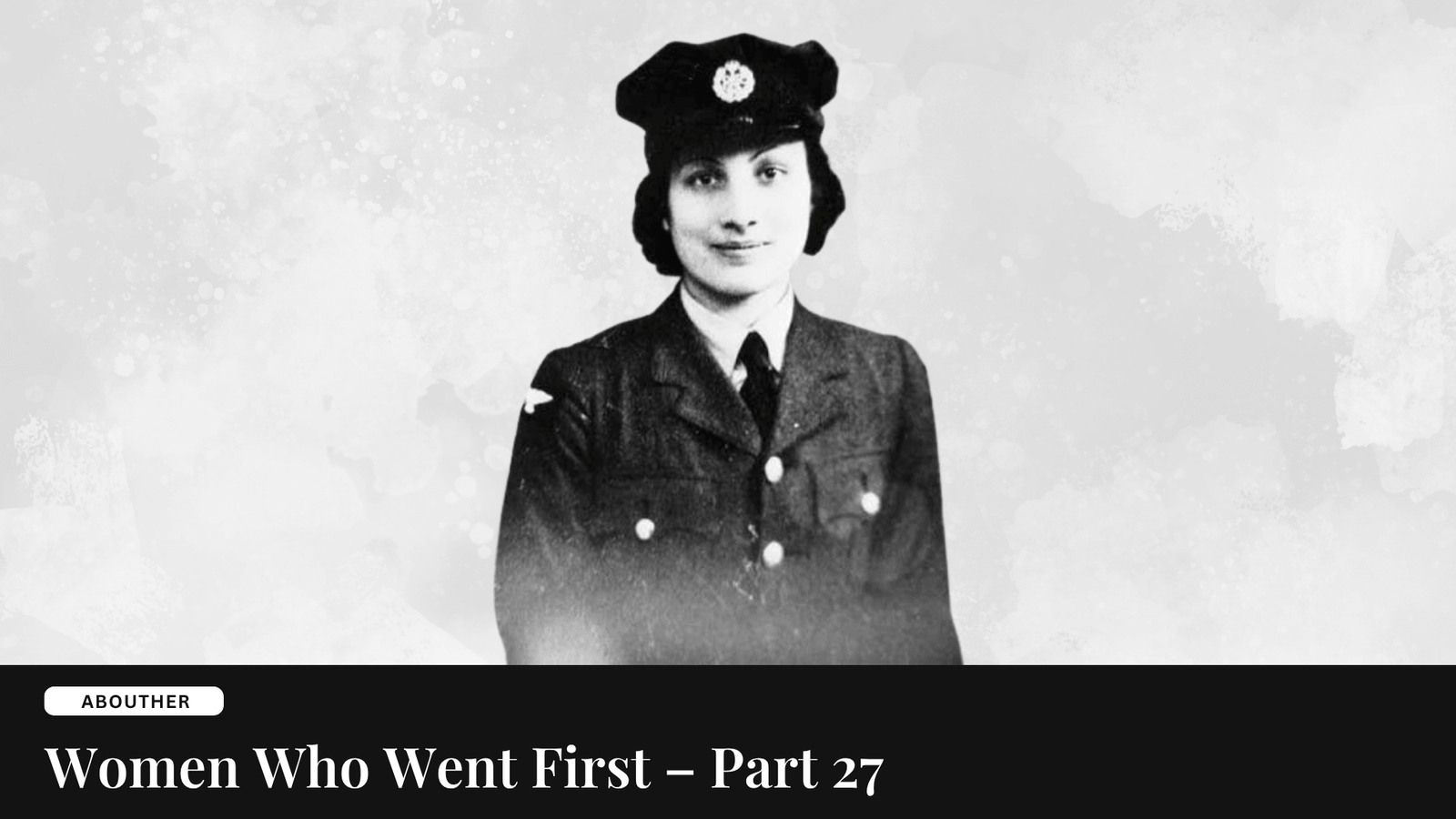
This series featured Noor Inayat Khan several issues ago: a woman who was genuinely a spy, who held her silence under torture, and whose guilt was never in question. Mata Hari was executed as a spy by the same country, France, that decorated Noor Inayat Khan posthumously, and whose guilt has never been established beyond doubt. Both women navigated a world of wartime intelligence, male power, and national paranoia. Both died violently because of it. The difference in what they were accused of, and in the certainty with which those accusations can be sustained, is one of the more instructive contrasts this series has produced. Noor knew what she was doing and why. Mata Hari, to the end, may not have fully understood what she had been caught in.
THE LEGACY SHE LEFT
Mata Hari has been portrayed in dozens of films, books, and plays since her death. The portrayal has rarely been accurate and almost always been reductive, collapsing her into the archetype she had herself created: the dangerous exotic seductress, the femme fatale, the woman whose sexuality made her inherently untrustworthy. This archetype predates her and will outlast her, but she is its most famous human embodiment, which is its own kind of tragedy. She was far more interesting than the archetype, and the archetype was used to kill her.
What she actually left behind was the proof that a woman with nothing could build a life of complete independence through intelligence, performance, and the precise understanding of what the world around her wanted and how to provide it on terms she controlled. That is not a simple legacy and it is not an entirely comfortable one. It is, however, a real one, and it belongs in a series about women who went first.
WHY SHE BELONGS IN THIS SERIES
The Women Who Went First has told stories of women who went first into institutions, into space, into art, into resistance, and into the most extreme versions of human courage and human complexity. Mata Hari went first into something this series has not addressed before: the invention of a self so complete, so deliberately constructed, and so successfully sustained that it became more real than the self she had been born into.
She went first also into the specific danger of being a woman who refuses the role her world assigns her and succeeds so visibly at doing so that the world decides she must be up to something. She was up to something: she was living freely in an era that did not permit women to do so. The world dressed that up as espionage, tried her in secret, and shot her at dawn.
Whether she was guilty of what France accused her of is a question this series cannot answer, because history cannot answer it. What the series can say is that she was a woman who built herself from nothing, who lived entirely on her own terms for a decade, and who faced a firing squad at forty-one with enough composure to blow a kiss. The mystery at the centre of her story is not incidental to it. It is the point. In a series about women who went first, she went first into the space where a woman’s ambiguity becomes more threatening to power than any definite crime could be.
“”She was a woman who had invented herself completely, and a world at war found that unforgivable. Whether she was guilty of what they shot her for, history has never established. What is certain is that she refused a blindfold and did not flinch.””
THE WOMEN WHO WENT FIRST · ABOUTHER MAGAZINE
Share This On Social
About the Author: Sangeeta Relan

Related Posts



I’m Sangeeta Relan—an educator, writer, podcaster, researcher, and the founder of AboutHer. With over 30 years of experience teaching at the university level, I’ve also journeyed through life as a corporate wife, a mother, and now, a storyteller.