
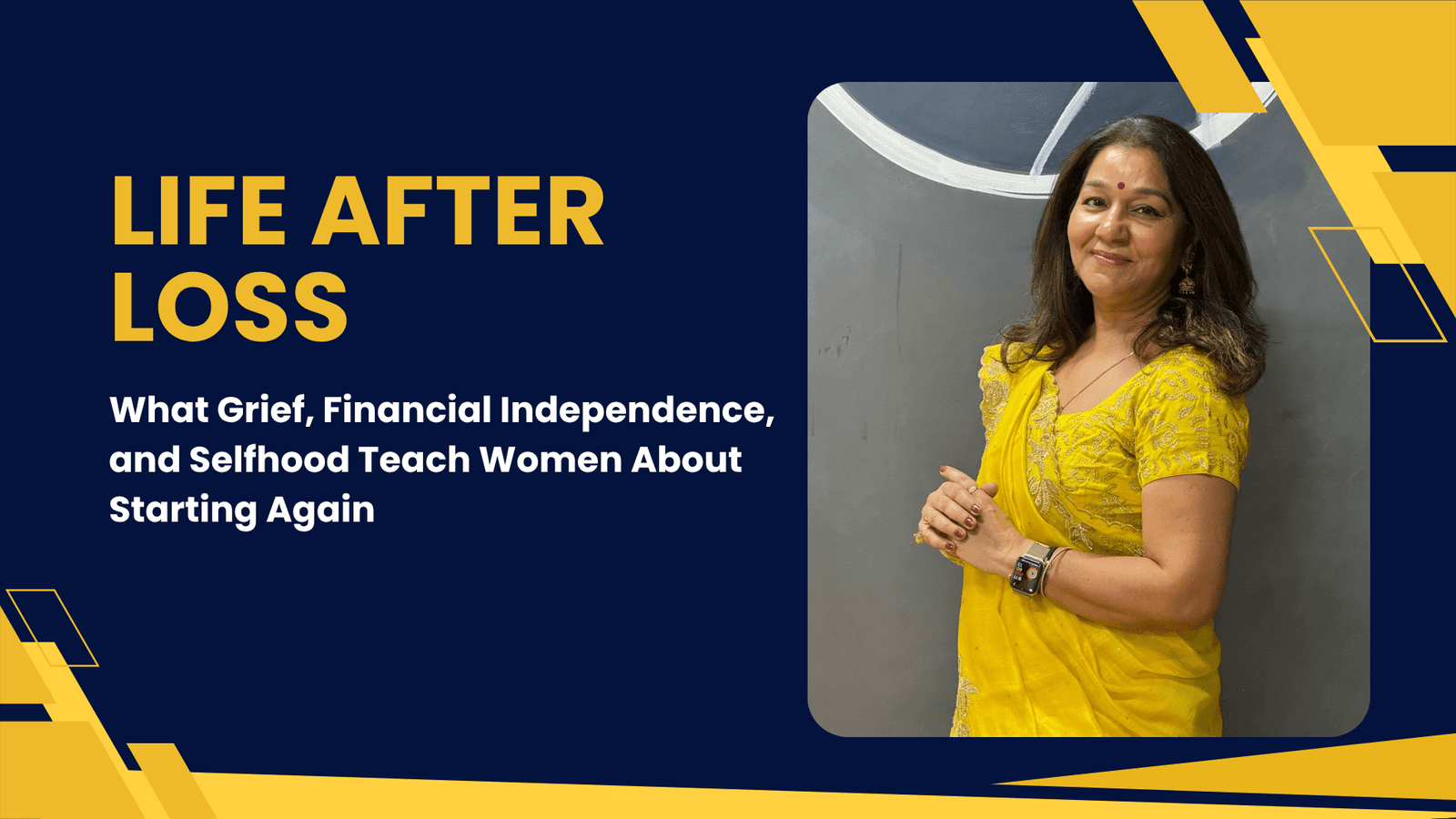
Life After Loss: What Grief, Financial Independence, and Selfhood Teach Women About Starting Again
Some conversations stay with you not because they offer neat answers, but because they speak to life in its rawest, most honest form. Over the years, through The AboutHer Show, I have spoken to women who have built careers, challenged norms, nurtured families, and reinvented themselves. But some of the most powerful stories are not about public success. They are about private courage, about what happens when life changes irreversibly, and a woman must slowly learn how to live again.
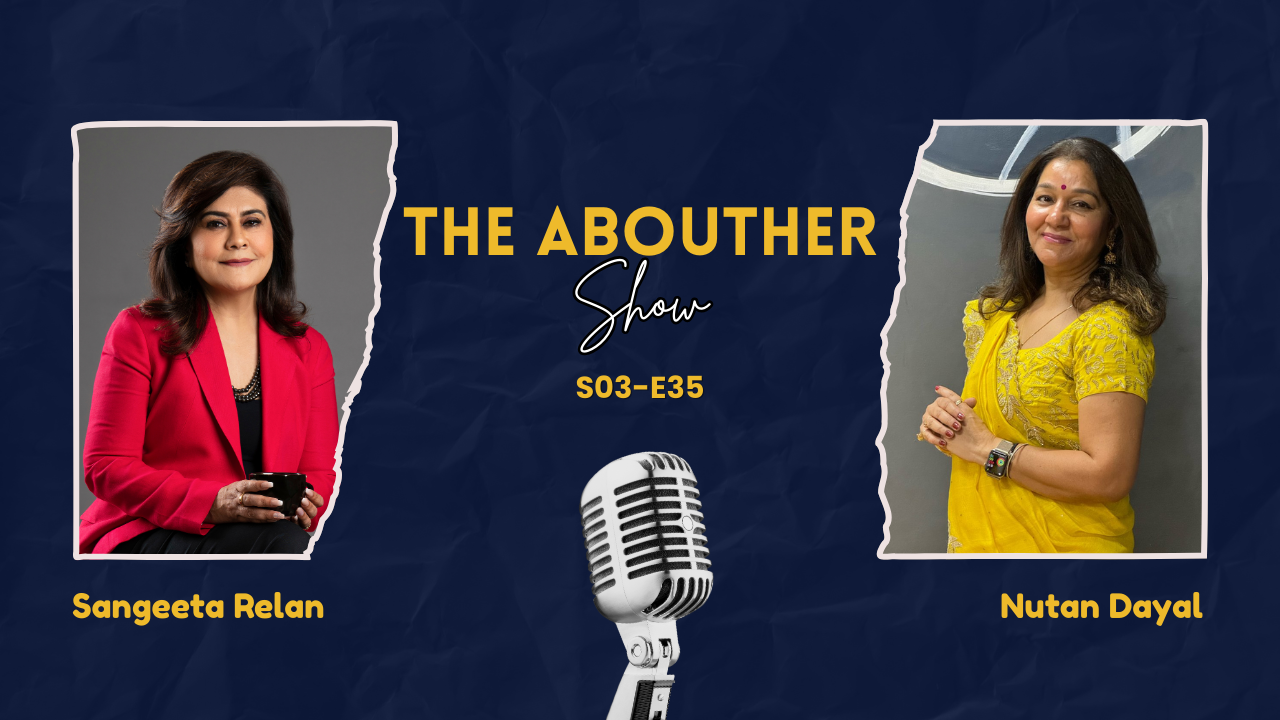
My conversation with Nutan Dayal was one such story.
This was not a discussion about profession or achievement in the usual sense. It was about grief, love, identity, and rebuilding after the sudden loss of a life partner. In sharing her experience with honesty and grace, Nutan offered something deeply valuable: not a formula for healing, but an understanding of what it means to continue.
Why Nutan Dayal’s Story Matters
Nutan Dayal’s story matters because it reflects a reality many women live through, but few speak about openly. After losing her husband suddenly, she had to navigate not just emotional devastation, but also the practical, social, and financial realities of standing on her own.
What makes her voice so compelling is that she does not speak in clichés. She speaks from lived experience. She talks about grief as something that does not vanish, but changes. She talks about fitness, dance, routine, financial awareness, family, and acceptance, not as motivational buzzwords, but as lifelines.
For women in India especially, where widowhood, emotional expression, and financial dependence are still deeply shaped by cultural expectations, her reflections feel both personal and socially significant.
The Pressure on Women to “Be Strong”
One of the most striking parts of the conversation was Nutan’s response to the phrase so often offered to women after loss: be strong.
It sounds comforting, but it can also become a burden. Women are often expected to hold themselves together for children, family, and society. In that process, they may be denied the space to grieve honestly. What looks like strength from the outside may simply be survival under pressure.
Nutan rejects this idea of performative strength. Her insight is important: grief should not be managed according to what makes others comfortable. It must be felt, lived, and acknowledged. She spoke about the importance of talking about the person who is gone, of allowing tears, memories, and even laughter.
Also Read: Beyond the Medal- Why India’s Sporting Stories Matter for Women, Legacy and Leadership
In many Indian families, loss is followed by silence. People often feel that not speaking of the dead will somehow help everyone cope better. But Nutan’s experience suggests the opposite. Silence can harden grief into something heavier. Speaking, remembering, and allowing emotion to exist may be uncomfortable, but it is also part of healing.
Women do not heal by pretending they are fine. They heal when they are allowed to remain human.
Grief Does Not End—It Changes Shape
Modern conversations around healing often create the impression that grief is something to “get over.” But lived experience is rarely so tidy.
Nutan described grief as something that changes form. It may move from sharp pain to a quieter ache, from daily breakdown to memory, from darkness to love, but it does not disappear altogether. This is an important and compassionate way of understanding loss. It removes the pressure to “move on” in some socially acceptable timeframe.
For women who feel guilty because grief returns years later, this matters. Lasting grief is not always a sign of being stuck. Sometimes it is simply the continuing presence of deep love.
One of the most moving ideas Nutan shared was that, over time, her grief became less about pain and more about love. That shift did not happen suddenly. It came through time, reflection, and acceptance. Healing, in this sense, is not forgetting. It is learning to remember differently.
How Movement and Routine Become Tools of Survival
There is something deeply practical in Nutan’s account of healing. She does not romanticise recovery. She speaks instead about movement – exercise, dance, cooking, stepping out, meeting people, filling the day with things that keep the mind and body engaged.
This is not a small thing. For many women, healing is not only emotional or verbal; it is physical and routine-based. It may begin with one dance class, one walk, one hour at the gym, one meal cooked with care. These actions may seem ordinary, but in times of grief they can become anchors.
Nutan spoke about how fitness and dance gave her not just distraction, but a way to reconnect with life. Movement helped create brief spaces where grief did not disappear, but loosened its hold. Cooking, too, slowly became a source of feeling and expression again.
There is a larger lesson here. Joy does not always return dramatically. Sometimes it returns in fragments, and that is enough to begin with.
Why Financial Independence Matters So Deeply
One of the most important parts of the conversation was the discussion around money.
Loss is emotional, but it is also practical. There are accounts, documents, certificates, legal procedures, insurance claims, investments, and decisions that must be dealt with. This is where the gender gap becomes painfully visible. Many women, even educated and capable women, remain only partially involved in financial matters. They may trust that things are “taken care of,” until a crisis reveals how little they have been included.
Nutan was candid about initially feeling clueless. What helped was support—from friends, family, and a husband who had been organized with paperwork. But her broader message was clear: women must know their financial reality.
This is not just a personal finance issue. It is a matter of dignity and agency.
In India, women are often encouraged to participate in family life, but not always in financial decision-making. Nutan’s story reminds us why that must change. Financial literacy is not only about investing or building wealth. It is also about being able to function in a moment of shock, without feeling completely helpless.
Preparedness may not prevent loss, but it can reduce panic when life becomes uncertain.
The Hidden Struggle of Rebuilding Identity
Another important layer in this conversation was the shift in identity that follows the loss of a partner.
When a woman has long been part of a couple, widowhood is not only emotional loss, it is social dislocation. The act of entering rooms alone, attending weddings, socialising, or even watching a movie by oneself can feel newly difficult. These moments may seem minor from the outside, but they represent a deeper question: Who am I now?
Nutan spoke honestly about this transition. She did not present herself as fully transformed. She admitted that some things still feel hard. That honesty is refreshing, because not every story of resilience needs to be packaged as triumphant reinvention.
Sometimes resilience is quieter. Sometimes it is simply learning to show up, alone, in a world that once felt shared.
For many women, especially in cultures where identity is closely tied to roles – wife, mother, caregiver – this rebuilding of selfhood can be one of the most difficult parts of the journey.
Living Day by Day Is Also a Form of Strength
When asked what it means to live life on her own terms, Nutan’s answer was simple: she now lives day by day. She tries to fill her life with things she likes, to remain as happy as she can, and not to overthink the future.
This may sound modest, but it is deeply wise.
In a culture that celebrates big declarations and dramatic reinvention, there is something powerful about choosing the next day instead of the next decade. For many women navigating grief, uncertainty, or identity rupture, day-by-day living is not avoidance. It is a practical and emotionally intelligent way of moving forward.
It is not about controlling everything. It is about finding steadiness within what cannot be controlled.
Also Read: From Branding to Belief- Preeti Juneja on Purpose, Visibility, and the Courage to Begin Again
Key Takeaways
- Grief does not disappear; it changes shape over time.
- Telling women to “be strong” can unintentionally silence their healing.
- Talking openly about a loved one can help families process loss more honestly.
- Movement, routine, and small joys can become powerful tools for recovery.
- Financial awareness is essential for women at every stage of life.
- Widowhood or partner loss often brings a deep shift in identity and social confidence.
- Living day by day can be a meaningful and healthy form of resilience.
- Support systems matter, not because they remove grief, but because they reduce isolation.
A Closing Reflection
Nutan Dayal’s story is about more than widowhood. It is about what women carry, what they are expected to suppress, and what they must often teach themselves in the aftermath of loss. Her journey reminds us that healing is not linear, strength is not always visible, and rebuilding rarely happens all at once.
For women, especially in India, this conversation opens up larger questions about emotional permission, financial preparedness, and the quiet work of reclaiming identity. We often admire women’s resilience. Perhaps it is time we also create the conditions that make their healing less lonely.
About the Author
Sangeeta Relan is an Associate Professor at Delhi University with over 34 years of teaching experience. She is a researcher in gender studies, writer, podcaster, and founder of AboutHer, a platform dedicated to amplifying women’s voices and stories. Through The AboutHer Show, she has hosted 140+ conversations with women and men as allies on identity, resilience, leadership, wellbeing, and change.
Share This On Social
About the Author: Sangeeta Relan

Related Posts



I’m Sangeeta Relan—an educator, writer, podcaster, researcher, and the founder of AboutHer. With over 30 years of experience teaching at the university level, I’ve also journeyed through life as a corporate wife, a mother, and now, a storyteller.