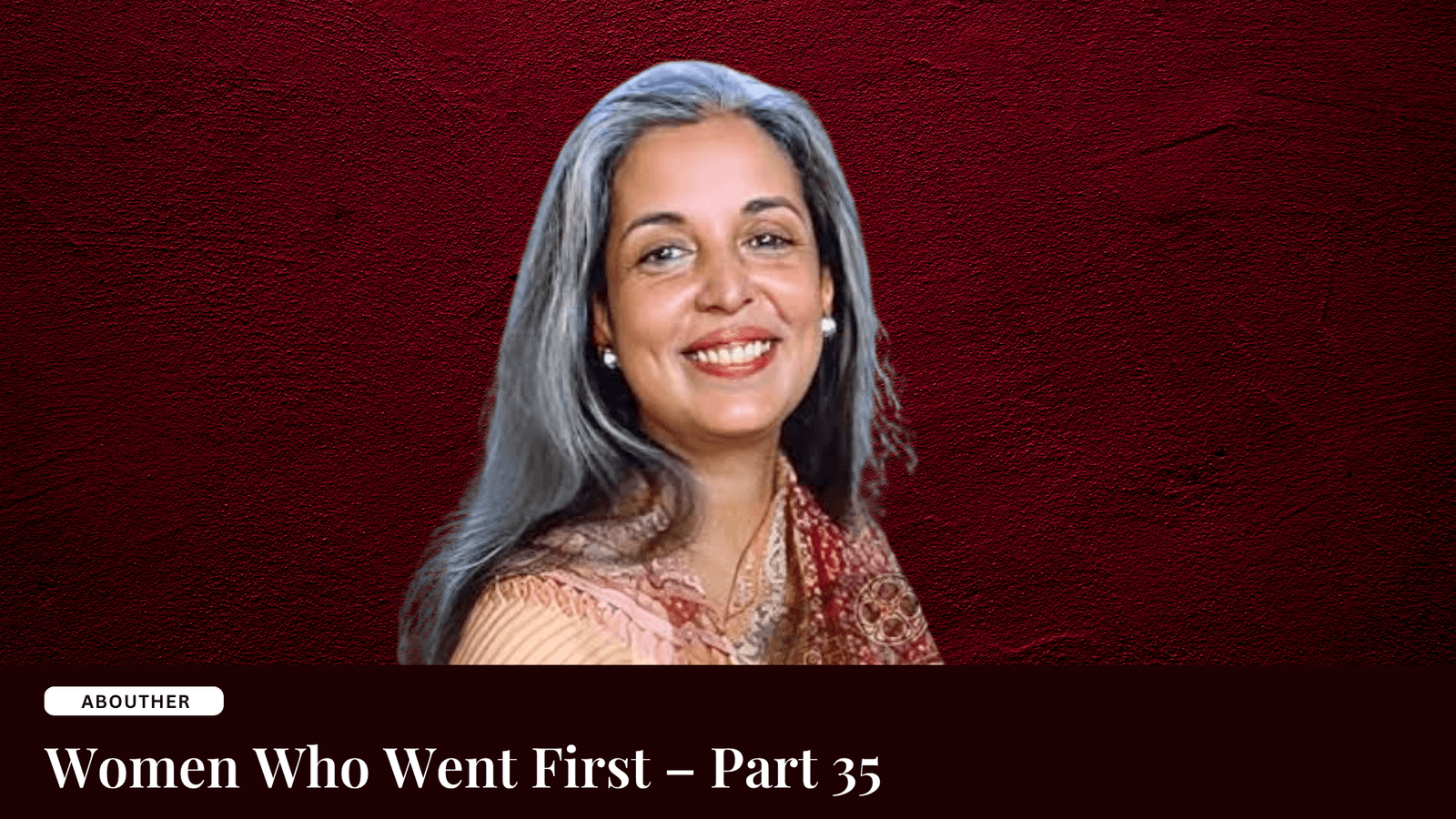
The Women Who Went First – Part 35
ISSUE 35 | THE WOMEN WHO WENT FIRST
PAST PORTRAIT
Leela
Naidu
Naidu
1940 – 2009
Vogue named her one of the ten most beautiful women in the world. She found that the least interesting thing about herself, and she walked away.
In 1954, when Leela Naidu was fourteen years old, Vogue magazine named her one of the ten most beautiful women on earth. It was the kind of declaration that turns a person into an object. Most young women in that position would have understood the assignment: become the beauty, play the role, let the world consume you. Leela Naidu spent the next five decades refusing to do any of that.
She was born in 1940 to Ram Naidu, an Indian nuclear physicist, and a French mother. The combination gave her a face that photographers could not stop pointing cameras at, and a mind that was far more interested in literature and ideas than in what those cameras wanted. She grew up between worlds: Indian by name and inheritance, European by education and sensibility, claimed entirely by neither.
When Bollywood came calling, she answered, but on her own terms, and not for long. She acted in a small number of films that are now considered classics, then walked away from the industry at the height of her fame. She did not leave because she failed. She left because she had other things to do.
The Films She Made and the Ones She Didn’t
Leela Naidu’s filmography is short by any measure. She appeared in Hrishikesh Mukherjee’s early work, and most significantly in James Ivory’s The Householder in 1963, one of the first films produced by the Merchant Ivory partnership that would go on to define a certain kind of prestige cinema. She was not playing glamour in that film. She was playing the complicated interior life of a young woman navigating a marriage she had not fully chosen.
That gap between what people expected of her face and what she actually brought to a role was characteristic. She was offered far more than she accepted. The roles she turned down were, by most accounts, more numerous than the roles she took. She was not interested in being decorative. She was interested in whether a role had anything in it worth doing.
WHAT THE WORLD SAW
Fourteen years old. Vogue magazine. One of the ten most beautiful women on earth. This is the sentence that follows Leela Naidu through every profile ever written about her, and it is the sentence she spent her life outrunning. She did not reject beauty; she simply refused to let it be the whole story. In an industry and an era that had no framework for a woman who looked like her and also had opinions, she created her own framework, and then she left.
Married to a Poet
In 1965 she married Dom Moraes, one of India’s most significant English-language poets, the first Asian writer to win the Hawthornden Prize for poetry. Their relationship and eventual separation became part of both their life stories in the way that literary marriages often do, narrated and renarrated in memoirs and interviews. Leela Naidu was consistently more private about it than Dom Moraes was. She did not make her private life into material.
Also Read: The Women Who Went First – Part 34
This reticence was consistent. She gave relatively few interviews. When she did speak, she spoke carefully and with a dry precision that journalists found disarming. She was not performing mystery. She simply did not believe the world was owed the interior of her life in exchange for its attention.
“She was offered everything the industry could give a beautiful woman. She looked at it, considered it, and chose something quieter and harder to name.”
ON LEELA NAIDU’S DEPARTURE FROM BOLLYWOOD
The Walking Away
The exit from Bollywood was not dramatic. There was no public falling-out, no scandal, no statement. She simply became less available, and then unavailable. She moved to Europe for stretches of time. She read widely. She lived.
This kind of departure is harder to write about than a scandal, because it leaves no wreckage to sift through. What it represents, though, is a particular kind of courage that is undervalued in accounts of women’s lives: the courage to stop. To decide that the thing the world is celebrating you for is not the thing you want to do. To walk away from the machine while it is still offering you more.
Bollywood in the 1960s did not have a template for this. It had templates for the star who burned out, the actress who married and retired, the beauty who aged ungracefully. It did not have a template for the woman who looked at all of it clearly and decided she preferred her own company and a good book.
A LIFE IN ITS OWN TERMS
1940 Born in India to an Indian physicist father and French mother
1954 Named by Vogue as one of the ten most beautiful women in the world, age 14
1963 Starred in James Ivory’s The Householder, first Merchant Ivory production
1965 Married poet Dom Moraes
1970s Gradually withdrew from public life and the film industry
2009 Died in Mumbai, largely forgotten by the industry that had celebrated her
The Forgetting
She died in Mumbai in 2009. The obituaries were fond but brief. The industry that had once claimed her as one of its great beauties had largely moved on. She was not, by the end, a household name. The films she had made were known mainly to people who sought out the early Merchant Ivory work or the quieter strands of 1960s Indian cinema.
This forgetting is its own kind of statement. The women whom the entertainment industry remembers are the ones who stayed, who gave it everything, who kept producing until they had nothing left. Leela Naidu gave it a controlled portion of herself and kept the rest. The industry, which does not know what to do with that, eventually forgot her for it.
We are not obligated to repeat the forgetting.
CROSS-SERIES CONNECTION
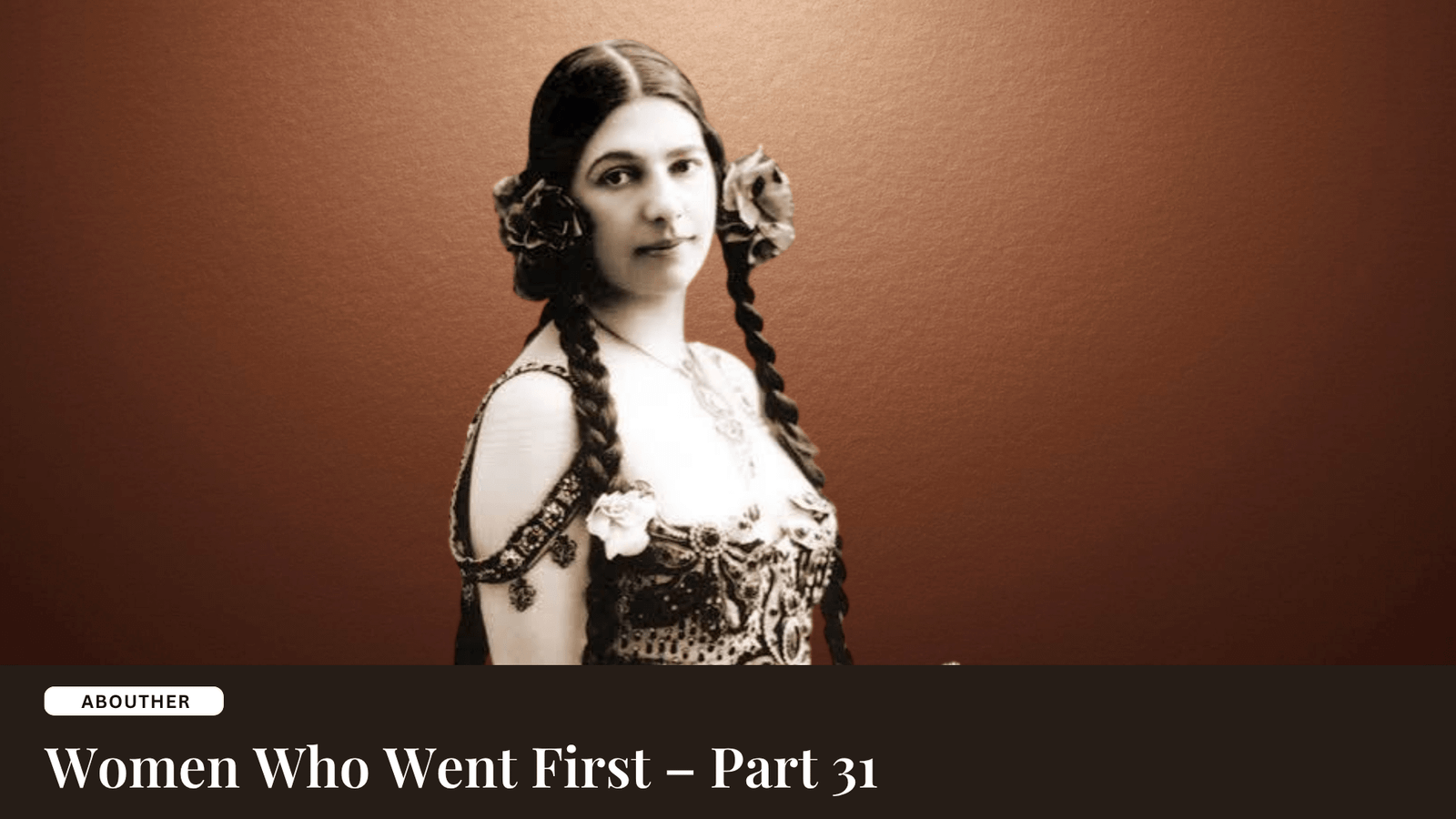
In Issue 31 of this series, we wrote about Mata Hari, another woman whose extraordinary face became the thing the world insisted on, to the exclusion of everything else she was. The difference is instructive: Mata Hari was consumed by the persona she created; Leela Naidu refused to be consumed. Both women understood that beauty in the public eye is not a gift but a negotiation, and that the terms of that negotiation are rarely set by the woman herself. Leela Naidu is one of the rare cases where they were.
Why She Belongs in This Series
The Women Who Went First is usually about women who pushed their way into spaces that excluded them. Leela Naidu went first in a different direction. She was already inside the most celebrated space available to a woman who looked like her, and she chose to leave it. In an era when women had very little control over how they were seen, she exercised the ultimate control: she removed herself from view.
That is not passivity. That is a decision about what a life is for. She decided that her life was not for the consumption of an industry or an audience. She decided it was for living, in whatever private and particular way she chose. In 1960s Bollywood, that was going first in every sense that matters.
She was called one of the most beautiful women in the world, and she found that the least interesting thing about herself. That, in this series, makes her exactly where she belongs.
ISSUE 35 • PAST PORTRAIT • ABOUTHER MAGAZINE
THE WOMEN WHO WENT FIRST
Share This On Social
About the Author: Sangeeta Relan

Related Posts


I’m Sangeeta Relan—an educator, writer, podcaster, researcher, and the founder of AboutHer. With over 30 years of experience teaching at the university level, I’ve also journeyed through life as a corporate wife, a mother, and now, a storyteller.