The Women Who Went First – Part 38
ISSUE 38 | THE WOMEN WHO WENT FIRST
PAST PORTRAIT
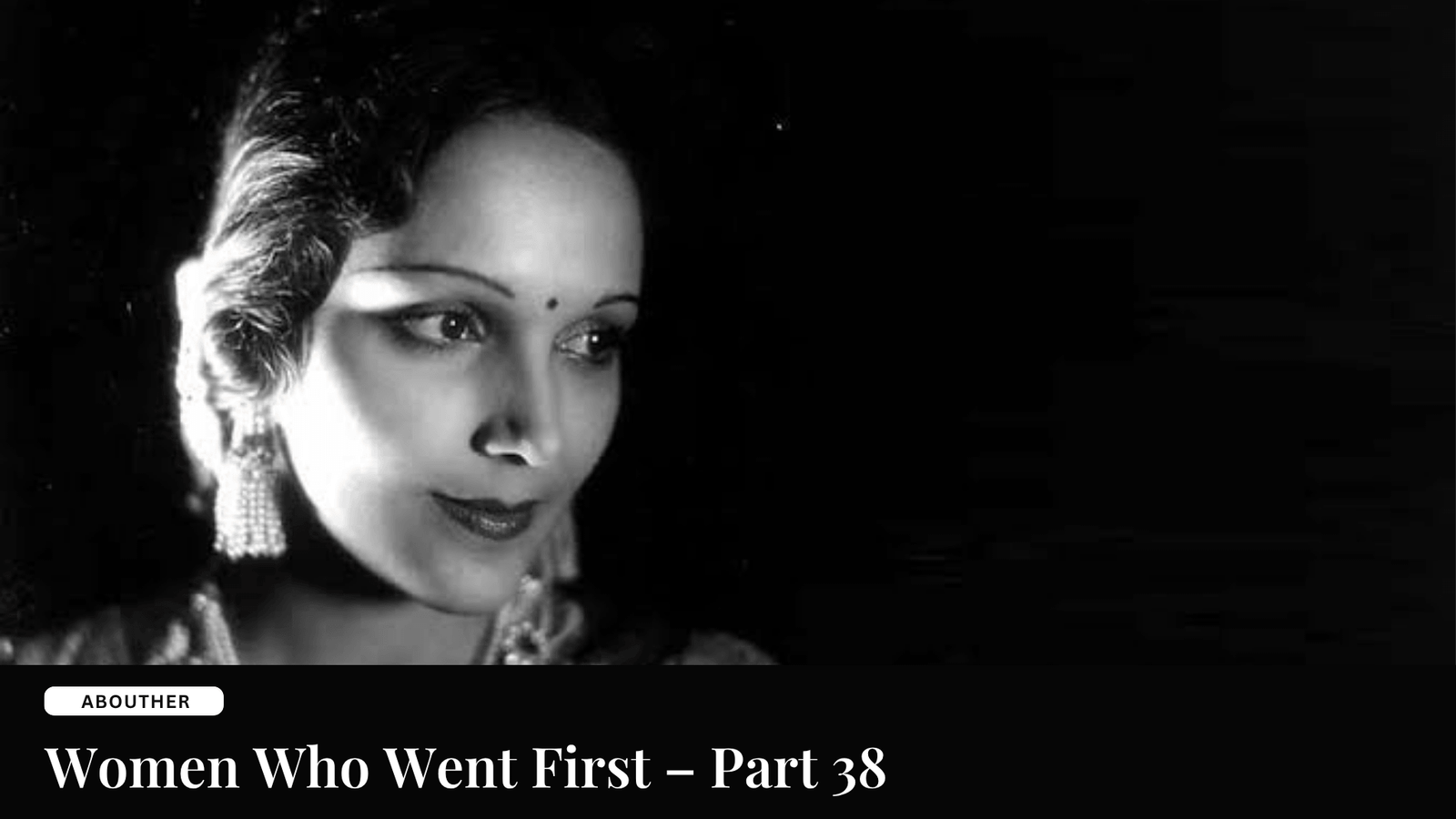
Devika
Rani
Rani
1908 – 1994
She lit up the screen, ran the studio, and then, on her own terms, went dark.
1933
BOMBAY TALKIES FOUNDED
4 min
ON-SCREEN KISS THAT SCANDALIZED INDIA
1958
FIRST DADASAHEB PHALKE AWARD
THE BEGINNING
She was born in Waltair in 1908, the great-niece of Rabindranath Tagore on her mother’s side. Her father was the Surgeon General of Burma. The family was cultured, connected, and thoroughly at ease in two worlds. Devika Rani grew up knowing that beauty and intelligence were not separate categories, and she carried that certainty for the rest of her life.
She went to London in her teens to study at the Royal Academy of Dramatic Art and the Royal Academy of Music. She trained in textile design and set design at the London Theatre Studio. She was not preparing to become a film star. She was preparing to become an artist. The screen found her anyway.
“She was not preparing to become a film star. She was preparing to become an artist. The screen found her anyway.”
BOMBAY TALKIES
In London she met Himanshu Rai, a filmmaker who had already made a name producing Indian films in Germany. They married in 1929 and returned to India together with a vision: a modern film studio built on the model of what they had seen in Europe. In 1934, Bombay Talkies opened in Malad, Bombay, and it was like nothing India had seen. Sound studios, a laboratory, European equipment, and a roster of technicians trained abroad. Devika Rani was its leading actress, its artistic director, and in practical terms, the force that held it together.
The films she made in the 1930s were urgent, modern, and unafraid. Achhut Kanya (1936), in which she played an Untouchable girl who falls in love across caste lines, was shown across India and debated in drawing rooms and newspapers. It was not entertainment pretending to be art. It was art dressed as entertainment so that more people would watch it.
1933 Karma First Anglo-Indian talkie; filmed in England
1935 Jawani Ki Hawa Social reform, directed at Bombay Talkies
1936 Achhut Kanya Caste and love; her most enduring role
1937 Izzat With a young Ashok Kumar
1940 Anjaan Her final major role before retiring from acting
THE KISS
In Karma (1933), shot in England, Devika Rani and her co-star Himanshu Rai shared a four-minute on-screen kiss. In Britain, it was unremarkable. In India, it was a sensation. Newspapers wrote about it. Moralists condemned it. Audiences lined up to see it.
Devika Rani was not embarrassed. She had done nothing wrong and she knew it. The kiss was part of the story the film was telling. She said so, calmly, and then went back to work. In a country where women on screen were expected to look away, she had looked directly at the camera. That, more than the kiss itself, was what unsettled people.
THE STUDIO RUNS ON HER
When Himanshu Rai died in 1940, Devika Rani did not step aside. She took over Bombay Talkies and ran it herself. She was thirty-two. The studio was mid-production on several films, the staff was uncertain, and the industry watched to see if she would sell or collapse. She did neither.
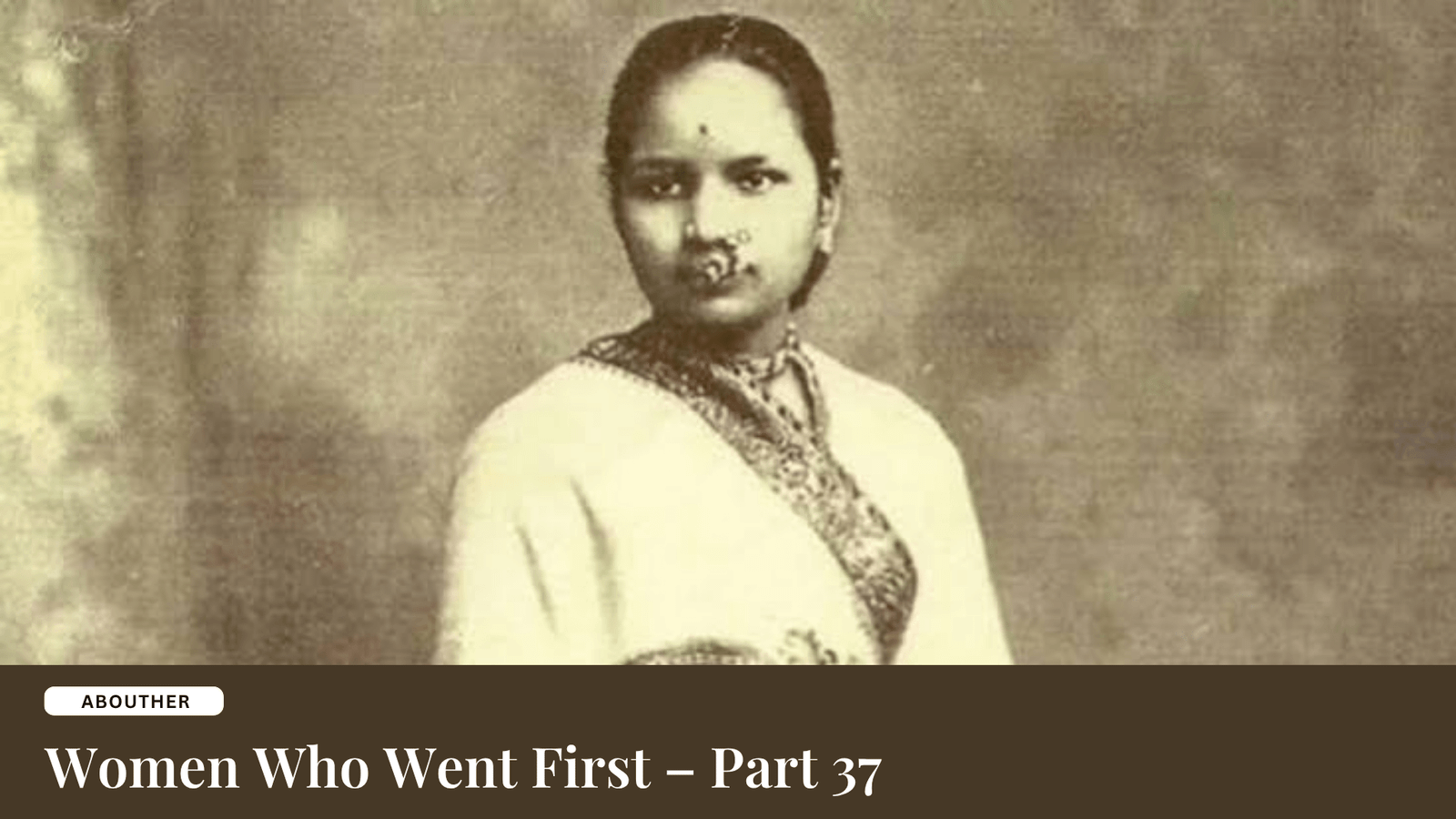
Also Read: The Women Who Went First – Part 37
Under her stewardship, Bombay Talkies launched the careers of Dilip Kumar, Ashok Kumar, and Madhubala. She spotted Dilip Kumar working in a military canteen in Pune, brought him to the studio, renamed him, and cast him. That is the kind of eye she had. She was not just keeping the studio alive. She was building the next generation of Indian cinema with her own hands.
She retired from acting in 1945. She was thirty-seven. The studio continued for a few years after, then closed. She had done what she came to do.
THE DISAPPEARANCE
In 1945, she married the Russian painter Svetoslav Roerich, son of the celebrated Nicholas Roerich. They moved to Bangalore, to an estate called Tataguni, surrounded by paintings and gardens. She stepped entirely out of public life.
For decades, almost no one heard from her. She was not bitter, not broken. She had simply finished one life and begun another. She grew roses. She helped Svetoslav with his painting. She corresponded with friends. She was, by all accounts, content in a way that had nothing to do with applause.
India did not entirely forget her. In 1958, she received the very first Dadasaheb Phalke Award, the highest honour Indian cinema gives. She accepted it quietly. When journalists came to Tataguni to ask her about the old days, she was gracious, clear-eyed, and gave nothing away that she had not chosen to give.
She died in Bangalore in 1994, at eighty-five, among her roses.
“She had simply finished one life and begun another. She grew roses. She was, by all accounts, content in a way that had nothing to do with applause.”
CROSS-SERIES CONNECTION · ISSUE 35
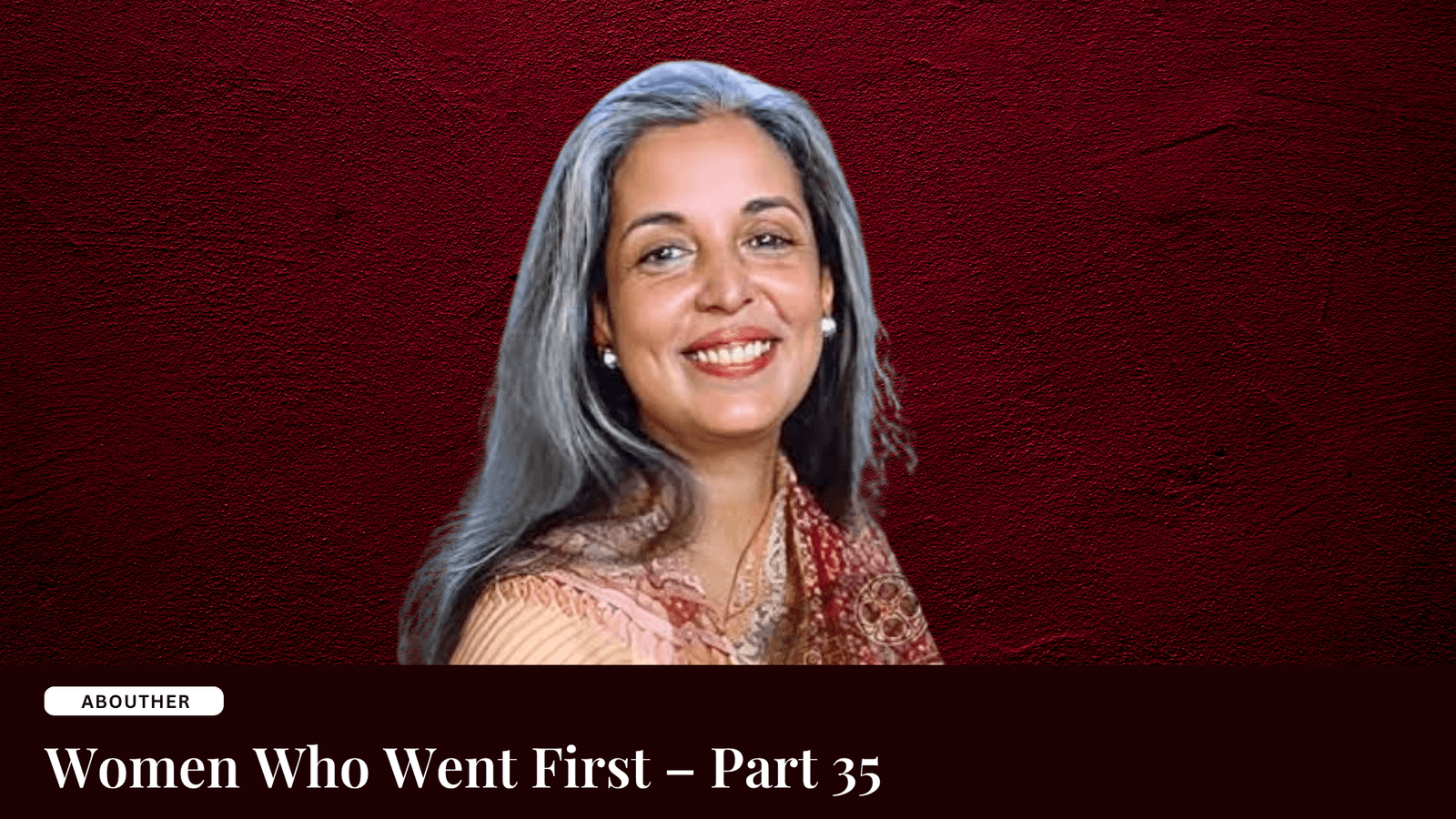
Read alongside Leela Naidu (Issue 35), and a pattern becomes visible in Indian film history: the woman who is most extraordinary is often the one who steps away first. Leela Naidu withdrew gradually, almost without announcement, as if the world’s attention had become too loud. Devika Rani did the same, but with more deliberateness. She chose Tataguni. She chose the roses. Both women let the screen go and found something the screen could not give them. The difference is that Devika Rani built the industry before she left it.
WHY SHE BELONGS IN THIS SERIES
Most of the women we call “pioneers” opened a door and then stood to one side while others walked through. Devika Rani opened the door, rebuilt the building, hired the next generation, handed them the keys, and walked away to a garden in Bangalore. She did not need to be remembered in order to have mattered. Indian cinema exists in the shape it does partly because she spent a decade making it that way, and then, having made it, she let it go. That is not retreat. That is completion.
ISSUE 38 • PAST PORTRAIT • ABOUTHER MAGAZINE
THE WOMEN WHO WENT FIRST
Share This On Social
About the Author: Sangeeta Relan

Related Posts


I’m Sangeeta Relan—an educator, writer, podcaster, researcher, and the founder of AboutHer. With over 30 years of experience teaching at the university level, I’ve also journeyed through life as a corporate wife, a mother, and now, a storyteller.