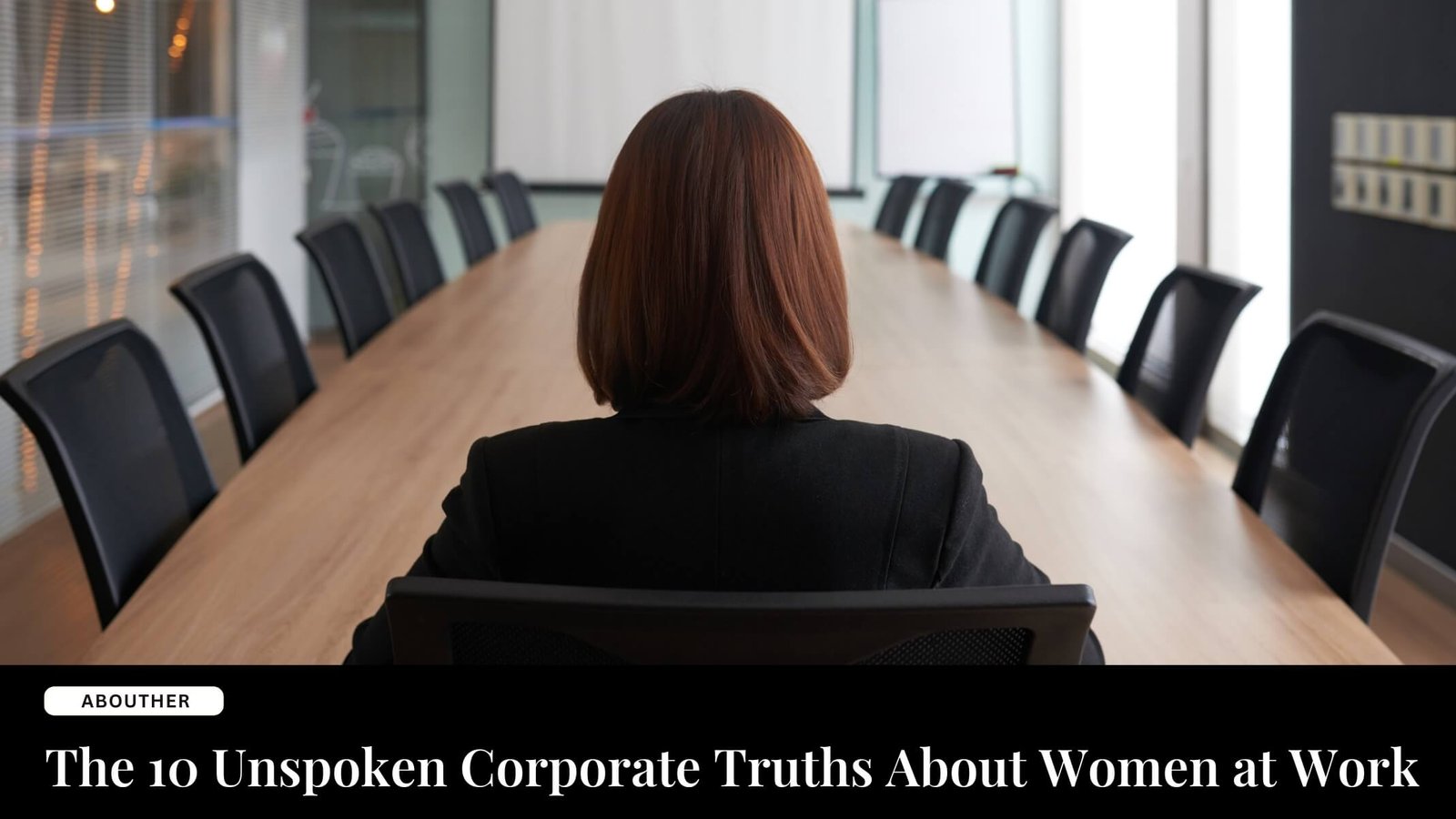
The 10 Unspoken Corporate Truths About Women at Work
As Saudi filmmaker Haifaa al-Mansour once boldly said, “Whether it’s coming from the region, or internationally, I really enjoy portraying strong female protagonists, women who don’t see themselves as victims. … We are very sassy. We are very strong. Don’t take us for granted.” That line always sticks with me because it reminds me how much of a woman’s strength is misread or undervalued in professional settings.
Corporate politics is a world of silent codes, unwritten rules, and conversations in private offices, behind closed doors, and in places where decisions are made long before any official announcement. As someone who has spent years in Human Resources, I’ve sat in these rooms, and I’ve witnessed the gap between what organizations say about equity and what they do.
There are truths about how women are perceived and treated in corporate environments that HR rarely mentions. Here are ten uncomfortable realities, debunking the illusions, and offering insight into how women can navigate these realities.
Your Outfit Isn’t Just Noticed; It’s Interpreted
It’s no secret that women are judged by their appearance more than men. What’s often not acknowledged is how deeply this influences perception and opportunity. In leadership discussions, I’ve heard comments like “She’s dressed to impress, but does she have the substance?” or “She’s too flashy for a leadership role.” Bright lipstick, a designer bag, or high heels are sometimes read as superficiality, not style. Ironically, dressing too plainly can be considered a lack of confidence or effort. It’s a lose-lose.
Makeup, Hair, and Accessories Are Used to Assess “Fit”
A woman’s hairstyle, whether curly or straight, long or cropped, natural or styled, is often a conversation point in leadership reviews. I’ve been in meetings where leaders debated whether someone was “executive material” based on her look. HR won’t admit it, but grooming is frequently weaponized in subtle ways: not neat enough? Unprofessional. Too polished? Trying too hard.
Also Read: Beyond the Mask: Authentic Leadership for Women Who Do It All On and Off Screen
Friendly Behavior with Men Gets Misinterpreted
There’s a fine line between being approachable and being “too friendly.” I’ve seen women criticized for laughing too often at male colleagues’ jokes. While male-male camaraderie is seen as bonding, women are whispered about. Worse still, success is sometimes wrongly attributed to rumored relationships rather than genuine merit.
After-Hours Presence Counts But Only Selectively
Women with family responsibilities often can’t stay late, and that’s held against them, regardless of their daytime performance. But when women do stay late or attend after-hours events, particularly where alcohol is involved, they risk being talked about in ways their male counterparts never are. “She networks well” becomes “She’s always around after hours… wonder why?”
Promotions Are Not Just About Performance
HR may sell a merit-based system, but behind closed doors, I’ve seen promotions swayed by proximity to power. It’s not uncommon for a woman to be told she’s “not ready,” even when her track record surpasses the man who got the role. Sometimes, it’s because the man in power has a long-standing rapport with the candidate, which is not necessarily inappropriate, but rather based on informal, gendered trust networks.
Motherhood Is Still Seen as a Career Liability
Despite all the “we support working moms” rhetoric, when a woman announces a pregnancy, some leaders immediately assume she’ll slow down. I’ve seen project opportunities redirected “just in case she won’t have the bandwidth.” After maternity leave, the battle to reestablish credibility is often silent and steep. Men, meanwhile, are praised for “still showing up strong” after having kids.
Marital Status Still Shapes Perception
Single women are often stereotyped as having “more time to give,” and thus expected to stretch. Married women, especially with children, are assumed to have home commitments that make them less available for travel or leadership roles. Either way, the assumption is made for them, not with them. Men rarely face the same scrutiny.
DEI Is Sometimes a Numbers Game
While companies tout diversity hires, I’ve seen discussions where women were brought in or pushed forward not for their capability but to check a box. This undermines their authority once they’re in the role, and peers question whether she earned it, which affects how seriously she’s taken. True inclusion means enabling her to succeed, not just counting her for optics.
Stereotypes Still Define Leadership Styles
An assertive woman is often labeled as “difficult” or “bossy,” while a man is described as “strong.” A collaborative woman might be called “too soft” or “not leadership material.” If ambitious, she’s “intense” or “trying too hard.” The constant tightrope between being too much and not enough is mentally exhausting, and HR policies rarely address these biases directly.
Also Read: 10 Simple Acts of Kindness That Cost Little to Nothing
The Real Power Conversations Happen Without You
Many women believe that if they do good work, they’ll be recognized. But promotions often come from advocacy, not output. The real decisions happen informally (golf outings, hallway chats, private dinners). If a woman doesn’t have a male champion in the room when those decisions are made, her name may not even be brought up. It’s not fair, but it’s real.
So, What Can Be Done? Awareness is the first step. Until we shift the conversations happening behind closed doors, women will continue to play a game where the rules keep changing. The truth might be uncomfortable, but it’s time we start telling it.
I’m reminded of something Krishna Ahooja Patel said: “Women are half of the world’s population, do two-thirds of the work, get one-tenth of the income, and are the owners of one per cent of the property.”. That’s not just numbers; it’s the reality behind every unspoken rule we’ve talked about today. And it’s why challenging these hidden dynamics isn’t optional; it’s necessary.
Share This On Social
About the Author: Sara Yahia

Related Posts








I’m Sangeeta Relan—an educator, writer, podcaster, researcher, and the founder of AboutHer. With over 30 years of experience teaching at the university level, I’ve also journeyed through life as a corporate wife, a mother, and now, a storyteller.