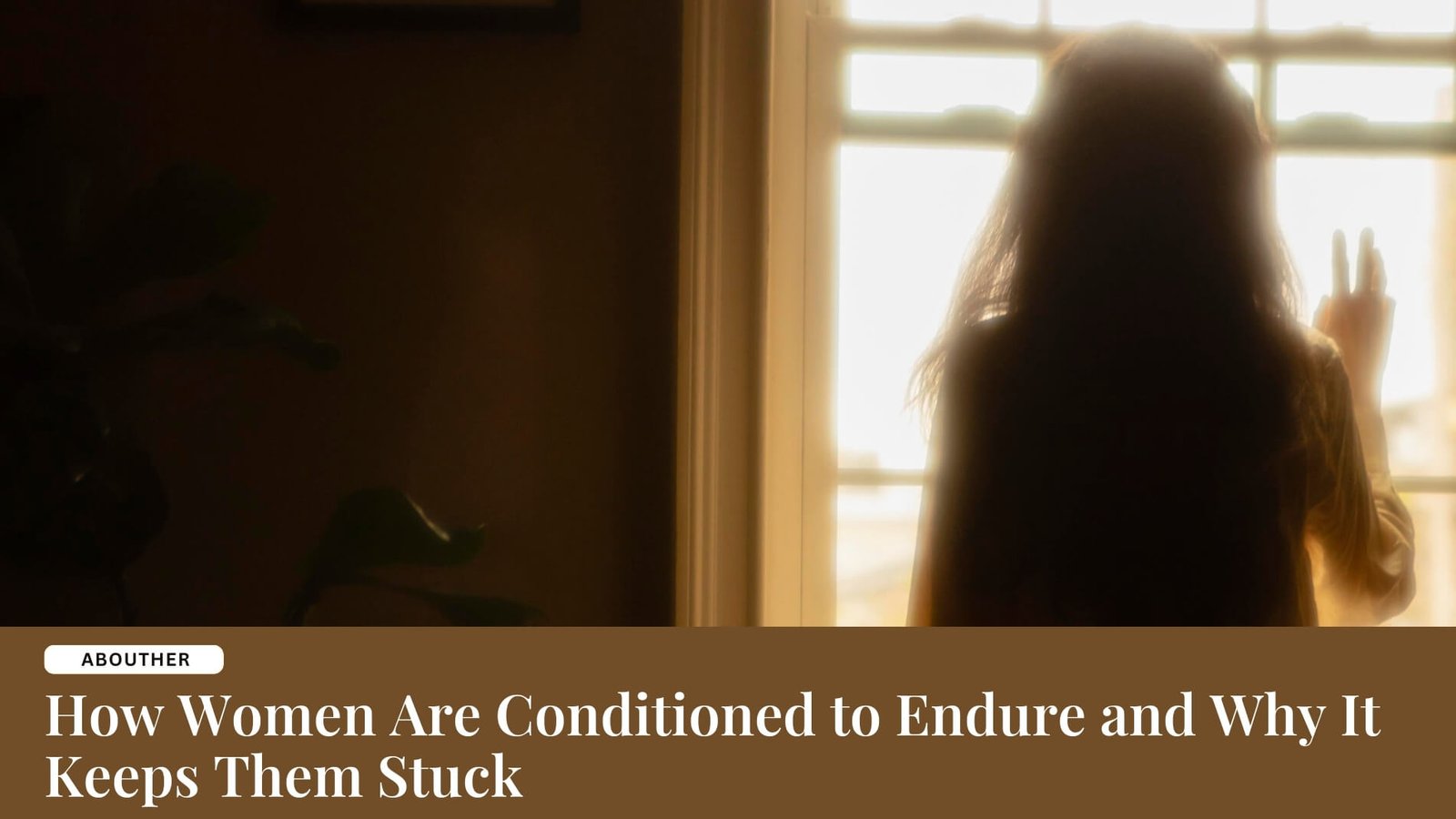
How Women Are Conditioned to Endure and Why It Keeps Them Stuck
Meet Shreya. She is 34. She got married a year ago despite red flags that were hard to miss even then. She told herself she was overthinking and that every relationship needs adjustment and things would settle with time. But they didn’t. The problems began within the first month of marriage. Arguments, emotional distance, dismissiveness; patterns that left her constantly questioning herself. Still, she stayed. She tried harder. She explained more gently. She silenced her anger and reframed her hurt. When the pressure mounted, she agreed to have a child hoping it would save the marriage, or at least stabilise it. Today, Shreya is still there, still enduring.
Every time she raises her voice, she is told she is the problem. That she is too emotional, creates issues and if she has to stay then she needs to learn. And over time, she has learned to phrase her pain differently, not as “This hurts me” but as “What can I do better?” because “I am the problem”.
She uses statements like:
- “It’s up to me to make this work.”
- “Tell me what I should change.”
- “Maybe if I manage myself better…”
Notice what’s missing -there is no conversation about what needs to change on the other side. That how it’s an unsaid rule that she needs to suck it up and adjust if she has to stay and this is what she and so many other women do irrespective of their educational, financial and family background. Those without support of course struggle the most but for those who do have the support, the story is still the same because women are conditioned to endure, not empowered.
This is what endurance looks like when it becomes conditioning rather than choice. This endurance is not always loud and in your face. It begins with a series of small adjustments, compromises here and there that are rooted in values, needs, comfort and overtime become about altering and changing their identity completely. Endurance in relationships looks like –
- Staying despite consistent emotional invalidation
- Taking sole responsibility for “making the relationship work”
- Reframing neglect, disrespect, or avoidance as normal relationship issues
- Asking “What can I adjust?” instead of “Why am I hurting?”
- Confusing patience with progress
- Feeling guilty for wanting basic emotional safety
They do this because they are too busy trying to convince themselves that if they just try harder, love will eventually meet them halfway. This is what most women are brought up with. Many women are conditioned early to:
- Prioritise harmony over honesty
- Associate love with sacrifice
- View emotional tolerance as maturity
- Believe that leaving equals failure
- Fear being labelled “difficult,” “selfish,” or “too much”
Psychologically, endurance becomes a survival response. When a woman’s needs are repeatedly dismissed, her nervous system learns that staying quiet feels safer than risking conflict or abandonment. But what needs to be understood is that endurance is not strength when it comes at the cost of self-erasure and we really do need to stop glorifying it. What needs to change is not a woman’s capacity to tolerate, but the framework she is operating within.
This shift begins when women learn that:
- A relationship cannot be sustained by one person’s effort alone
- Accountability must exist on both sides
- Love does not require self-abandonment
- Endurance is not proof of commitment, mutual responsibility is
- Asking for change is not being demanding; it is being honest
Real strength is not staying at any cost. It is recognising when staying requires you to disappear because it is true that leaving or calling out a dynamic is unhealthy, unsustainable, toxic, is extremely difficult when we’re constantly told to prioritise comfort and silence.
For women like Shreya and for many others healing begins not with trying harder, but with asking a different question: “Why am I the only one being asked to change?” Sometimes, the bravest thing a woman can do is stop enduring and start listening to what her discomfort has been trying to tell her all along.
Share This On Social
About the Author: Damini Grover

Related Posts





I’m Sangeeta Relan—an educator, writer, podcaster, researcher, and the founder of AboutHer. With over 30 years of experience teaching at the university level, I’ve also journeyed through life as a corporate wife, a mother, and now, a storyteller.