Are Today’s Teenagers Really More Fragile, Or Just More Honest?
Every generation believes the next one has it harder, easier, or simply wrong. Yet when we truly listen to teenagers instead of judging them, a very different story emerges, one of awareness, pressure, resilience, and a deep need to simply be understood.
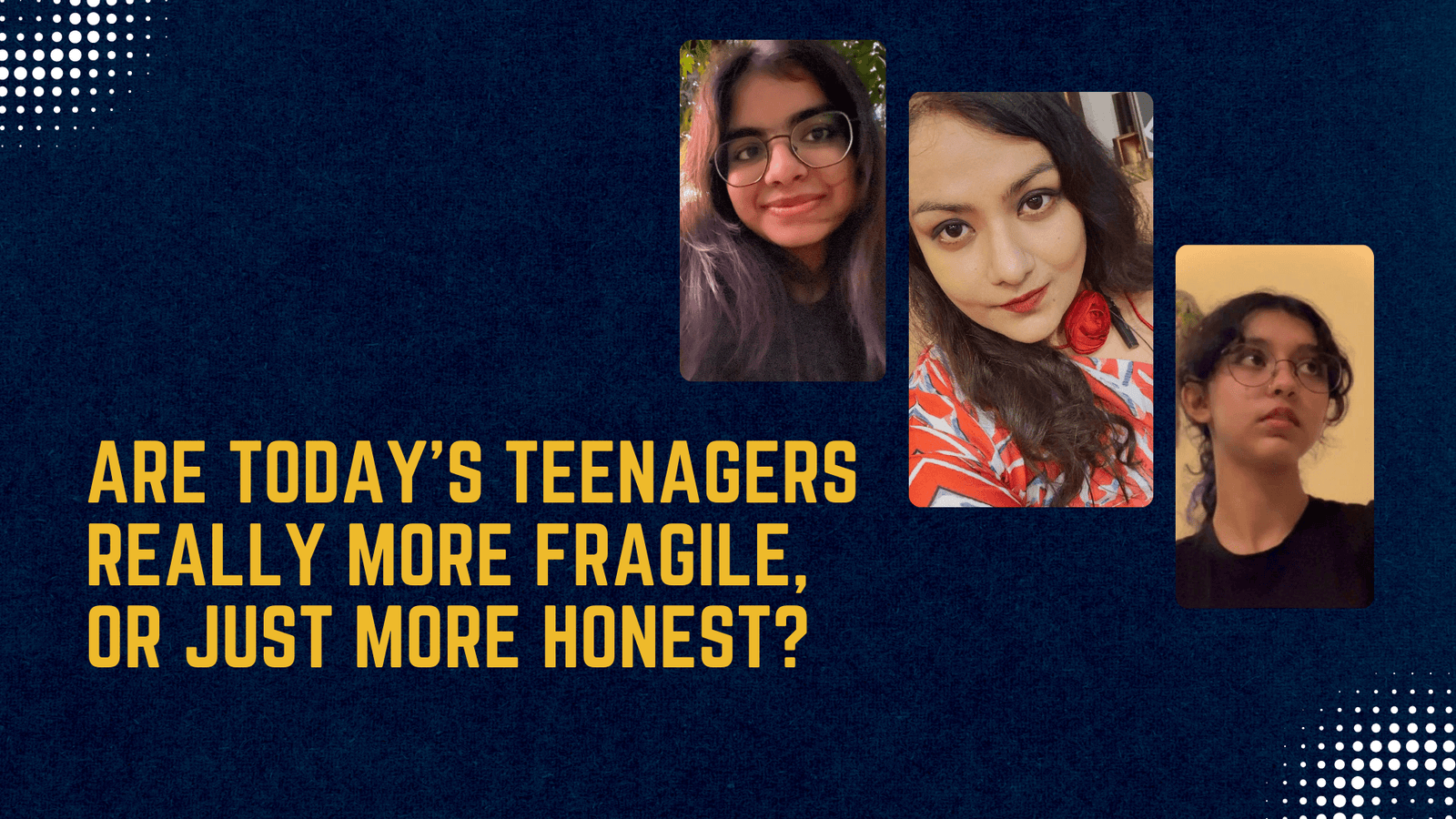
In a recent conversation on The The AboutHer Show, educator Ishita, along with students Aadya and Gayatri, opened up about what it really feels like to be a teenager today. Their discussion revealed something powerful: teenagers today are not weaker, they are navigating a far more complex world.
From academic pressure to social media comparison, from anxiety to identity, their experiences highlight an urgent truth: teenagers don’t just need advice, they need acceptance.
The New Reality of Growing Up
While emotional needs of teenagers haven’t changed much over the years, their environment certainly has. Today’s teenagers are growing up in a world of constant connectivity, information overload, and visible comparison.
As educator Ishita explains:
“The emotional needs of teenagers haven’t changed. What has changed is the world around them and how quickly they have had to adapt to it.”
Teenagers today are:
- More informed
- More self-aware
- More expressive
- But also more exposed to pressure
This exposure creates both strength and vulnerability.
The Silent Pressures Teenagers Carry
One of the biggest themes that emerged was pressure coming from every direction.
Academic expectations, social comparison, future uncertainty, and self-expectations often collide at the same time.
As Gayatri described it:
“You feel like you’re being blasted from every possible direction with pressure — academia, social life, everything at once.”
Some of the biggest pressures teenagers reported include:
- Academic competition and college admissions
- Social expectations shaped by social media
- Fear of missing out (FOMO)
- Beauty standards and comparison culture
- Fear of making mistakes in a permanent digital world
Social Media: The Double-Edged Sword
Social media emerged as both a support system and a stress trigger.
On one hand, it builds connection and belonging. On the other, it creates constant comparison.
Aadya captured this perfectly:
“Comparison is the thief of joy.”
The discussion highlighted an important reality: social media itself isn’t the enemy, unconscious consumption is.
Teenagers today are increasingly aware of algorithms, digital influence, and curated realities, but awareness alone doesn’t remove emotional impact.
Anxiety: The Word That Keeps Appearing
From a teacher’s perspective, Ishita noted one word appearing repeatedly in classrooms today: Anxiety
Not just one type, but many:
- Performance anxiety
- Social anxiety
- Self-esteem struggles
- Fear of inadequacy
Her most important insight?
“Before awareness comes acceptance.”
Students open up not when adults give solutions, but when they feel safe from judgment.
Also Read: Chitra Banerjee Divakaruni- Reclaiming Women’s Voices, One Story at a Time
What Support Actually Helps Teenagers?
Perhaps the most surprising insight was simple:
Teenagers don’t always want solutions.
Sometimes they just want someone to listen.
As Aadya shared:
“Sometimes I don’t want advice. I just want someone to listen.”
The conversation revealed what actually helps:
Support that helps:
✔ Listening without immediately fixing
✔ Trust and belief
✔ Emotional safety
✔ Genuine conversations
✔ Professional help when needed
Support that doesn’t help:
✖ Constant comparison to “our times”
✖ Unsolicited advice
✖ Dismissing their struggles
✖ Treating them as problems to solve
Redefining Success for Gen Z
Interestingly, success for these teenagers wasn’t defined by wealth or status.
Instead, it sounded refreshingly human.
For Aadya:
“Success right now is getting into a good college while staying happy and sane.”
For Gayatri:
“Success feels like being surrounded by people who love you.”
This shift shows something powerful:
Gen Z may be redefining success from achievement to wellbeing.
What Teenagers Wish Adults Would Change
When asked what one change could improve teenage support systems, the answers were strikingly simple:
“See us as human beings, not problems.”
“Stop scrutinising. Start understanding.”
“Believe us when we say we need help.”
Perhaps the most powerful takeaway?
Teenagers don’t expect perfection from adults.
They expect honesty, humility, and humanity.
Key Takeaways for Parents, Educators and Adults
If there was one summary of the conversation, it would be this:
Connection matters more than correction.
Here are the biggest lessons adults can take away:
- Acceptance builds trust faster than advice
- Listening builds resilience more than lecturing
- Teenagers need allies, not supervisors
- Emotional safety builds openness
- Trust motivates more than fear
A Call to Action: Listen Before You Lead
If we want mentally stronger teenagers, we must first become emotionally safer adults.
That may mean:
- Listening without interrupting
- Asking instead of assuming
- Accepting instead of correcting
- Supporting instead of controlling
Because resilience isn’t taught through pressure.
It is built through support.
As Ishita beautifully said:
“Our job is not to reform teenagers. Our job is to understand them as human beings.”
And perhaps that is where change truly begins.
Want to understand what today’s teenagers are really going through? Listen to the full episode of The About Her Show and join the conversation.
YouTube: https://www.youtube.com/watch?v=yHwo3pDbIIY
Spotify: https://shorturl.at/QaIiC
Apple: https://shorturl.at/MkgAU
Sangeeta Relan is an Associate Professor at the University of Delhi with over 34 years of teaching experience. She is a researcher in gender diversity and corporate governance and the founder of AboutHer, a platform dedicated to storytelling, dialogue, and women’s voices.
Through The AboutHer Show, she has hosted over 140 conversations with women leaders, creators, and change-makers, as well as men who actively support gender inclusion. Her work focuses on identity, leadership, financial independence, and the evolving role of women in contemporary India.
Share This On Social
About the Author: Sangeeta Relan

Related Posts






I’m Sangeeta Relan—an educator, writer, podcaster, researcher, and the founder of AboutHer. With over 30 years of experience teaching at the university level, I’ve also journeyed through life as a corporate wife, a mother, and now, a storyteller.