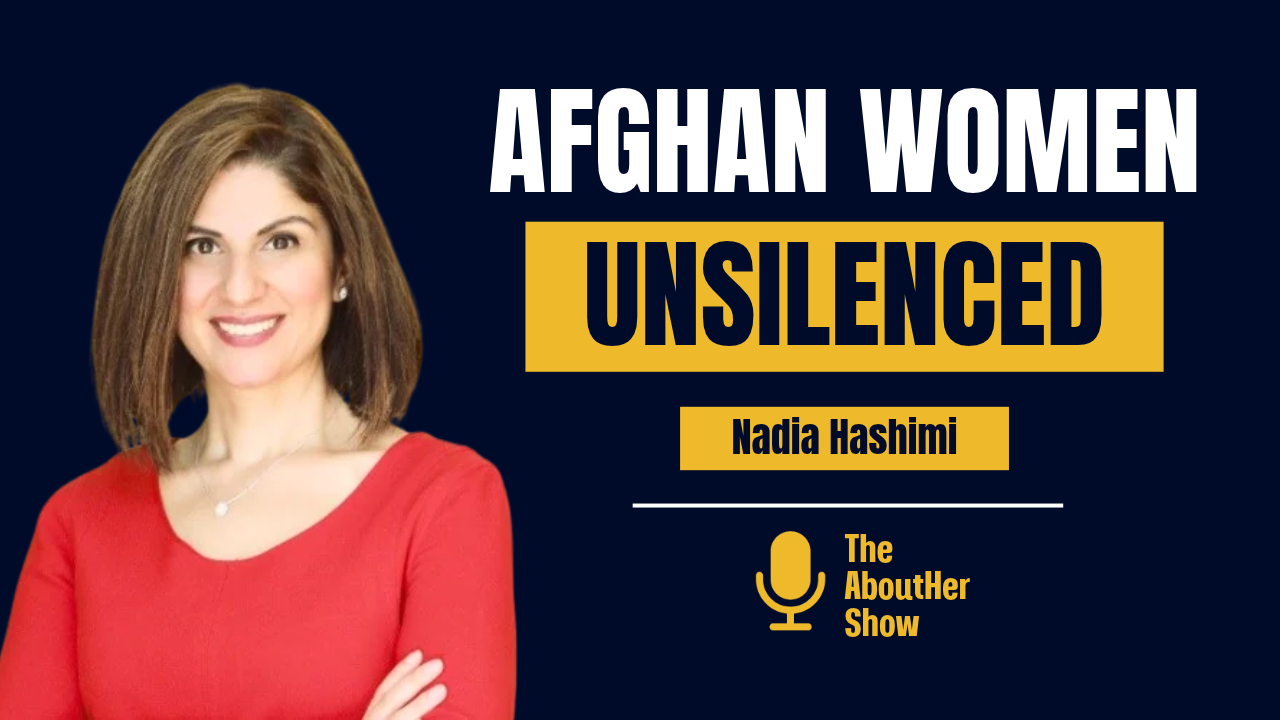
They Are Not Voiceless: Nadia Hashimi on Afghan Women and the Stories We Tell
THE ABOUTHER SHOW · IN CONVERSATION
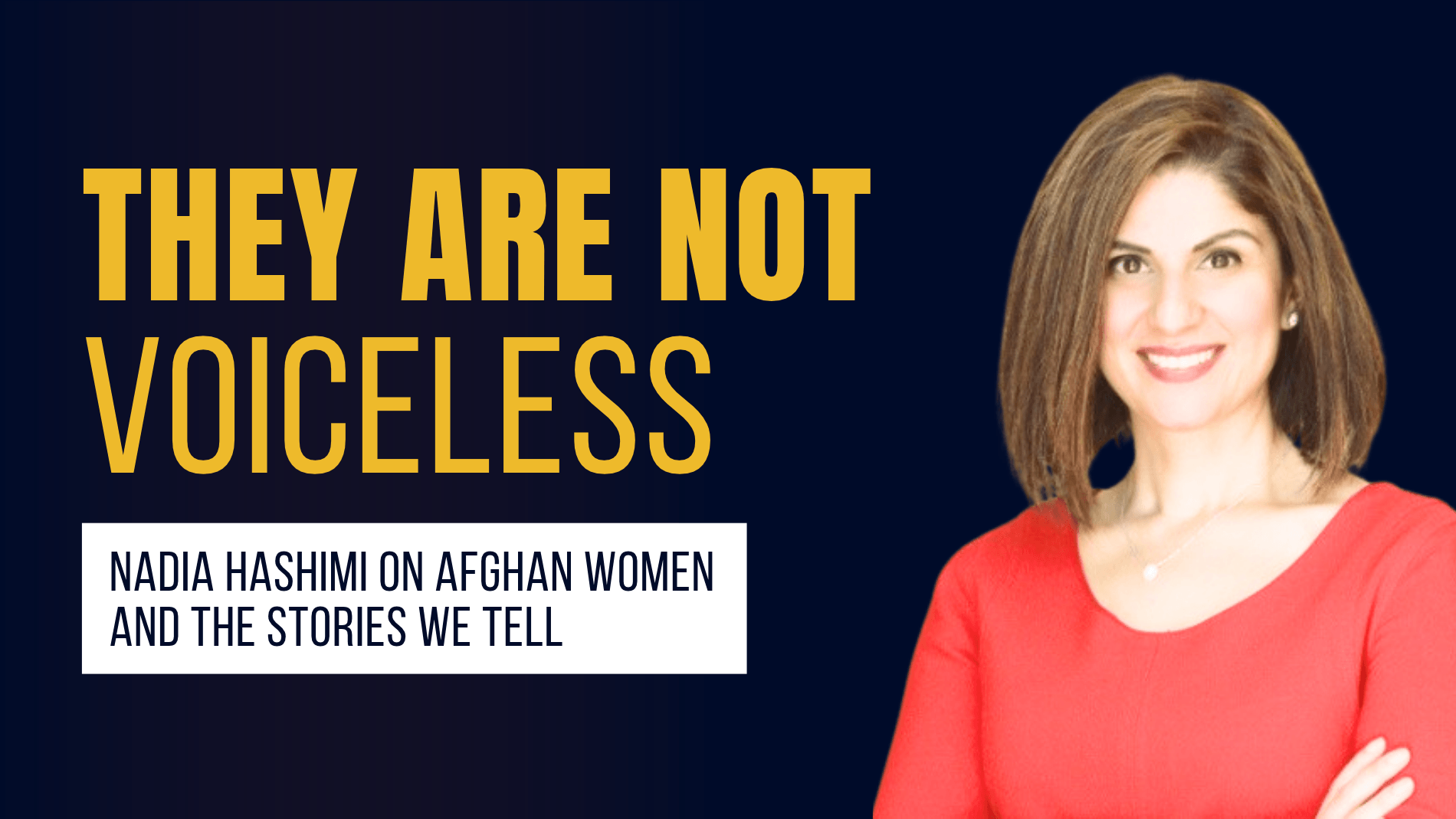
They Are Not Voiceless
Nadia Hashimi on Afghan Women and the Stories We Tell
Nadia Hashimi on Afghan Women and the Stories We Tell
From Sangeeta Relan’s conversation with Nadia Hashimi on The AboutHer Show
I asked Nadia Hashimi a question I thought I knew the answer to. Her books have been translated into 17 languages, and readers around the world turn to her for a window into Afghan women’s lives. Does she feel the pull, or the pressure, to be seen as the voice of Afghan women in the West?
She did not hesitate.
I never want to position myself as the voice of Afghan women because we have Afghan women who are speaking for themselves.
That one answer says a lot about who she is, and it ran through the whole of our conversation. I have been reading her books since 2016 or 2017, and here is what I took away from it.
The nudge that started it all
Nadia was a pediatrician who had just finished her training, and it was the first year of her marriage. Her husband noticed how much she read and saw something she had not seen in herself. He suggested she try writing. At first she thought he was just being ambitious on her behalf.
Then she started wondering what she would write. That small question became a career, and she is clear about where it began.
A lot of the work has to be done by women by ourselves, but then there is so much room for the allyship too.
It is exactly why we invite men onto this show.
Picking up the pen
I asked whether she would still be writing if her first book had not taken off. She was honest: she is not sure, but she hopes so. She has just finished her eighth book, and her answer was that the hardest part is the very first step.
I know this one personally. About ten years ago I had stories to tell and nowhere to publish them, so I started a website. It took almost 65 stories before I had the courage to send one to a publisher. Nadia put it simply: the craft gets honed over time, and there is something to be said for the showing up.
Also Read- She Told Doubters to Put Garlic Under Their Feet. Then She Built an Industry.
Memory, binders and a 1979 coup
How much of her writing is inherited memory, and how much is research? Both, and she can tell them apart. The culture comes from home: the way you stand up when someone walks into the room, the way you talk to your grandparents, the music, the food.
The specifics come from her binders. For City of Widows she interviewed the commander of the Female Tactical Platoon, an elite unit that went on night missions and fast roped out of helicopters. She also spoke to an American woman who served on a cultural support team that trained them. For Sparks Like Stars, which is about the 1979 coup, she combined her uncle’s memories with American Foreign Service Officer archives. Sometimes she finds things her own parents did not expect her to find.
When Rahima tapped her on the shoulder
Nadia had always meant to leave Rahima’s story where The Pearl That Broke Its Shell ended. She had put the character through so much that she was hesitant to return. While piecing together a timeline for a story about the women of that platoon, she asked herself who would actually sign up for such a life.
The answer arrived on its own, almost like Rahima tapping her on the shoulder. She checked the timeline, and it worked. The two books are standalone reads, so you can start with either one.
What the Taliban fear most
Nadia wanted City of Widows to show how the return of the Taliban affected everyone, not only one kind of woman. Mina, the journalist in the book, stands for the women who were erased from television screens, quite literally, in a field that had thrived for 20 years.
She also pointed to what the Taliban have targeted most fiercely: freedom of speech, arts and culture, the humanities, women and equality.
Their targets really should guide us to understand what are the essential principles, the institutions of a society that give us a thriving culture.
Not the voice, but one of many
Growing up, Nadia could not find a single novel with Afghan characters in her library. She did not realize what kind of hole that left until she began writing the stories she wished she could have found. Today, the shelves are filling with books by Afghan women, and she has many of them on her own.
She warned against calling Afghan women voiceless, because that aligns us with the Taliban, who have been silencing them.
They’re not voiceless. They are speaking up.
I think this is where people like us come in. They speak for themselves, and the rest of us can help that message reach a wider audience.
She is also clear that she does not write for a Western audience. She writes for the characters, and readers bring their own lens. Western readers have told her they did not know Afghanistan had a peaceful era. Afghan readers have thanked her for bringing back what one called whispers from a childhood.
Kabul, August 2021, in real life
When I asked whether the news and the fiction ever blurred, Nadia said they blurred completely. She watched that month unfold with her parents and the wider community, asking each day who had escaped and how many flights had taken off. At one point a vulnerable, well known woman in Afghanistan was messaging her to try to escape, and many people were building spreadsheets to help get vulnerable people onto the manifest of one of the last flights.
Yet the heart of the book is a mother and a daughter. Their tensions would exist in any year, and history only shapes how they play out.
It is significant in the way that it molds people’s lives.
A good ending is not always a happy one
What does she hope readers feel has changed for Rahima by the end? Not a golden road ahead, but a few answers to the questions she started with. As Nadia put it, people end up feeling more solid in the skin they are in, with a little more strength in their legs for the next few steps.
I told her I think happy endings are overrated. Life is a mixed bag, and a good story should be too.
In our closing round, she described Kabul before everything changed in a single word: promising. Her favorite Afghan dish is maash palaw. And the one thing she wishes more people understood about Afghan women is simple.
That they’re worthy and fully human.
KEY TAKEAWAYS
1. Allies change careers.
A husband’s nudge is what turned a reader and pediatrician into a novelist.
2. The first step is the hardest.
Picking up the pen is the barrier. The craft improves with practice and showing up.
3. Fiction makes history human.
Readers connect to characters in a way they often cannot to textbooks or news.
4. A society’s targets reveal its foundations.
Free speech, arts, culture and women’s equality are what the Taliban attack, and they are what a thriving society rests on.
5. Afghan women are already speaking.
The role of writers and listeners is to amplify them, not to speak for them.
6. A good ending is a solid one.
Growth means feeling more grounded, not having a perfect life.
Key quotes
“I never want to position myself as the voice of Afghan women because we have Afghan women who are speaking for themselves.”
“I think the hardest part about believing in oneself as a writer is picking up the pen the very first time.”
“They’re not voiceless. They are speaking up.”
“Their targets really should guide us to understand what are the essential principles, the institutions of a society that give us a thriving culture.”
“They feel a little bit more solid in the skin that they’re in.”
“That they’re worthy and fully human.”
All quotes are from Nadia Hashimi, author of City of Widows.
Listen to the full conversation on The AboutHer Show.
Not just about her. It takes all of us.
Share This On Social
About the Author: Sangeeta Relan

Related Posts





I’m Sangeeta Relan—an educator, writer, podcaster, researcher, and the founder of AboutHer. With over 30 years of experience teaching at the university level, I’ve also journeyed through life as a corporate wife, a mother, and now, a storyteller.