
The Women Who Went First – Part 26
AboutHer
STORIES. WOMEN. NOW.
THE WOMEN WHO WENT FIRST ✦ CONTEMPORARY
PORTRAIT · ISSUE NO. 26
Priya
Jhingan
Jhingan
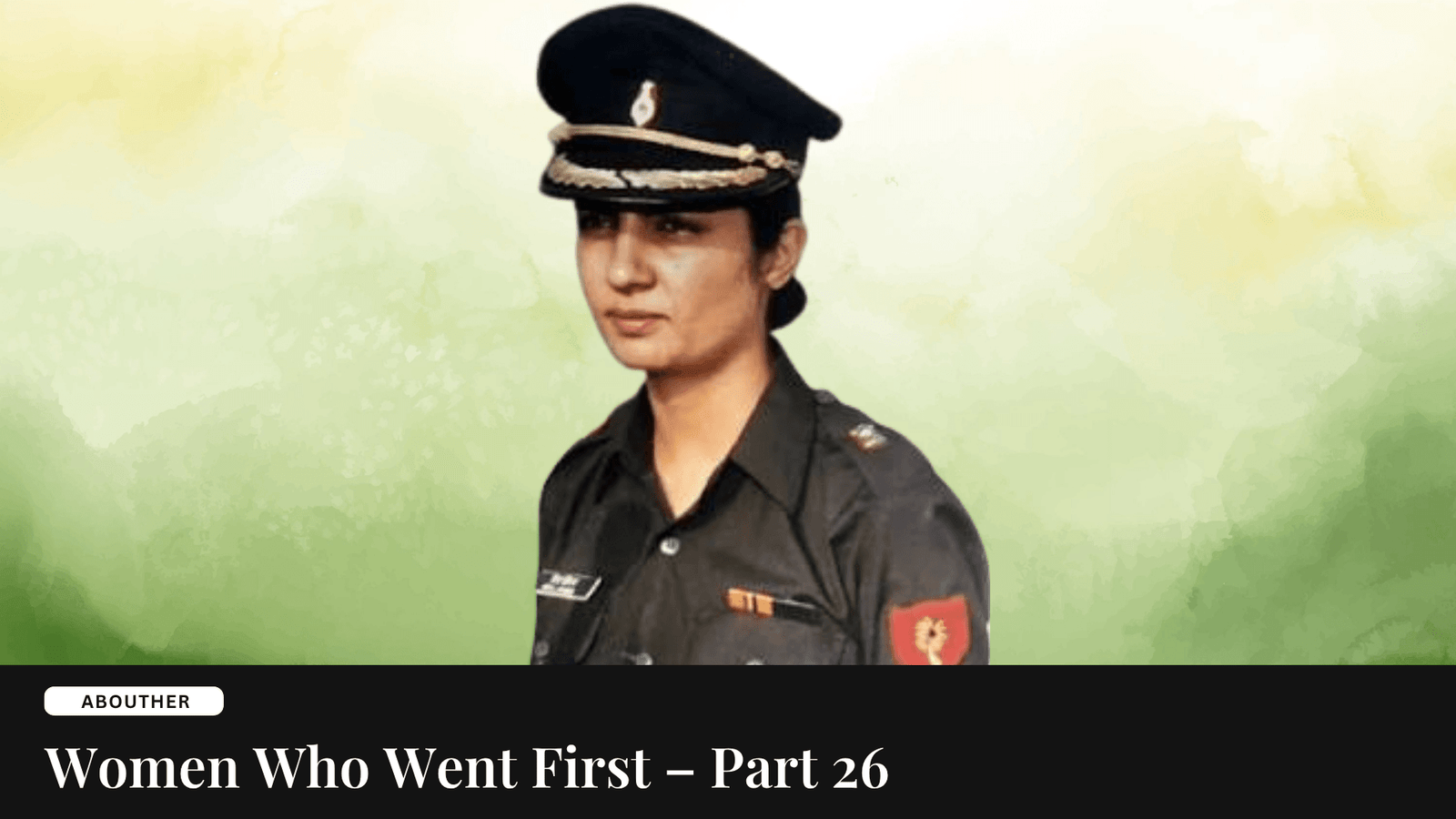
She wrote a letter asking why women could not join the Indian Army. The letter changed the answer. She became the first woman commissioned into the Indian Army in 1993, and she chose regimental number 001 because she understood exactly what she was.
In 1992, a young woman from Delhi wrote a letter to the Chief of Army Staff of the Indian Army. The letter asked a simple question: why were women not permitted to join? It was not a petition, not a legal challenge, not an organised campaign. It was one woman asking one question that the institution had never been asked in quite that way before, directly and without apology, by someone who genuinely wanted to serve and genuinely could not understand why she was not being allowed to. The letter was read. The question was taken seriously. Within a year the Indian Army had opened its first Women’s Special Entry Scheme and Priya Jhingan had been commissioned as its first officer, wearing regimental number 001, a number she had chosen herself, knowing that it would mean something long after she had left the uniform behind.
THE LETTER
THE LETTER THAT CHANGED EVERYTHING, 1992
Priya Jhingan was a law student in Delhi when she wrote to the Chief of Army Staff asking why women were excluded from military service. She had grown up with a deep sense of wanting to serve the country in a way that felt meaningful and substantive, and the army represented that to her in a way that other options did not. The letter was direct and respectful and completely serious. It did not argue for women’s rights in abstract terms. It argued that she specifically wanted to serve and that she could not see why she should not be permitted to. The Army’s response surprised her: instead of dismissing the question, it set in motion a process that would end with the creation of the Women’s Special Entry Scheme. She applied. She was selected. She was commissioned in 1993 as the first woman officer in the Indian Army’s history. She chose the regimental number 001 because she wanted it to be clear, to everyone who came after her, that she had been first.
THE NUMBER SHE CHOSE
001
THE REGIMENTAL NUMBER PRIYA JHINGAN CHOSE WHEN COMMISSIONED INTO THE INDIAN ARMY IN 1993. THE FIRST WOMAN OFFICER IN THE ARMY’S HISTORY. SHE CHOSE IT DELIBERATELY.
The choice of number 001 is worth pausing on. It was not assigned to her. She chose it. That act of deliberate self-designation, of understanding in real time that she was doing something historic and marking it clearly so that the history could not be obscured later, is characteristic of someone who understood the weight of the moment she was in. She was not simply joining the Army. She was opening it. The number was her way of saying so, permanently, in the institution’s own records.
WHAT SHE DID IN UNIFORM
Priya Jhingan served in the Army for several years in the Judge Advocate General’s branch, which handles legal matters within the military. Her background in law, combined with her position as the first woman officer, placed her in a role that was simultaneously pioneering and intensely scrutinised. Every decision she made, every interaction she had, every piece of work she produced was observed with the particular attention that institutions give to the person who is demonstrating whether the experiment was a good idea.
She has spoken about her time in service with pride and with honesty about the challenges. She was warmly received by many colleagues and encountered resistance from others. She navigated the institution with the same directness she had brought to the letter that got her in, and she left having demonstrated, without ambiguity, that women could serve in the Indian Army with the same competence and commitment as their male counterparts.
“I wrote that letter because I believed I could serve. I chose the number 001 because I wanted every woman who came after me to know that someone had been first and that it was possible.”
PRIYA JHINGAN
WHAT CAME AFTER HER
The door Priya Jhingan opened in 1993 has not opened as far or as fast as it should have. Women officers in the Indian Army have fought, repeatedly and through the courts, for the permanent commission and the combat roles that their male colleagues hold as a matter of course. The Supreme Court of India ruled in 2020 that women officers must be considered for permanent commission on equal terms with men, a ruling that the Army had resisted for years and that required a court order to implement.
In 2021 Captain Abhilasha Barak became the first woman combat aviator in the Army Aviation Corps. In 2022 the first women soldiers were inducted into the military police. Each of these milestones arrived decades later than they should have, and each arrived only after sustained pressure, legal challenge, and the kind of institutional reluctance that makes the original courage of the women who pushed for entry even more significant in retrospect.
THE DOOR THAT HAS NOT OPENED FULLY
Priya Jhingan’s letter opened the Indian Army to women officers in 1993. In the thirty years since, the progress has been real but contested at every step. Women have had to fight through the courts for permanent commission, for command roles, for combat positions that the institution granted to men as a matter of course. The Supreme Court’s 2020 ruling that the Army’s resistance to permanent commission for women was based on gender stereotypes rather than military necessity was a landmark, but it required a court to say what should have been obvious thirty years earlier. Priya Jhingan opened the door. The institution has been arguing about how far to open it ever since. That tension is part of her story and it belongs here.
THE LIFE SHE BUILT AFTER SERVICE
Priya Jhingan left the Army to raise her family, a decision she has spoken about without apology or regret, in the same direct way she has spoken about everything else. She has remained a visible figure in conversations about women in the military, speaking at events, giving interviews, and maintaining the public presence of someone who understands that the first person through any door has an ongoing responsibility to the people who follow.
Also Read: The Women Who Went First – Part 25
She has watched the subsequent decades of legal battles and institutional resistance with the particular perspective of someone who knows what the resistance feels like from the inside and who understands that the question she asked in 1992, in a letter written by a law student in Delhi, has still not been fully answered.
THE NOOR INAYAT KHAN CONNECTION
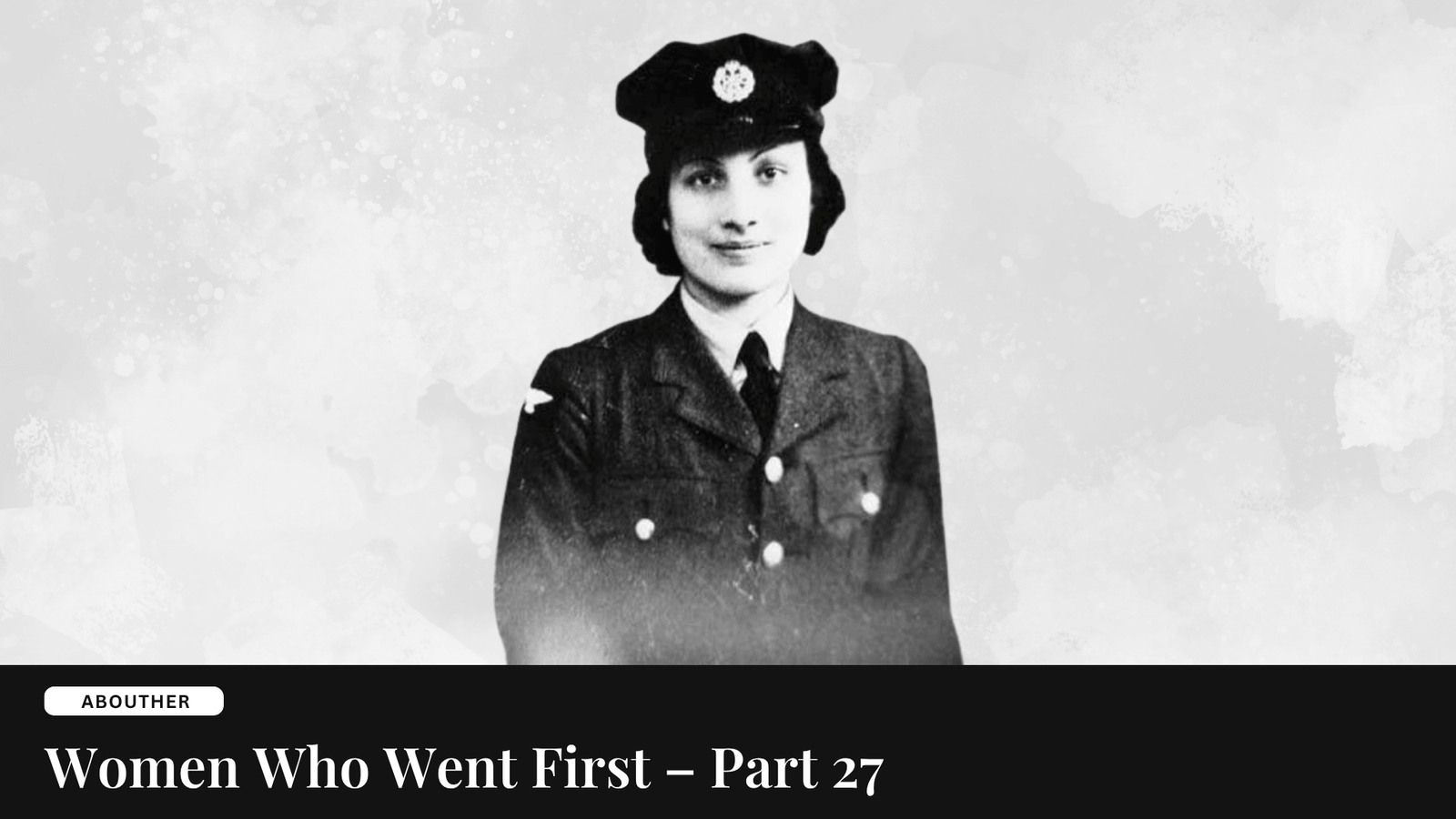
The next issue of this series will feature Noor Inayat Khan, the Indian-origin British spy who served in Nazi-occupied France during World War Two, the first female wireless operator dropped into occupied France, who was captured, tortured, and executed without revealing a single name. Noor entered a war as a woman in a role that women were not officially supposed to hold. Priya Jhingan wrote a letter that changed what Indian women could officially be in uniform. Both understood that the barrier was not ability but permission. Both found their own way through it, fifty years apart, in completely different contexts, with the same fundamental clarity about what they were doing and why.
WHY SHE BELONGS IN THIS SERIES
The Women Who Went First has told stories of women who went first into institutions, into space, into courtrooms, onto stages, and into hostile territory. Priya Jhingan went first into the Indian Army with a letter. That is the most unadorned version of going first that this series has encountered: no dramatic moment, no crisis, no historical accident. A young woman, a question, a letter, and a decision to see what happened when she asked it directly.
What happened was that the institution listened. Not immediately, not without resistance, not without the decades of subsequent struggle that the incomplete-box above describes. But it listened enough. The door opened. Number 001 is in the records. Every woman officer who has served in the Indian Army since 1993 has served because Priya Jhingan wrote that letter, chose that number, and demonstrated for the years she served that the experiment was worth continuing.
She also belongs here because of what she represents about how change happens. Not always through protest or legal challenge or historical crisis. Sometimes through a letter. Sometimes through one person asking one question so directly and so seriously that the institution receiving it cannot quite find a satisfactory reason not to answer. The letter is one of the oldest and most underrated instruments of going first. Priya Jhingan used it well.
“”She wrote a letter asking why women could not join the Indian Army. The letter changed the answer. She chose regimental number 001 because she wanted every woman who came after her to know that someone had been first and that it was possible.”
THE WOMEN WHO WENT FIRST · ABOUTHER MAGAZINE
Share This On Social
About the Author: Sangeeta Relan

Related Posts


I’m Sangeeta Relan—an educator, writer, podcaster, researcher, and the founder of AboutHer. With over 30 years of experience teaching at the university level, I’ve also journeyed through life as a corporate wife, a mother, and now, a storyteller.