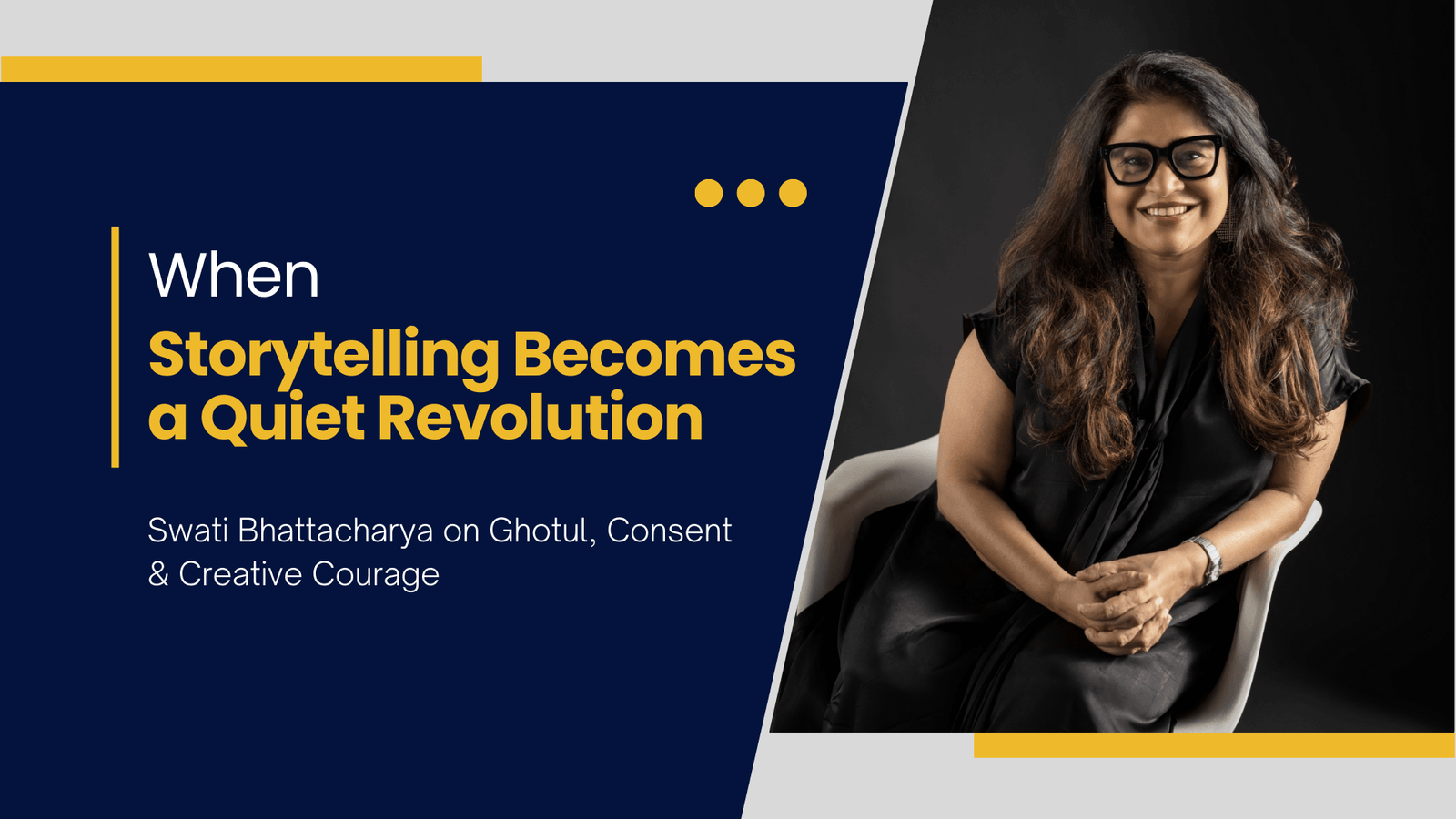
When Storytelling Becomes a Quiet Revolution: Swati Bhattacharya on Ghotul, Consent & Creative Courage
What if the most radical thing you could do… was start a conversation at home?
Not protest.
Not provoke.
Not polarise.
Just open a door.
In this episode of The AboutHer Show, Swati Bhattacharya, multi-award-winning creative director and one of the most influential voices in purpose-driven advertising — reminds us that social change does not always begin with outrage. Sometimes, it begins with honesty.
Her body of work has reshaped how brands participate in culture. From campaigns that reimagined rituals to films that confront adolescent sexuality, Swati stands at the intersection of creativity and social responsibility. But what makes her work powerful is not spectacle. It is sensitivity.
Early in the conversation, she says something that sets the tone for everything that follows:
“It’s not about just protesting… sometimes it’s just solving through storytelling.”
And that philosophy defines her journey.
From Advertising to Storytelling
Swati often says she did not “enter advertising”, she entered storytelling. Raised as an only child with long stretches of solitude while her working mother built her own career, she learned early that boredom is not emptiness. It is incubation.
Music, theatre, cultural immersion, creativity was not an ambition; it was atmosphere.
When she stepped into advertising, she saw possibility. Not just to sell products, but to reflect truths. That shift – from persuasion to perception – shaped everything that followed.
Over time, her campaigns began doing something more than marketing. They began shifting behaviour. Reframing rituals. Expanding empathy.
She describes it as transformation without confrontation, a way of moving culture without attacking it.
Ghotul: Why This Story Matters Now
At the centre of this episode is her short film for UNAIDS, Ghotul, launched globally on International Day of the Girl Child. The film draws from Gond community traditions where conversations about sexuality were once open, communal, and unburdened by shame.
And that is where Swati disrupts a deeply held assumption: consent and agency are not Western imports. They exist within our own cultural histories.
The urgency of Ghotul lies in the present reality, rising adolescent pregnancies, increasing HIV rates among teenage girls, and the dangerous silence surrounding desire.
Swati does not frame sexuality as threat. She reframes it as humanity.
“Pleasure is a fundamental human right.”
It is a line that unsettles, because it confronts decades of conditioning that have equated desire with danger.
But she goes further.
“We should be able to create safe spaces in our homes… where they feel safe telling us what is happening to their bodies, what is happening to their minds.”
The insight is simple yet transformative: we cannot demand safer streets if we cannot create safer conversations.
Also Read: Menaka Raman on Storytelling, Children, and Finding Your Voice Through Words
Making the Invisible Visible
Across her body of work, whether working with widows, trans communities, domestic workers, or adolescent girls, Swati returns to one principle: dignity.
She does not parachute into communities. She listens. She builds trust. She translates lived experience into narrative without sensationalism.
And in doing so, she reminds us:
“Emotions don’t need language.”
Rejection feels the same across identities. Shame feels the same across geographies. Longing feels the same across cultures.
This universality is what allows her stories to resonate deeply without shouting.
On Backlash, Courage & Inner Posture
One might assume that campaigns tackling sexuality, gender, and cultural rituals would invite resistance. Yet Swati shares something surprising — not one of her campaigns has been trolled or attacked in the way people might expect.
Perhaps that is because her work does not humiliate tradition. It converses with it.
When asked what she would tell her 16-year-old self, her answer reveals the emotional foundation beneath her courage:
“Life doesn’t come at you. Life comes from you.”
Approach the world as combat, and everything becomes a battlefield. Approach it with openness, and you may find allies instead of enemies.
It is a philosophy that explains both her creative resilience and her leadership style.
And then, in the rapid-fire round, she leaves us with a sentence that feels both gentle and radical:
“Desire is not dangerous.”
Key Takeaways from the Conversation
1. Storytelling Can Shift Systems Without Shouting
Change does not always require confrontation. It can require connection. When stories reflect truth with dignity, people lean in rather than push away.
2. Homes Are the First Institutions of Safety
Conversations about consent and sexuality must begin where children feel safest. Silence creates secrecy. Secrecy creates vulnerability.
3. Creativity Is a Form of Leadership
Advertising, when rooted in empathy, can influence policy, behaviour, and perception. Storytelling is not soft power, it is cultural power.
4. Truth Outlives Trends
Swati cautions young creators against chasing virality. Authenticity is not strategy — it is coherence. Work that comes from a consistent inner truth sustains.
5. Visibility Is Responsibility
Making the invisible visible requires trust, humility, and emotional intelligence. Representation must honour lived experience.
Watch/Listen to the Full Episode:
Spotify: https://shorturl.at/LPy6c
Apple Podcasts: https://shorturl.at/t4wNS
Audible: https://shorturl.at/3ZCuX
YouTube: https://www.youtube.com/watch?v=MGN6bfpVCrE
Stay Connected with AboutHer
If this conversation moved you — challenged you — or opened a new way of thinking, stay with us.
Follow The AboutHer Show for more conversations that spotlight courage, visibility, and purposeful leadership.
🌐 Visit our website: https://aboutherbysangeeta.com/
📲 Follow AboutHer on Instagram, Facebook, LinkedIn, Twitter, and Pinterest
And if this episode resonated, share it. Because sometimes revolutions do not begin in boardrooms or on stages.
They begin in living rooms.
Share This On Social
About the Author: Sangeeta Relan

Related Posts
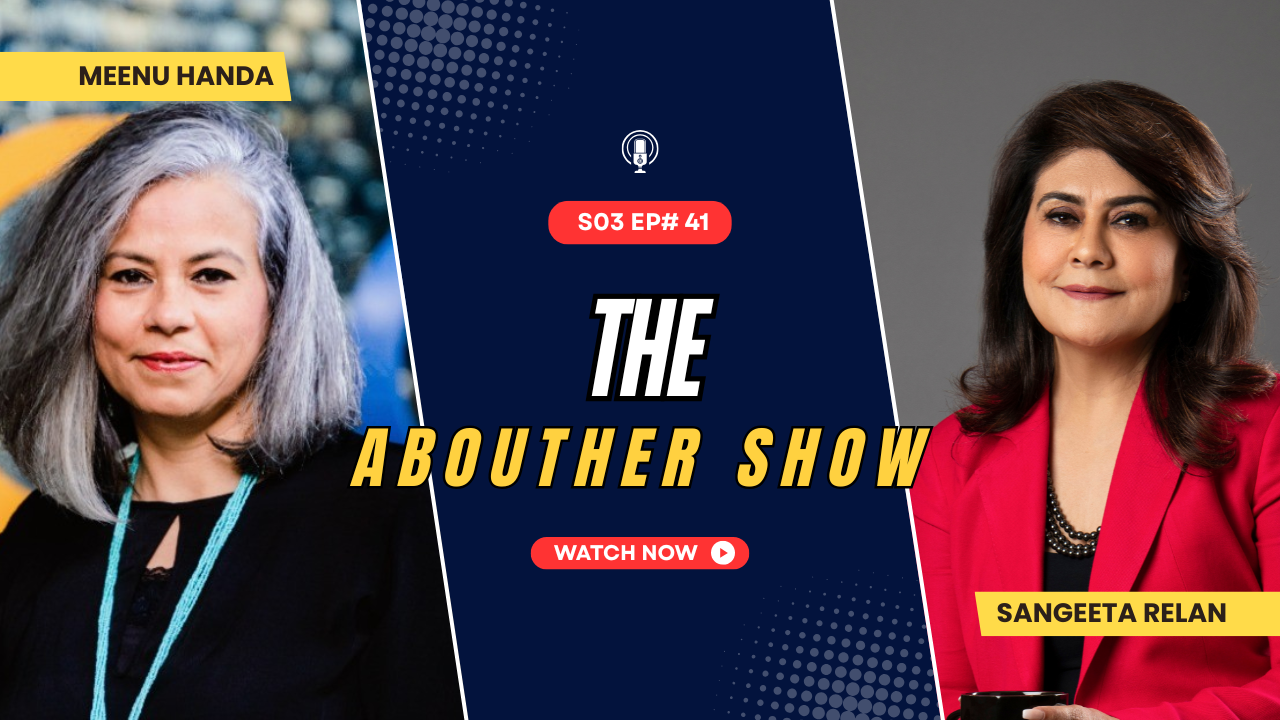





I’m Sangeeta Relan—an educator, writer, podcaster, researcher, and the founder of AboutHer. With over 30 years of experience teaching at the university level, I’ve also journeyed through life as a corporate wife, a mother, and now, a storyteller.